Breast Health Awareness: Early Signs Every Woman Should Know
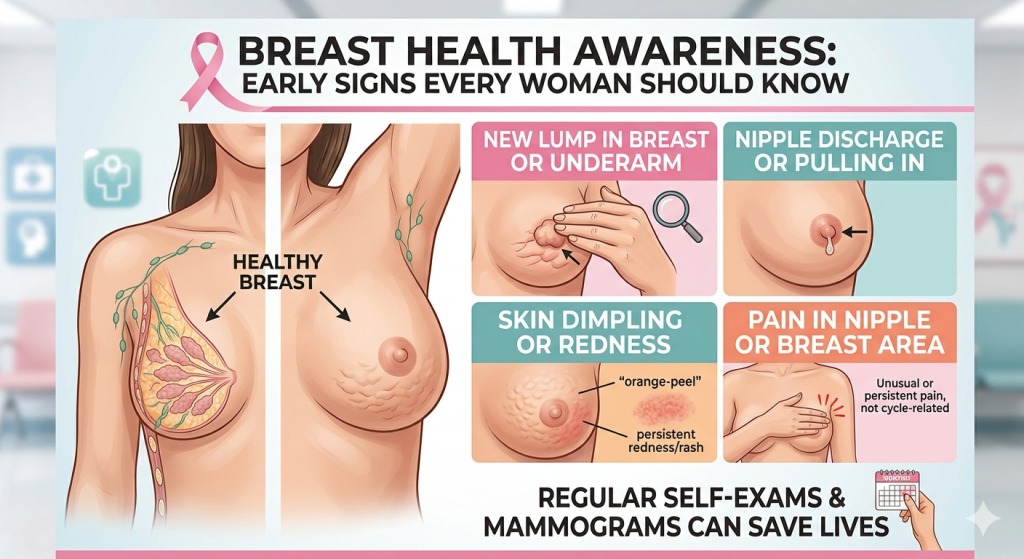
Breast health awareness is an essential part of every woman’s overall well-being. Many breast conditions can be treated successfully when discovered early, making awareness one of the most powerful tools for protecting long-term health. Understanding how your breasts normally look and feel can help you notice unusual changes quickly and seek medical advice when needed.
Although not every breast change means cancer, recognizing early warning signs can lead to faster diagnosis and better treatment outcomes. Women of all ages should learn the basics of breast health so they can make informed decisions about prevention, screening, and medical care.
Why Breast Health Awareness Matters
Breast tissue naturally changes throughout life due to hormonal fluctuations, pregnancy, aging, and menopause. Because of these normal changes, many women may ignore symptoms that deserve attention. Practicing breast health awareness means becoming familiar with your body and paying attention to any differences that persist. Learn more
Early detection of breast abnormalities can:
- Improve treatment success
- Reduce complications
- Increase survival rates
- Lower emotional stress
- Encourage proactive healthcare habits
Being aware of breast changes can literally save lives.
Normal Breast Changes vs. Warning Signs
Not every lump or discomfort is dangerous. Breasts can feel different during:
- Menstrual cycles
- Pregnancy
- Breastfeeding
- Menopause
- Weight changes
However, some changes should never be ignored. Knowing the difference between normal and unusual symptoms is critical.
Early Signs Every Woman Should Know
1. A New Lump in the Breast or Underarm
One of the most common warning signs is a new lump or thickened area in the breast or armpit. While many lumps are non-cancerous, any new mass should be evaluated by a healthcare provider.
A concerning lump may feel:
- Hard
- Irregular in shape
- Painless
- Different from surrounding tissue
Some lumps can also be tender, so pain alone does not determine seriousness.
2. Change in Breast Size or Shape
A noticeable difference in the size or shape of one breast can be an early warning sign. While minor asymmetry is normal, sudden changes may indicate an underlying issue.
Watch for:
- One breast becoming larger
- Swelling
- Distortion
- Visible shape changes
Persistent changes should be medically assessed.
3. Skin Changes on the Breast
Changes in the skin can signal a breast problem. Some women notice the skin becoming:
- Red
- Scaly
- Thickened
- Dimpled
- Irritated
Skin that resembles an orange peel texture can be especially concerning and should be checked immediately.
4. Nipple Changes
Changes in the nipple can be an important sign of breast disease. Warning signs include:
- Nipple turning inward suddenly
- Persistent itching
- Rash around the nipple
- Crusting
- Pain in one nipple
These symptoms can sometimes indicate infection, but they may also be linked to more serious conditions.
5. Unusual Nipple Discharge
Nipple discharge that occurs without squeezing should be evaluated, especially if it is:
- Bloody
- Clear
- Yellowish
- Coming from one breast only
While discharge can happen for harmless reasons, unusual discharge deserves prompt medical attention.
6. Persistent Breast Pain
Breast pain is often related to hormonal changes, but pain that remains in one specific area should not be ignored.
Seek evaluation if the pain is:
- Localized
- Persistent
- Unrelated to your menstrual cycle
- Increasing over time
Pain alone rarely indicates cancer, but it should still be checked.
7. Swelling or Warmth
Inflammation in the breast may appear as:
- Warm skin
- Swelling
- Tenderness
- Redness
These symptoms can result from infection, but inflammatory breast conditions can also cause them.
How to Check Your Breast Health
Breast awareness does not mean obsessively checking. Instead, it means knowing what is normal for your body.
Look in the Mirror
Observe your breasts with arms:
- At your sides
- Raised overhead
- Pressed on hips
Look for:
- Changes in contour
- Skin dimpling
- Nipple changes
- Swelling
Feel for Changes
Use the pads of your fingers to gently examine your breasts in a circular motion.
Check:
- Entire breast
- Underarm area
- Collarbone region
Do this monthly to become familiar with your normal breast texture.
Risk Factors for Breast Problems
Some women may have a higher risk of breast disease due to:
- Family history of breast cancer
- Age over 40
- Obesity
- Smoking
- Alcohol use
- Hormonal therapy
- Lack of physical activity
Even women without risk factors should still practice breast awareness.
When to See a Doctor
Contact a healthcare provider if you notice:
- A new lump
- Skin changes
- Nipple discharge
- Persistent pain
- Swelling
- Breast asymmetry
A doctor may recommend:
- Clinical breast exam
- Ultrasound
- Mammogram
- Biopsy if necessary
Prompt action can make a major difference.
Importance of Regular Screening
Regular screening can help detect problems before symptoms appear.
Common screening methods include:
- Mammograms
- Clinical breast exams
- Ultrasound
- MRI for high-risk women
Women should discuss screening schedules with their healthcare provider based on age and risk level.
Tips for Better Breast Health
Support your breast health by:
- Maintaining a healthy weight
- Exercising regularly
- Limiting alcohol
- Avoiding smoking
- Eating a balanced diet
- Managing stress
- Attending routine medical visits
Healthy lifestyle habits can reduce overall breast disease risk.
Read: Pelvic Floor Health: The Hidden Engine of Male Longevity
Final Thoughts
Breast health awareness empowers women to take charge of their well-being. Learning the early signs every woman should know can lead to faster diagnosis, more effective treatment, and better health outcomes. Most breast changes are not cancer, but no persistent change should be ignored.
The best approach is simple: know your body, trust your instincts, and seek medical advice whenever something feels unusual. Early attention can protect your health and provide peace of mind.