Understanding Scoliosis: Symptoms, Causes, and Treatment
Scoliosis is a medical condition that affects the alignment of the spine, causing it to curve sideways instead of remaining straight. While a healthy spine naturally has slight front-to-back curves, scoliosis creates an abnormal side-to-side curve that may appear as an “S” or “C” shape. Understanding scoliosis symptoms, causes, and treatment is important because early diagnosis can help prevent complications and improve quality of life.
Scoliosis can affect children, teenagers, and adults. In mild cases, it may cause little discomfort, but severe scoliosis can lead to pain, posture problems, breathing difficulties, and reduced mobility if left untreated.
What Is Scoliosis?
Scoliosis is a spinal condition where the spine curves abnormally to one side. The condition may develop gradually and often becomes more noticeable during periods of rapid growth, especially during adolescence. Learn more
The curve can occur in different parts of the spine:
- Upper spine (thoracic scoliosis)
- Lower spine (lumbar scoliosis)
- Both upper and lower spine
The severity of scoliosis varies from mild to severe.
Common Symptoms of Scoliosis
Recognizing scoliosis early is important for proper treatment.
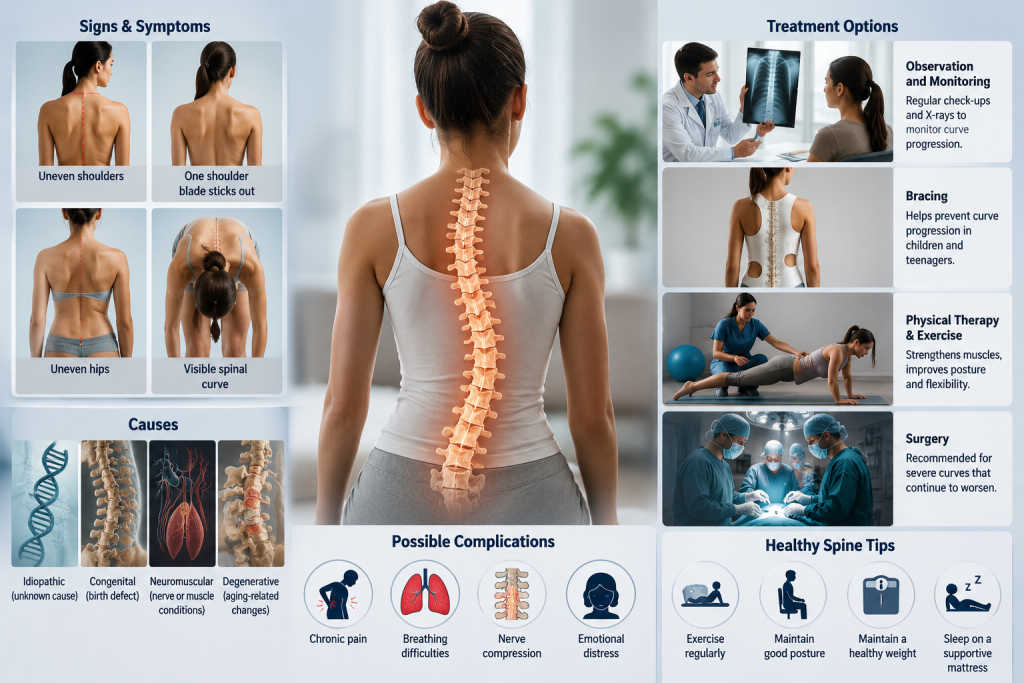
Common scoliosis symptoms include:
- Uneven shoulders
- One shoulder blade sticking out more
- Uneven hips
- Leaning to one side
- Back pain
- Muscle imbalance
- Visible spinal curve
In severe cases, scoliosis may affect lung function and breathing.
Signs of Scoliosis in Children and Teenagers
Scoliosis often develops during growth spurts.
Parents may notice:
- Clothes fitting unevenly
- One hip higher than the other
- Uneven waistline
- Child leaning sideways
- One shoulder appearing higher
School screenings sometimes help detect scoliosis early.
Symptoms of Adult Scoliosis
Adults may develop scoliosis later in life or continue having it from childhood.
Adult scoliosis symptoms may include:
- Chronic back pain
- Stiffness
- Fatigue after standing
- Nerve pain
- Leg discomfort
Degenerative changes in the spine can worsen scoliosis in adults.
Causes of Scoliosis
Understanding scoliosis causes helps determine the best treatment approach.
1. Idiopathic Scoliosis
This is the most common form of scoliosis.
Key facts:
- Exact cause is unknown
- Often develops during adolescence
- May run in families
Most scoliosis cases are idiopathic.
2. Congenital Scoliosis
Congenital scoliosis develops before birth due to abnormal spinal development.
Causes may include:
- Improper vertebrae formation
- Spinal bone abnormalities during pregnancy
This type is present at birth.
3. Neuromuscular Scoliosis
Certain muscle or nerve conditions can lead to scoliosis.
Associated conditions:
- Cerebral palsy
- Muscular dystrophy
- Spinal cord disorders
Weak muscles may fail to support the spine properly.
4. Degenerative Scoliosis
This type commonly affects older adults.
Causes include:
- Aging
- Disc degeneration
- Arthritis
- Bone weakening
Degenerative scoliosis often develops gradually.
Risk Factors for Scoliosis
Several factors increase the likelihood of scoliosis.
Common risk factors:
- Family history
- Rapid growth during puberty
- Neuromuscular disorders
- Aging-related spinal changes
Girls are more likely to develop severe scoliosis than boys.
How Scoliosis Is Diagnosed
Doctors use several methods to diagnose scoliosis.
Diagnostic tools:
- Physical examination
- Forward bend test
- X-rays
- MRI scans
- CT scans in some cases
X-rays help measure the degree of spinal curvature.
Complications of Untreated Scoliosis
Severe scoliosis can lead to long-term problems.
Possible complications:
- Chronic pain
- Poor posture
- Reduced flexibility
- Breathing difficulties
- Nerve compression
- Emotional distress
Early treatment may reduce these risks.
Treatment Options for Scoliosis
Scoliosis treatment depends on:
- Age
- Severity of the curve
- Symptoms
- Cause of scoliosis
1. Observation and Monitoring
Mild scoliosis may only require regular monitoring.
Doctors may:
- Track curve progression
- Perform periodic X-rays
- Monitor growth in children
Not all scoliosis cases worsen.
2. Physical Therapy and Exercise
Exercise can improve posture and muscle support.
Helpful exercises:
- Core strengthening
- Stretching
- Posture correction exercises
- Breathing exercises
Physical therapy may reduce discomfort and improve mobility.
3. Bracing
Children and teenagers with growing spines may need braces.
Bracing helps:
- Prevent curve progression
- Support spinal alignment
- Reduce worsening during growth
Braces are most effective before skeletal maturity.
4. Pain Management
Adults with scoliosis may need pain relief.
Common methods:
- Anti-inflammatory medication
- Heat therapy
- Massage
- Gentle exercise
Pain management improves daily comfort.
5. Surgery for Severe Scoliosis
Severe curves may require surgery.
Surgical goals:
- Straighten the spine
- Stabilize the spine
- Prevent worsening
Spinal fusion is one of the most common scoliosis surgeries.
Can Scoliosis Be Prevented?
Most scoliosis cases cannot be fully prevented, especially idiopathic scoliosis. However, maintaining good spinal health may help reduce discomfort.
Helpful habits:
- Regular exercise
- Good posture
- Strong core muscles
- Healthy body weight
Early detection is one of the best ways to reduce complications.
Living with Scoliosis
Many people with scoliosis live active and healthy lives.
Helpful lifestyle tips:
- Stay physically active
- Maintain flexibility
- Follow treatment plans
- Avoid prolonged poor posture
- Attend regular medical checkups
Support and education can improve confidence and quality of life.
When to See a Doctor
Seek medical evaluation if you notice:
- Uneven shoulders
- Visible spinal curve
- Persistent back pain
- Leaning posture
- Reduced mobility
Early diagnosis improves treatment success.
Read: Osteoarthritis vs Rheumatoid Arthritis: Key Differences Explained
Final Thoughts
Understanding scoliosis symptoms, causes, and treatment is important for protecting long-term spinal health. Scoliosis can affect posture, movement, and overall quality of life, but early diagnosis and proper treatment can help manage the condition effectively. Whether through monitoring, physical therapy, bracing, or surgery, many people with scoliosis can maintain active and healthy lives with the right care and support.