Osteoarthritis vs Rheumatoid Arthritis: Key Differences Explained
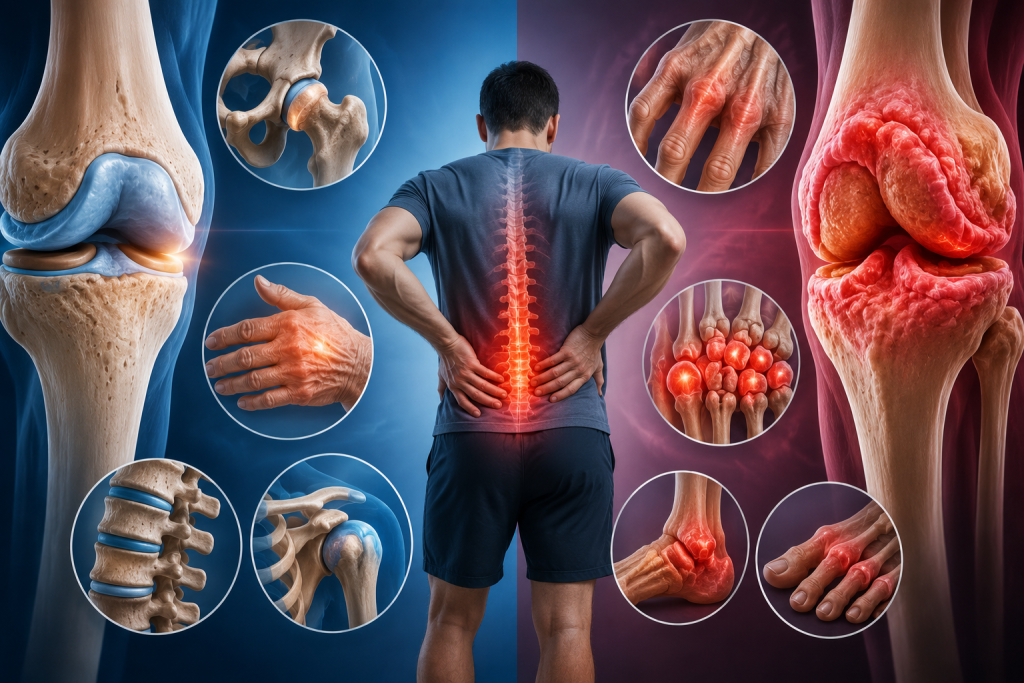
Arthritis is one of the most common causes of joint pain and stiffness worldwide. Among the many types of arthritis, osteoarthritis and rheumatoid arthritis are the two most common forms. Although both conditions affect the joints, they have very different causes, symptoms, and treatment approaches. Understanding osteoarthritis vs rheumatoid arthritis can help people recognize symptoms early and seek the right medical care.
Many people confuse these two conditions because both can cause pain, swelling, and reduced mobility. However, osteoarthritis is mainly caused by wear and tear on the joints, while rheumatoid arthritis is an autoimmune disease that attacks healthy joint tissue.
What Is Osteoarthritis?
Osteoarthritis (OA) is a degenerative joint disease that develops when the protective cartilage covering the ends of bones gradually wears down. Cartilage acts as a cushion that allows smooth joint movement. As the cartilage breaks down, bones begin to rub against each other, causing pain and stiffness.https://nras.org.uk/resource/rheumatoid-arthritis-ra-and-osteoarthritis-oa/
Commonly affected joints:
- Knees
- Hips
- Hands
- Spine
- Shoulders
Osteoarthritis usually develops slowly over time and is more common in older adults.
What Is Rheumatoid Arthritis?
Rheumatoid arthritis (RA) is an autoimmune condition in which the immune system mistakenly attacks the lining of the joints. This causes inflammation, swelling, and joint damage.
Unlike osteoarthritis, rheumatoid arthritis can affect the entire body, including:
- Eyes
- Lungs
- Heart
- Blood vessels
RA can occur at any age, although it commonly begins between ages 30 and 60.
Osteoarthritis vs Rheumatoid Arthritis: Main Differences
Understanding the key differences between osteoarthritis and rheumatoid arthritis can make diagnosis easier.
1. Cause of the Disease
Osteoarthritis:
- Caused by joint wear and tear
- Cartilage gradually breaks down
- Often linked to aging and joint overuse
Rheumatoid Arthritis:
- Caused by autoimmune system malfunction
- Immune system attacks healthy joints
- Inflammation damages tissues
This is one of the biggest distinctions in osteoarthritis vs rheumatoid arthritis.
2. Age of Onset
Osteoarthritis:
- More common after age 50
- Risk increases with aging
Rheumatoid Arthritis:
- Can develop earlier in life
- Often begins between 30–60 years
RA may even affect children in some cases.
3. Joint Symptoms
Osteoarthritis symptoms:
- Pain worsens with activity
- Stiffness improves with movement
- Crunching or grinding sensation
- Limited flexibility
Rheumatoid arthritis symptoms:
- Morning stiffness lasting over 30 minutes
- Warm, swollen joints
- Fatigue
- Joint tenderness
RA symptoms are often more inflammatory.
4. Pattern of Joint Involvement
Osteoarthritis:
- Often affects one side more than the other
- Usually targets weight-bearing joints
Rheumatoid Arthritis:
- Usually affects joints symmetrically
- Both hands, wrists, or knees may be affected equally
Symmetry is a major clue in osteoarthritis vs rheumatoid arthritis diagnosis.
5. Inflammation Levels
Osteoarthritis:
- Mild inflammation may occur
- Mainly mechanical joint damage
Rheumatoid Arthritis:
- Significant inflammation
- Immune-driven joint destruction
RA inflammation can damage joints permanently if untreated.
6. Progression Speed
Osteoarthritis:
- Develops gradually over years
Rheumatoid Arthritis:
- Symptoms may worsen quickly
- Flare-ups are common
RA can become aggressive without treatment.
7. Whole-Body Symptoms
Osteoarthritis:
Usually limited to joints.
Rheumatoid arthritis:
May cause:
- Fatigue
- Fever
- Weight loss
- Weakness
RA is considered a systemic disease.
Risk Factors for Osteoarthritis
Several factors increase OA risk:
- Aging
- Obesity
- Joint injuries
- Repetitive motion
- Poor posture
- Genetics
Excess body weight places extra pressure on joints.
Risk Factors for Rheumatoid Arthritis
RA risk factors include:
- Family history
- Smoking
- Hormonal factors
- Autoimmune tendencies
- Obesity
Women are more likely to develop RA than men.
Diagnosis of Osteoarthritis vs Rheumatoid Arthritis
Doctors use several methods to diagnose arthritis.
Diagnostic tools:
- Physical examination
- X-rays
- MRI scans
- Blood tests
- Joint fluid analysis
Blood tests can help detect inflammatory markers linked to RA.
Treatment for Osteoarthritis
Treatment focuses on reducing pain and improving movement.
Common treatments:
- Physical therapy
- Weight management
- Pain relievers
- Exercise
- Joint injections
- Surgery in severe cases
Lifestyle changes are important for long-term management.
Treatment for Rheumatoid Arthritis
RA treatment aims to reduce immune system activity and inflammation.
Common treatments:
- Anti-inflammatory drugs
- Disease-modifying antirheumatic drugs (DMARDs)
- Biologic medications
- Physical therapy
- Lifestyle management
Early treatment can prevent joint damage.
Exercise and Joint Health
Exercise can help both conditions when done correctly.
Helpful activities:
- Walking
- Swimming
- Stretching
- Low-impact strength training
Regular movement improves flexibility and reduces stiffness.
Diet and Arthritis
A healthy diet may help reduce inflammation.
Helpful foods:
- Fatty fish
- Fruits and vegetables
- Nuts and seeds
- Whole grains
- Olive oil
Avoiding excessive processed foods may also help.
When to See a Doctor
Seek medical attention if you experience:
- Persistent joint pain
- Swelling
- Morning stiffness
- Reduced mobility
- Joint warmth or redness
Early diagnosis improves treatment outcomes.
Read: Male Fertility Decline in 2026: Causes, Lifestyle Risks, and Prevention
Final Thoughts
Understanding osteoarthritis vs rheumatoid arthritis is important because these conditions have different causes, symptoms, and treatment approaches. Osteoarthritis mainly results from joint wear and aging, while rheumatoid arthritis is an autoimmune disease that causes inflammation and joint damage. Recognizing the key differences early can help people receive proper treatment, protect joint function, and improve overall quality of life.