Sexually Transmitted Infections: Symptoms and Prevention Methods
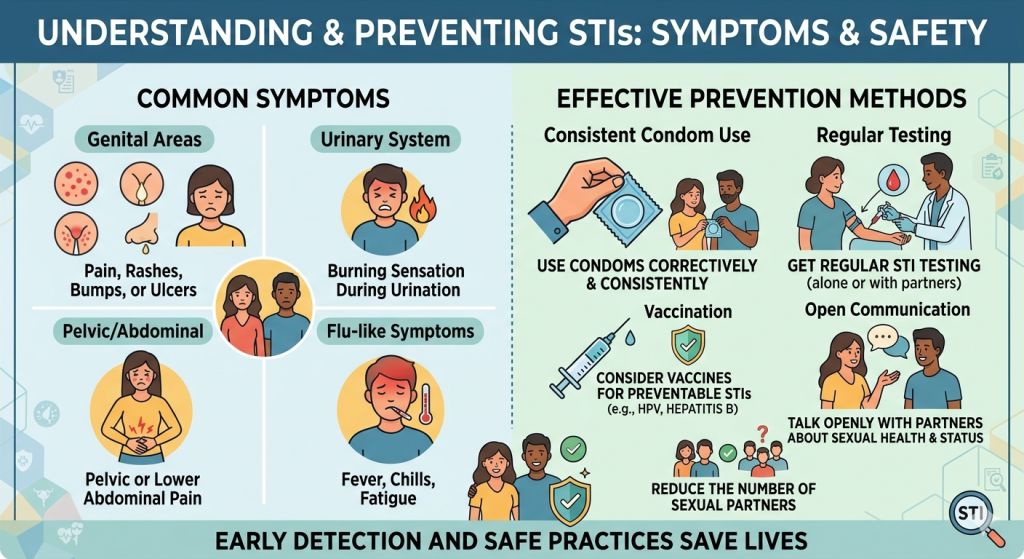
Sexually transmitted infections (STIs): symptoms and prevention methods are an important aspect of sexual and reproductive health. STIs are infections passed from one person to another through sexual contact, including vaginal, oral, or anal sex. They are caused by bacteria, viruses, or parasites and can affect both men and women. Some STIs show clear symptoms, while others may remain silent for a long time, making regular awareness and testing very important.
Understanding the symptoms and prevention methods helps reduce the spread of infections and protects long-term health. Early detection and proper prevention can significantly lower complications such as infertility, chronic pain, and other serious health conditions.
What Are Sexually Transmitted Infections?
Sexually transmitted infections are diseases transmitted mainly through sexual contact. Common STIs include:
- Chlamydia
- Gonorrhea
- Syphilis
- Human Papillomavirus (HPV)
- Herpes Simplex Virus (HSV)
- HIV/AIDS
- Trichomoniasis
Learn about sexually transmitted infections, their common symptoms, and effective prevention methods to protect your sexual and reproductive health.Some STIs are bacterial and can be cured with treatment, while viral infections may be managed but not completely cured. Learn more
Common Symptoms of STIs
Symptoms of STIs vary depending on the type of infection, and some people may not show any symptoms at all.
1. Unusual Discharge
One of the most common symptoms is abnormal discharge from the vagina, penis, or anus. It may appear:
- Yellow
- Green
- Thick
- Foul-smelling
This can indicate infections like gonorrhea or trichomoniasis.
2. Pain or Burning During Urination
A burning sensation when urinating is a common sign of infection. It may be caused by:
- Chlamydia
- Gonorrhea
- Urinary tract involvement
This symptom should never be ignored.
3. Genital Sores or Blisters
Painful sores, blisters, or ulcers around the genital area may indicate:
- Herpes (HSV)
- Syphilis (in early stages)
These sores can come and go but still require medical treatment.
4. Itching and Irritation
Persistent itching in the genital area can be a sign of:
- Trichomoniasis
- Pubic lice
- Yeast infections (sometimes non-STI related)
Itching should be evaluated if it persists.
5. Pain During Sexual Intercourse
Pain during sex may indicate an underlying infection or inflammation in the reproductive organs.
6. Lower Abdominal or Pelvic Pain
Some STIs, especially when untreated, can spread to reproductive organs and cause:
- Pelvic inflammatory disease (PID)
- Chronic pelvic pain
- Fertility issues
7. Flu-like Symptoms
Certain infections like HIV or syphilis may cause early symptoms such as:
- Fever
- Fatigue
- Swollen lymph nodes
- Body aches
These symptoms are often mistaken for other illnesses.
How STIs Spread
STIs are mainly spread through:
- Unprotected sexual contact
- Sharing contaminated needles
- Mother-to-child transmission during birth
- Skin-to-skin contact (for some infections like HPV and herpes)
Understanding transmission helps in effective prevention.
Prevention Methods for STIs
Preventing STIs is always better than treating them. Many infections can be avoided with simple protective habits.
1. Use Protection (Condoms)
Using condoms correctly during sex greatly reduces the risk of infection. They provide a barrier against most STIs.
2. Practice Mutual Monogamy
Being in a long-term relationship where both partners are tested and uninfected reduces risk significantly.
3. Get Regular STI Testing
Regular screening helps detect infections early, even when there are no symptoms.
Testing is especially important if:
- You have multiple partners
- You start a new relationship
- You experience symptoms
4. Limit Number of Sexual Partners
Having fewer sexual partners reduces exposure to infection.
5. Vaccination
Vaccines are available for some STIs such as:
- HPV (Human Papillomavirus)
- Hepatitis B
Vaccination is an effective preventive measure.
6. Avoid Sharing Needles
Sharing needles for drugs or tattoos increases the risk of infections like HIV and hepatitis.
7. Maintain Good Personal Hygiene
Good hygiene supports overall sexual health:
- Wash genital areas regularly
- Avoid harsh chemical products
- Wear clean underwear
8. Open Communication with Partner
Talking openly about sexual health, testing history, and protection helps reduce risk.
Why Early Detection Is Important
Many STIs do not show symptoms immediately. Without treatment, they can lead to:
- Infertility
- Chronic pain
- Pregnancy complications
- Organ damage
- Increased HIV risk
Early detection ensures better treatment outcomes and prevents spread to others.
When to See a Doctor
Seek medical attention if you notice:
- Unusual discharge
- Genital sores
- Burning urination
- Persistent itching
- Pelvic pain
- Exposure to an infected partner
Doctors may perform tests such as blood tests, urine tests, or swabs for diagnosis.
Read: How to Prevent Urinary Tract Infections Naturally
Final Thoughts
Understanding sexually transmitted infections: symptoms and prevention methods is essential for maintaining sexual and reproductive health. While STIs are common, they are also highly preventable with safe practices, regular testing, and awareness.
Protecting yourself and your partner begins with knowledge and responsible choices. Early detection, safe sex practices, and open communication remain the most effective ways to reduce the spread of STIs and maintain long-term health and well-being.