Circadian Rhythm Lighting and Sleep Hygiene
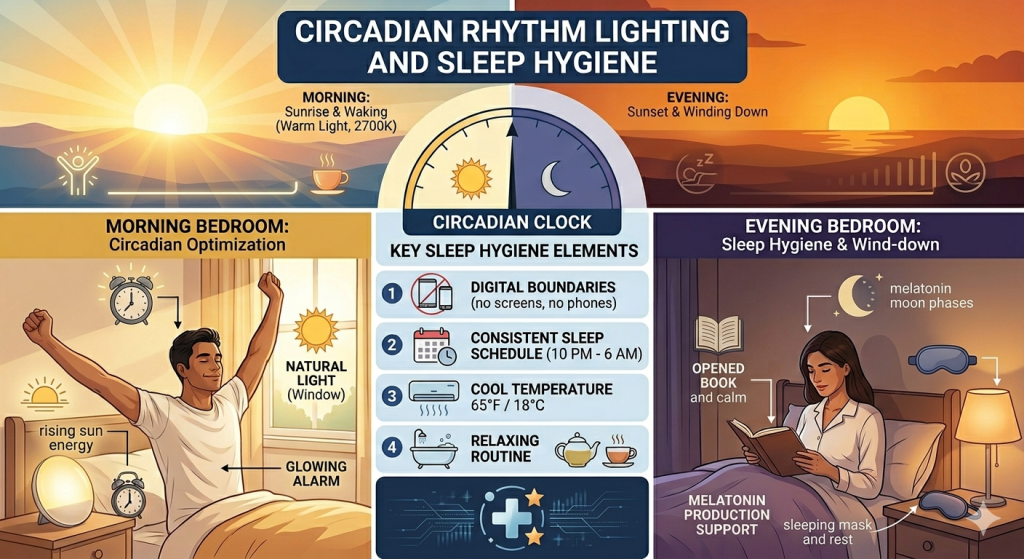
Circadian rhythm lighting and sleep hygiene are two closely connected factors that play a major role in how well you sleep, how energetic you feel during the day, and how healthy your body remains over time. The circadian rhythm is your body’s natural 24-hour internal clock, while sleep hygiene refers to the habits and environment that support good sleep. When both are properly managed, they can significantly improve sleep quality, mood, concentration, and overall health.
In today’s world, artificial lighting, screen exposure, and irregular sleep patterns often disrupt the body’s natural rhythm. Understanding how lighting affects your sleep cycle and adopting healthy sleep habits can help restore balance and improve well-being.
What Is the Circadian Rhythm?
The circadian rhythm is a natural biological process that regulates your sleep-wake cycle over a 24-hour period. It is controlled by the brain and influenced mainly by light exposure. Read more
This internal clock affects:
- Sleep and wake times
- Hormone release (especially melatonin and cortisol)
- Body temperature
- Energy levels
- Mood and alertness
When your circadian rhythm is aligned, you feel alert during the day and sleepy at night. When it is disrupted, you may experience insomnia, fatigue, or poor concentration.
How Lighting Affects the Circadian Rhythm
Light is the most powerful signal that controls your body clock. Exposure to different types of light at different times of the day can either support or disrupt your sleep cycle.
Morning Light Exposure
Natural sunlight in the morning helps:
- Reset your internal clock
- Boost alertness
- Increase serotonin (mood hormone)
- Improve daytime energy
Getting sunlight within the first hour of waking is highly beneficial.
Evening Light Exposure
Bright artificial light in the evening, especially blue light from screens, can:
- Delay melatonin production
- Confuse the brain about sleep time
- Make it harder to fall asleep
This is one of the main causes of modern sleep problems.
What Is Circadian Rhythm Lighting?
Circadian rhythm lighting refers to lighting systems designed to support the body’s natural sleep-wake cycle. These lighting systems change color and brightness throughout the day to mimic natural sunlight patterns.
Features include:
- Bright, blue-enriched light in the morning
- Neutral white light during the day
- Warm, dim light in the evening
- Minimal blue light at night
This type of lighting helps align your environment with your biological clock.
What Is Sleep Hygiene?
Sleep hygiene refers to habits and routines that promote consistent, high-quality sleep. Good sleep hygiene helps the body prepare for rest and improves sleep depth and duration.
Key Principles of Good Sleep Hygiene
1. Maintain a Consistent Sleep Schedule
Going to bed and waking up at the same time every day helps regulate your internal clock.
Benefits include:
- Better sleep quality
- Easier waking in the morning
- Improved hormone balance
2. Reduce Screen Exposure Before Bed
Phones, tablets, and computers emit blue light that interferes with melatonin production.
Try to:
- Avoid screens 1–2 hours before bed
- Use night mode or blue light filters
- Replace screen time with reading or relaxation
3. Create a Relaxing Sleep Environment
Your bedroom should support rest and relaxation.
Ideal conditions:
- Dark environment
- Quiet surroundings
- Cool temperature
- Comfortable mattress and pillows
4. Limit Caffeine and Heavy Meals at Night
Caffeine and large meals can interfere with sleep.
Avoid:
- Coffee late in the day
- Energy drinks
- Spicy or heavy meals before bedtime
5. Use Bed Only for Sleep
Training your brain to associate bed with sleep helps improve sleep efficiency. Avoid working, eating, or scrolling in bed.
Connection Between Lighting and Sleep Hygiene
Circadian rhythm lighting and sleep hygiene work best together. Even with good habits, poor lighting can still disrupt sleep. Similarly, proper lighting alone cannot fix unhealthy sleep routines.
Combined benefits include:
- Faster sleep onset
- Deeper sleep cycles
- Improved mental clarity
- Better mood regulation
- Reduced insomnia risk
Health Benefits of Good Circadian Alignment
When your circadian rhythm and sleep hygiene are properly aligned, your body functions more efficiently.
Benefits include:
- Stronger immune system
- Better memory and concentration
- Balanced hormones
- Reduced stress levels
- Improved metabolism
- Lower risk of chronic diseases
Poor sleep over time can contribute to conditions like obesity, diabetes, depression, and heart disease.
Practical Tips for Better Sleep and Lighting Habits
- Get 10–30 minutes of morning sunlight daily
- Dim lights in the evening
- Use warm lighting at night
- Stick to a fixed sleep schedule
- Avoid screens before bed
- Create a calm bedtime routine
Small changes can lead to significant improvements in sleep quality.
Read: Sexually Transmitted Infections: Symptoms and Prevention Methods
Final Thoughts
Circadian rhythm lighting and sleep hygiene are essential for maintaining healthy sleep patterns and overall well-being. By aligning your environment with your natural biological clock and practicing good sleep habits, you can improve both physical and mental health.
Better sleep is not just about how long you rest, but how well your body follows its natural rhythm. When lighting, routine, and lifestyle work together, restful sleep becomes much easier and more consistent.