Understanding Migraine Triggers and Management Strategies
Migraines are more than just severe headaches. They are a complex neurological condition that can significantly affect a person’s daily life, work productivity, and emotional well-being. Millions of people worldwide experience migraines, often dealing with recurring pain, sensitivity to light and sound, nausea, and fatigue.
Understanding what causes migraines and learning effective management strategies can help reduce the frequency and severity of attacks while improving overall quality of life.
What Is a Migraine?
A migraine is a neurological disorder characterized by intense, throbbing pain, usually on one side of the head. Migraine attacks can last for several hours or even days and may interfere with normal activities. Learn more
Some individuals experience warning signs known as “auras” before a migraine begins. These may include:
- Visual disturbances
- Flashing lights
- Numbness or tingling
- Difficulty speaking
- Dizziness
Migraines affect people differently, and symptoms can vary from person to person.
Common Symptoms of Migraines
Migraine symptoms often go beyond headache pain and may include:
- Severe head pain
- Nausea and vomiting
- Sensitivity to light
- Sensitivity to sound
- Blurred vision
- Fatigue
- Difficulty concentrating
Some people may also feel weak or experience mood changes before or after an attack.
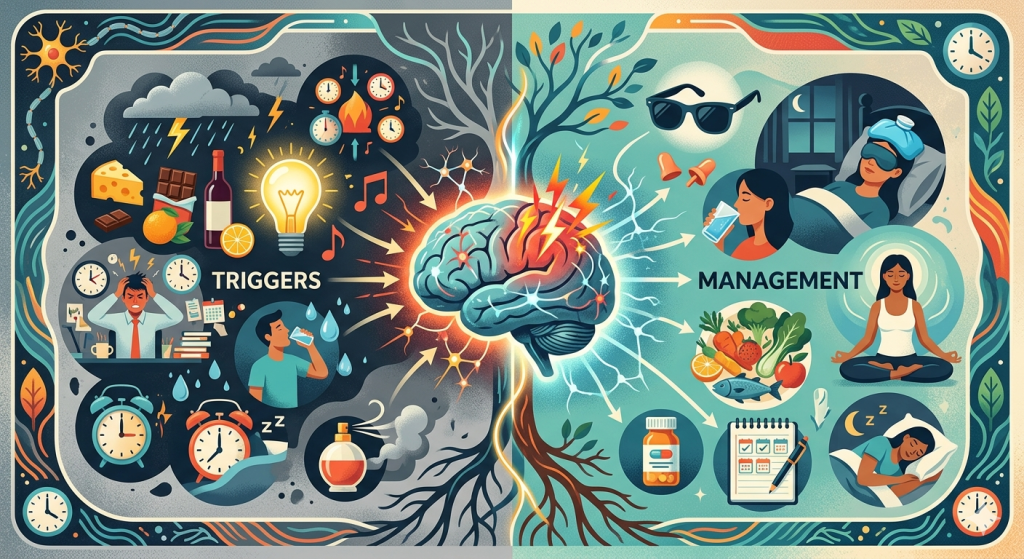
Common Migraine Triggers
Migraine triggers are factors that increase the likelihood of an attack. Identifying personal triggers can help individuals better manage their condition.
Stress and Anxiety
Emotional stress is one of the most common migraine triggers. Work pressure, financial worries, and emotional tension may contribute to migraine attacks.
Poor Sleep Habits
Lack of sleep or irregular sleep schedules can disrupt brain function and trigger migraines. Oversleeping may also affect some individuals.
Dietary Factors
Certain foods and beverages may increase migraine risk, including:
- Caffeine
- Alcohol
- Processed foods
- Artificial sweeteners
- Chocolate
- Aged cheese
Skipping meals or dehydration can also trigger headaches.
Hormonal Changes
Hormonal fluctuations, especially in women, may contribute to migraines. Changes during menstruation, pregnancy, or menopause can affect migraine frequency.
Environmental Triggers
Bright lights, loud noises, strong smells, and weather changes may provoke migraine attacks in sensitive individuals.
Excessive Screen Time
Long hours spent on phones, computers, or televisions can strain the eyes and contribute to migraines, especially when combined with poor posture or inadequate breaks.
Strategies for Managing Migraines
Although migraines cannot always be completely prevented, several lifestyle changes and treatments can help reduce their impact.
Maintain a Healthy Routine
Consistency in daily habits can support migraine prevention. Helpful habits include:
- Sleeping at regular times
- Eating balanced meals
- Staying hydrated
- Exercising regularly
- Avoiding excessive caffeine intake
A healthy routine helps stabilize the body and reduce stress on the nervous system.
Identify Personal Triggers
Keeping a migraine diary can help identify patterns and triggers. Individuals can track:
- Foods eaten
- Sleep duration
- Stress levels
- Weather conditions
- Activities before attacks
Recognizing patterns allows better prevention strategies.
Stress Management Techniques
Managing stress is essential for reducing migraine frequency. Effective techniques include:
- Meditation
- Deep breathing exercises
- Yoga
- Relaxation therapy
- Spending time outdoors
Mental relaxation can help calm the nervous system and reduce tension-related headaches.
Limit Screen Exposure
Taking regular breaks from screens can reduce eye strain and headache risk. The 20-20-20 rule may help:
Every 20 minutes, look at something 20 feet away for 20 seconds.
Adjusting screen brightness and maintaining proper posture may also help.
Medications and Medical Treatment
Doctors may recommend medications to:
- Relieve pain during attacks
- Prevent migraines from occurring frequently
- Reduce nausea and other symptoms
It is important to avoid overusing pain medications, as this may lead to rebound headaches.
People experiencing severe or frequent migraines should consult healthcare professionals for proper diagnosis and treatment plans.
The Importance of Hydration and Nutrition
Dehydration is a common migraine trigger. Drinking enough water throughout the day supports healthy brain function and overall wellness.
Eating nutrient-rich foods that stabilize blood sugar levels may also reduce migraine risk.
When to Seek Medical Attention
Medical help should be sought if migraines:
- Become unusually severe
- Occur frequently
- Interfere with daily activities
- Cause vision loss or confusion
- Develop suddenly with intense pain
Early medical evaluation can help rule out other serious conditions.
Read: Preventing Type 2 Diabetes Through Lifestyle Changes
Conclusion
Migraines can have a major impact on physical health, emotional well-being, and daily life. Understanding common triggers such as stress, poor sleep, dehydration, and dietary habits is an important step toward prevention and effective management.
By adopting healthy lifestyle habits, managing stress, identifying triggers, and seeking medical support when necessary, many individuals can reduce migraine frequency and improve their quality of life. Consistent self-care and proper treatment can make migraine management more effective and manageable over time.