The Future of Remote Work: Tools and Technologies You Need
Introduction
The future of remote work is no longer just a trend, it has become a permanent shift in how businesses operate globally. Over the past few years, remote work has evolved from an optional perk to a necessity, driven by technological advancements and changing workplace expectations. Today, companies and individuals rely heavily on digital tools and innovative technologies to stay productive, connected, and competitive.
As we move deeper into the digital age, understanding the tools and technologies you need for remote work is essential for success. Whether you’re a freelancer, entrepreneur, or corporate employee, the right tech stack can significantly boost your efficiency and collaboration.
Why Remote Work Is the Future
Remote work is growing rapidly due to several key factors:
- Flexibility and Work-Life Balance
Employees can work from anywhere, reducing stress and improving productivity. - Cost Savings
Companies save on office space, utilities, and other overhead expenses. - Access to Global Talent
Employers can hire the best talent regardless of geographical location. - Increased Productivity
Many studies show that remote workers are often more productive than office workers.
As a result, businesses are investing heavily in technologies that support remote work environments. Learn more
Essential Tools for Remote Work
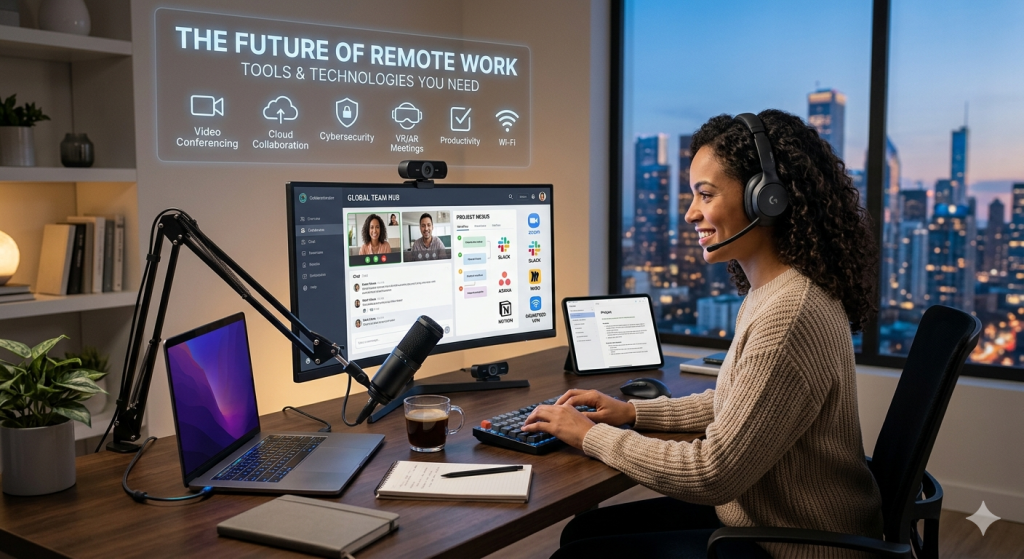
To thrive in a remote work setup, you need the right tools. Here are the most important categories:
1. Communication Tools
Effective communication is the backbone of remote work. Without face-to-face interaction, teams rely on digital communication platforms.
Popular communication tools include:
- Slack – for instant messaging and team collaboration
- Zoom – for video conferencing and meetings
- Microsoft Teams – for chats, calls, and file sharing
These tools help maintain clear communication, reduce misunderstandings, and keep teams aligned.
2. Project Management Tools
Managing tasks and projects remotely requires structured systems.
Top project management tools:
- Trello – visual task management using boards
- Asana – for tracking projects and workflows
- Monday.com – for team collaboration and productivity
These tools help teams stay organized, meet deadlines, and monitor progress efficiently.
3. Cloud Storage and File Sharing
Remote work depends heavily on easy access to files from anywhere.
Common cloud storage solutions:
- Google Drive – for storing and sharing files
- Dropbox – for secure file storage
- OneDrive – integrated with Microsoft Office tools
Cloud storage ensures that team members can collaborate in real time without worrying about file access.
4. Time Management and Productivity Tools
Working remotely requires discipline and proper time management.
Useful productivity tools:
- Toggl – for tracking work hours
- RescueTime – for analyzing productivity habits
- Clockify – for time tracking and reporting
These tools help individuals stay focused and accountable.
5. Cybersecurity Tools
Remote work increases exposure to cyber threats, making security essential.
Important cybersecurity tools include:
- VPNs (Virtual Private Networks)
- Antivirus software
- Password managers like LastPass
These tools protect sensitive data and ensure secure communication.
Key Technologies Shaping the Future of Remote Work
Beyond tools, advanced technologies are redefining how remote work operates.
1. Artificial Intelligence (AI)
AI is transforming remote work by automating repetitive tasks and improving efficiency.
Examples of AI in remote work:
- Chatbots for customer support
- AI scheduling assistants
- Automated data analysis
AI allows workers to focus on more strategic and creative tasks.
2. Cloud Computing
Cloud computing enables seamless access to data and applications from anywhere in the world.
Benefits include:
- Scalability
- Cost efficiency
- Real-time collaboration
It is the foundation of most remote work tools used today.
3. Virtual Reality (VR) and Augmented Reality (AR)
Although still emerging, VR and AR are set to revolutionize remote work.
Potential applications:
- Virtual meetings and conferences
- Remote training simulations
- Collaborative virtual workspaces
These technologies aim to recreate in-person experiences digitally.
4. 5G Technology
5G offers faster internet speeds and lower latency, improving remote work experiences.
Impact of 5G:
- Smoother video calls
- Faster file transfers
- Enhanced real-time collaboration
This technology will make remote work more efficient and accessible globally.
5. Automation Tools
Automation reduces manual work and increases productivity.
Examples:
- Workflow automation tools like Zapier
- Automated email responses
- Task scheduling systems
Automation helps teams focus on high-value tasks instead of repetitive work.
Challenges of Remote Work and How Technology Solves Them
Despite its benefits, remote work comes with challenges:
1. Communication Gaps
Solution: Use video conferencing and instant messaging tools to maintain clarity.
2. Isolation and Loneliness
Solution: Virtual meetings and team-building activities help maintain social connections.
3. Productivity Issues
Solution: Time tracking and productivity tools keep employees accountable.
4. Security Risks
Solution: Implement strong cybersecurity measures like VPNs and encryption.
Technology plays a critical role in overcoming these challenges.
Best Practices for Remote Work Success
To fully leverage remote work tools and technologies, follow these best practices:
- Set Up a Dedicated Workspace
Create a distraction-free environment for better focus. - Use the Right Tools
Choose tools that fit your workflow and team needs. - Maintain Clear Communication
Schedule regular check-ins and updates. - Prioritize Cybersecurity
Always use secure networks and protect sensitive data. - Stay Organized
Use project management tools to track tasks and deadlines.
The Future Outlook of Remote Work
The future of remote work looks promising and will continue evolving with technology. Hybrid work models, combining remote and in-office work are becoming increasingly popular.
Companies are also investing in:
- Digital collaboration platforms
- Employee wellness tools
- Advanced analytics for productivity tracking
As technology advances, remote work will become more immersive, efficient, and widely accepted across industries.
Read more:Best Free Software Tools for Students and Professionals
Conclusion
The future of remote work is driven by powerful tools and innovative technologies that enable people to work from anywhere without compromising productivity. From communication platforms to AI and cloud computing, these tools are shaping a new era of work that is flexible, efficient, and globally connected.
To succeed in this evolving landscape, individuals and businesses must embrace the right technologies and continuously adapt to new trends. By doing so, they can unlock the full potential of remote work and stay ahead in the digital age.