Understanding Color Blindness and Available Treatments
Color blindness, also known as color vision deficiency (CVD), is a condition that affects a person’s ability to distinguish certain colors. While many people think color blindness means seeing only in black and white, this is actually very rare. Most individuals with color blindness can see colors but have difficulty distinguishing between specific shades, particularly red and green. Understanding the causes, symptoms, and available treatment options can help individuals adapt and maintain a high quality of life.
What Is Color Blindness?
Color blindness occurs when the light-sensitive cells in the retina, known as cones, do not function properly or are absent. These cones are responsible for detecting red, green, and blue light. When one or more types of cones are missing or not working correctly, the brain receives inaccurate color information, making it difficult to distinguish certain colors.
Color blindness can be inherited or acquired later in life due to disease, injury, or aging. Learn more
Types of Color Blindness
Red-Green Color Blindness
This is the most common form of color vision deficiency. Individuals may have difficulty distinguishing between red and green shades. There are several variations, including:
- Protanomaly: Reduced sensitivity to red light.
- Protanopia: Inability to perceive red light.
- Deuteranomaly: Reduced sensitivity to green light.
- Deuteranopia: Inability to perceive green light.
Blue-Yellow Color Blindness
This less common form affects the ability to distinguish blue from green and yellow from violet.
Types include:
- Tritanomaly: Reduced ability to distinguish blue and yellow.
- Tritanopia: Complete inability to perceive blue light.
Complete Color Blindness
Also known as achromatopsia, this rare condition causes individuals to see the world primarily in shades of gray. It is often accompanied by light sensitivity and reduced visual acuity.
Causes of Color Blindness
Genetic Factors
Most cases of color blindness are inherited and present from birth. The genes responsible for red-green color blindness are carried on the X chromosome, making the condition more common in males than females.
Eye Diseases
Certain eye conditions can damage the retina or optic nerve and lead to acquired color vision problems. Examples include:
- Glaucoma
- Macular degeneration
- Diabetic retinopathy
- Cataracts
Aging
As people age, changes in the eye’s lens and retina can affect color perception.
Medications and Chemicals
Some medications and exposure to certain chemicals can alter color vision as a side effect.
Eye or Brain Injuries
Trauma affecting the retina, optic nerve, or visual processing areas of the brain may result in color vision deficiencies.
Symptoms of Color Blindness
Symptoms vary depending on the type and severity of the condition. Common signs include:
- Difficulty distinguishing red and green colors
- Trouble identifying blue and yellow shades
- Confusing similar color tones
- Problems interpreting color-coded information
- Difficulty selecting matching clothing colors
- Challenges in professions that rely heavily on color recognition
Many individuals are unaware they have color blindness until they undergo an eye examination.
How Is Color Blindness Diagnosed?
Eye care professionals use specialized tests to evaluate color vision. Common diagnostic tools include:
Ishihara Color Test
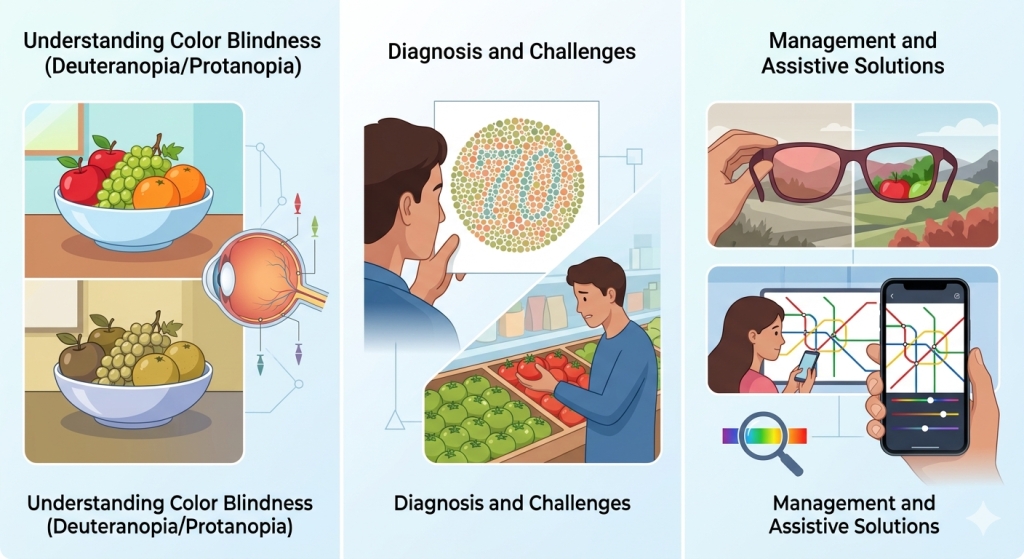
This widely used test consists of colored dot patterns containing numbers or shapes. People with color blindness may have difficulty identifying the hidden figures.
Color Arrangement Tests
These tests require individuals to arrange colored objects in a specific order, helping identify the type and severity of color vision deficiency.
Comprehensive Eye Examination
A complete eye exam can determine whether color vision problems are inherited or caused by an underlying eye condition.
Available Treatments for Color Blindness
Corrective Color Vision Glasses
Specialized glasses and contact lenses can help some people distinguish colors more effectively by filtering certain wavelengths of light. While these devices do not cure color blindness, they may improve color perception in specific situations.
Managing Underlying Conditions
If color blindness develops due to an eye disease or medication, treating the underlying cause may improve color vision or prevent further deterioration.
Adaptive Technology
Modern technology offers helpful tools for people with color blindness, including:
- Smartphone color-identification apps
- Accessibility settings on computers and mobile devices
- Color-blind-friendly software and design features
These tools help individuals navigate daily tasks more easily.
Occupational and Educational Support
Children and adults with color blindness can benefit from accommodations in school and the workplace. Alternative labeling systems, patterns, symbols, and text descriptions can reduce reliance on color-based information.
Living Successfully with Color Blindness
Although there is currently no permanent cure for inherited color blindness, most individuals adapt very well. Helpful strategies include:
- Learning the position of traffic lights
- Using labels instead of relying solely on colors
- Organizing clothing with assistance or labeling systems
- Utilizing technology to identify colors
- Informing teachers or employers about color vision challenges when necessary
With proper support and awareness, color blindness rarely prevents individuals from leading productive and fulfilling lives.
When to See an Eye Doctor
Consult an eye care professional if you:
- Notice sudden changes in color perception
- Experience worsening vision problems
- Have a family history of color blindness
- Suspect your child may have difficulty identifying colors
Early diagnosis can help identify underlying conditions and provide appropriate guidance.
Read: Common Eye Allergies and How to Manage Them
Conclusion
Color blindness is a common visual condition that affects the ability to distinguish certain colors. While most cases are inherited, some can result from eye diseases, aging, medications, or injuries. Although there is no cure for inherited color blindness, specialized glasses, adaptive technologies, and practical coping strategies can help individuals navigate daily life with greater confidence. Regular eye examinations remain essential for detecting color vision problems and maintaining overall eye health.