Reproductive Health in Women: Essential Tips for a Healthy Menstrual Cycle
Introduction: Reproductive Health in Women and Why It Matters
Reproductive health in women is a key aspect of overall wellbeing, influencing physical health, emotional balance, fertility, and quality of life. One of the most important indicators of reproductive health is the menstrual cycle. A healthy menstrual cycle often reflects that hormones are balanced and the reproductive system is functioning properly.
Understanding how your cycle works and how to care for it can help prevent complications such as irregular periods, severe cramps, hormonal imbalance, and fertility issues. In this guide, we will explore essential tips for maintaining reproductive health in women and achieving a healthy menstrual cycle naturally.
Understanding the Menstrual Cycle
The menstrual cycle is a monthly process where the body prepares for pregnancy. If pregnancy does not occur, the uterus sheds its lining, resulting in menstruation (period).
A typical cycle lasts between 21 to 35 days, with bleeding lasting 2 to 7 days. It is controlled by hormones such as estrogen and progesterone, which regulate ovulation and menstruation.
A healthy cycle is usually:
- Regular in timing
- Manageable in flow (not too heavy or too light)
- Mild to moderate in pain
- Free from extreme mood disruptions
When these patterns change, it may indicate an underlying reproductive health issue. Learn more
Importance of Reproductive Health in Women
Good reproductive health in women is essential for:
- Proper hormonal balance
- Healthy ovulation and fertility
- Reduced menstrual pain and discomfort
- Prevention of reproductive disorders like PCOS and endometriosis
- Emotional stability and mental wellbeing
Ignoring menstrual health can lead to long-term complications, including infertility and chronic hormonal disorders.
Essential Tips for a Healthy Menstrual Cycle
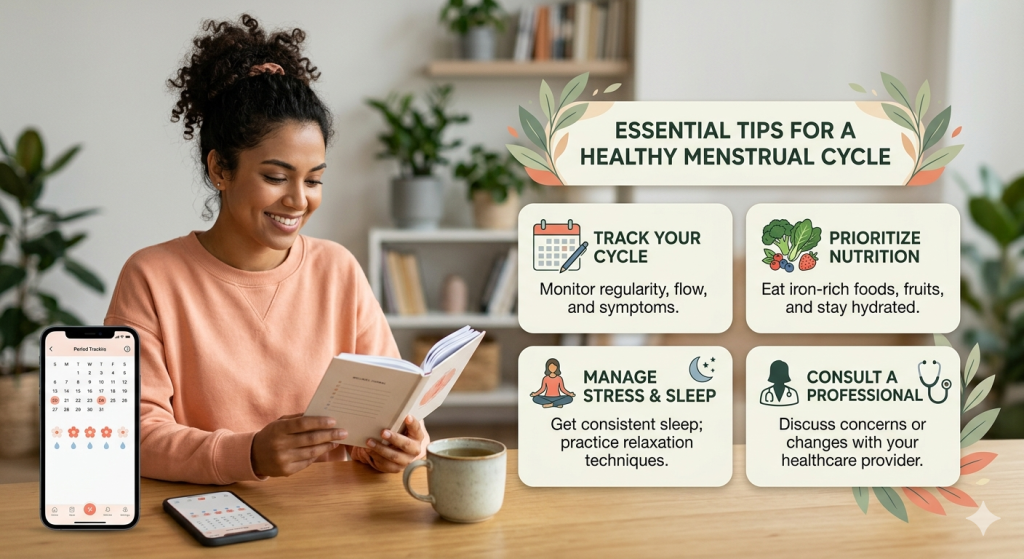
1. Maintain a Balanced Diet
What you eat plays a major role in reproductive health in women. A nutrient-rich diet helps regulate hormones and improve menstrual flow.
Include:
- Leafy greens (spinach, kale) for iron
- Fruits like bananas and berries for vitamins
- Whole grains for steady energy
- Healthy fats like avocados, nuts, and olive oil
- Protein sources like eggs, fish, and legumes
Avoid excessive:
- Processed foods
- Sugary snacks
- Caffeine and soft drinks
A poor diet can lead to irregular periods, fatigue, and worsened cramps.
2. Stay Hydrated
Water is essential for hormone regulation and reducing bloating during menstruation. Dehydration can worsen cramps and cause fatigue.
Aim for 6–8 glasses of water daily, and include herbal teas like ginger or chamomile to ease menstrual discomfort.
3. Exercise Regularly
Physical activity improves blood circulation, reduces stress, and helps regulate hormones.
Recommended exercises:
- Walking or jogging
- Yoga (especially poses for menstrual relief)
- Light strength training
- Stretching exercises
Exercise also helps reduce symptoms of PMS (Premenstrual Syndrome), such as mood swings and cramps.
4. Manage Stress Levels
Stress is one of the biggest disruptors of reproductive health in women. High stress levels can delay ovulation or even stop menstruation temporarily.
Stress management techniques include:
- Deep breathing exercises
- Meditation
- Journaling
- Adequate rest and sleep
- Engaging in hobbies
When stress is controlled, menstrual cycles often become more regular.
5. Get Enough Sleep
Sleep is crucial for hormone regulation. Poor sleep can disrupt estrogen and progesterone levels, leading to irregular cycles.
Aim for 7–9 hours of quality sleep every night. Maintain a consistent sleep schedule and avoid screens before bedtime.
6. Track Your Menstrual Cycle
Tracking your cycle helps you understand your body better and notice any irregularities early.
You can track:
- Cycle length
- Flow intensity
- Pain levels
- Mood changes
Apps or simple calendars can be used to monitor patterns. This is important for early detection of reproductive health issues.
7. Maintain a Healthy Weight
Both underweight and overweight conditions can affect hormonal balance. Fat cells produce estrogen, so too much or too little body fat can disrupt the menstrual cycle.
Maintaining a stable, healthy weight through balanced diet and exercise supports regular ovulation and menstruation.
8. Practice Good Intimate Hygiene
Proper hygiene helps prevent infections that can affect reproductive health in women.
Tips include:
- Changing sanitary pads every 4–6 hours
- Using clean, breathable underwear
- Avoiding harsh soaps in the vaginal area
- Keeping the genital area clean and dry
Poor hygiene can lead to infections that may affect fertility if untreated.
9. Limit Harmful Substances
Certain substances negatively affect menstrual health and hormones:
- Alcohol
- Smoking
- Excess caffeine
- Drug use
These can cause irregular cycles and increase the risk of reproductive disorders.
10. Regular Medical Checkups
Routine gynecological checkups are essential even if you feel healthy. They help detect early signs of conditions such as:
- PCOS (Polycystic Ovary Syndrome)
- Fibroids
- Endometriosis
- Hormonal imbalance
Early diagnosis leads to better treatment outcomes and improved reproductive health in women.
Common Signs of an Unhealthy Menstrual Cycle
You should consult a healthcare professional if you experience:
- Very irregular periods
- Excessively heavy bleeding
- Severe menstrual pain
- Missed periods (not due to pregnancy)
- Bleeding between cycles
- Extreme mood changes
These may signal underlying health issues that need attention.
Natural Ways to Support Hormonal Balance
In addition to lifestyle changes, some natural approaches may help:
- Ginger tea for cramps
- Turmeric for inflammation
- Omega-3 rich foods for hormone balance
- Herbal supplements (only with medical advice)
- Yoga and relaxation techniques
However, always consult a healthcare provider before using supplements.
Read: How Gut Health Impacts Mental Health and Mood
Conclusion
Reproductive health in women is closely tied to the menstrual cycle, making it an important indicator of overall wellbeing. A healthy menstrual cycle is not just about monthly bleeding, it reflects balanced hormones, good nutrition, proper stress management, and a healthy lifestyle.
By adopting simple habits like eating well, exercising, managing stress, and tracking your cycle, you can significantly improve your reproductive health and reduce menstrual problems.
Taking care of your reproductive health today ensures better fertility, stronger wellbeing, and a healthier future.