Pulmonary Rehabilitation: Benefits for Lung Disease Patients
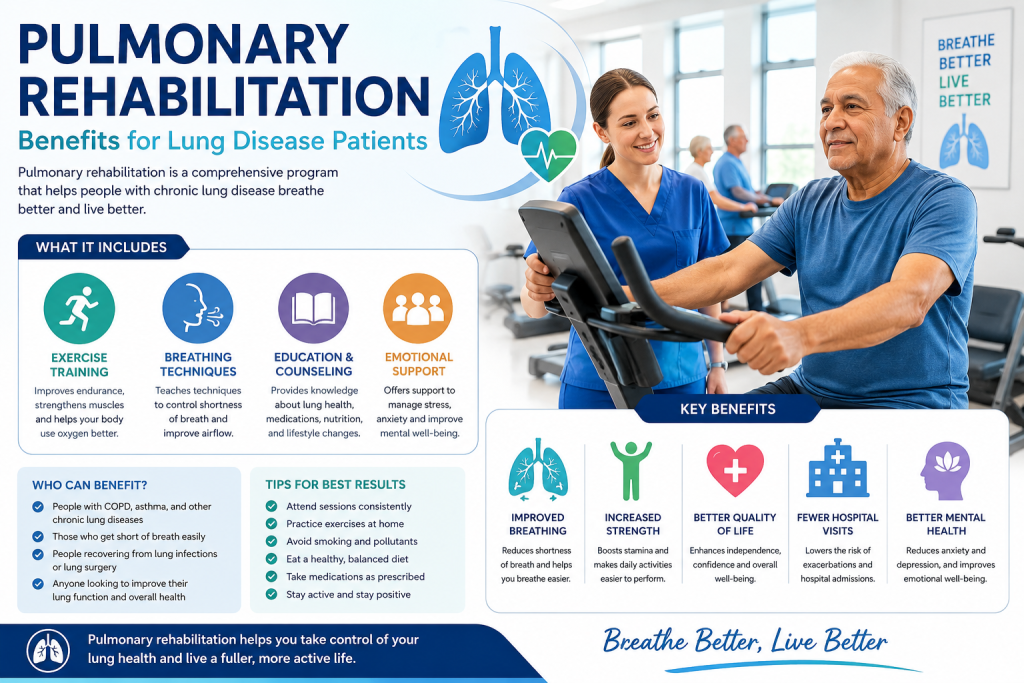
Living with a chronic lung disease can make everyday activities feel exhausting. Simple tasks like walking, climbing stairs, or even getting dressed may leave patients short of breath. Fortunately, pulmonary rehabilitation offers a structured and effective way to improve breathing, increase physical strength, and enhance quality of life for people with respiratory conditions.
Pulmonary rehabilitation is more than just exercise. It is a comprehensive program designed to help patients manage chronic lung diseases through education, physical activity, breathing techniques, nutritional guidance, and emotional support.
What Is Pulmonary Rehabilitation?
Pulmonary rehabilitation is a medically supervised program created for people with chronic respiratory diseases. The goal is to improve lung function, reduce symptoms, and help patients regain independence in their daily lives.
These programs are usually managed by a team of healthcare professionals, including doctors, respiratory therapists, physical therapists, nurses, and nutritionists. Learn more
Pulmonary rehabilitation is commonly recommended for people with conditions such as:
- Chronic Obstructive Pulmonary Disease (COPD)
- Asthma
- Pulmonary fibrosis
- Lung cancer
- Bronchiectasis
- Pulmonary hypertension
- Post-COVID lung complications
How Pulmonary Rehabilitation Works
A pulmonary rehabilitation program is tailored to each patient’s condition and physical ability. The treatment plan often includes:
Exercise Training
Exercise is one of the most important parts of pulmonary rehabilitation. Patients participate in safe and supervised physical activities that strengthen the muscles and improve endurance.
Common exercises include:
- Walking on a treadmill
- Cycling on stationary bikes
- Light strength training
- Stretching and flexibility exercises
Regular exercise helps the body use oxygen more efficiently, making breathing easier over time.
Breathing Techniques
Patients are taught breathing strategies that help control shortness of breath and improve airflow.
Popular techniques include:
- Pursed-lip breathing
- Diaphragmatic breathing
- Controlled coughing methods
These methods can reduce breathing difficulties during physical activity and daily tasks.
Education and Lifestyle Counseling
Pulmonary rehabilitation also teaches patients how to manage their condition effectively. Topics may include:
- Proper use of inhalers and medications
- Smoking cessation support
- Recognizing symptom flare-ups
- Managing fatigue and stress
- Healthy eating habits
Education empowers patients to take better control of their health.
Emotional and Psychological Support
Living with chronic lung disease can lead to anxiety, depression, and social isolation. Pulmonary rehabilitation programs often provide counseling or support groups to help patients cope emotionally.
Mental wellbeing plays a major role in overall recovery and quality of life.
Benefits of Pulmonary Rehabilitation
Pulmonary rehabilitation provides several physical and emotional benefits for lung disease patients.
Improved Breathing
One of the biggest advantages is reduced shortness of breath. Patients learn techniques that improve airflow and help them breathe more comfortably.
Increased Physical Strength
Exercise training improves muscle function and stamina, making it easier to perform daily activities without becoming exhausted.
Better Quality of Life
Patients often experience greater independence, improved confidence, and a more active lifestyle after completing rehabilitation programs.
Reduced Hospital Visits
Pulmonary rehabilitation can lower the risk of severe flare-ups and complications, reducing emergency room visits and hospital admissions.
Enhanced Mental Health
Supportive counseling and increased physical activity can reduce anxiety and depression associated with chronic lung disease.
Who Should Consider Pulmonary Rehabilitation?
Pulmonary rehabilitation is suitable for many people with chronic respiratory conditions, especially those who:
- Experience frequent shortness of breath
- Have difficulty performing everyday tasks
- Recently recovered from severe lung infections
- Need support after lung surgery
- Want to improve physical endurance and lung function
A healthcare provider can determine whether pulmonary rehabilitation is appropriate based on the patient’s condition and overall health.
Tips for Getting the Best Results
To gain maximum benefits from pulmonary rehabilitation, patients should:
- Attend sessions consistently
- Follow exercise recommendations at home
- Avoid smoking and secondhand smoke
- Maintain a healthy diet
- Stay physically active after completing the program
- Take medications exactly as prescribed
Long-term lifestyle changes are essential for maintaining progress.
Read: Tech Neck: Causes, Symptoms, and How to Prevent It
Conclusion
Pulmonary rehabilitation is a powerful tool for improving the lives of people living with chronic lung diseases. Through supervised exercise, breathing techniques, education, and emotional support, patients can regain strength, breathe more easily, and enjoy a better quality of life.
Although pulmonary rehabilitation does not cure lung disease, it helps patients manage symptoms more effectively and stay active for longer. Early participation in a rehabilitation program can make a significant difference in both physical and emotional wellbeing.