The Health Effects of Eating Late at Night
Eating late at night has become common for many people because of busy schedules, stress, and irregular sleeping habits. Some people skip meals during the day and eat heavily before bed, while others snack late while watching television or working. Although occasional late-night eating may seem harmless, making it a regular habit can have negative effects on overall health over time.
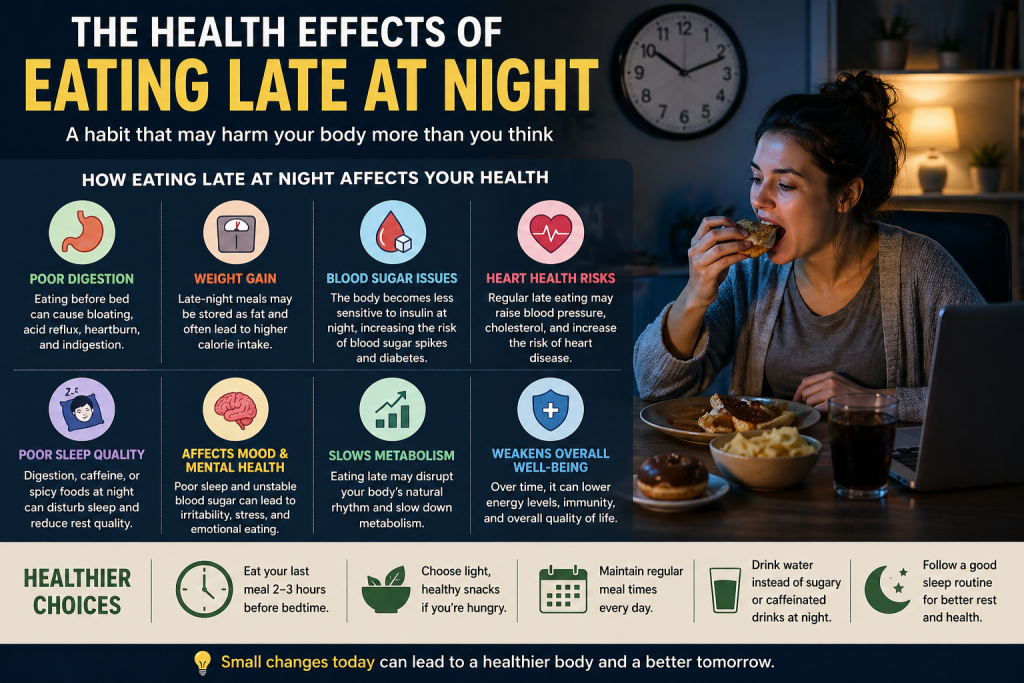
One of the most noticeable effects of eating late at night is poor digestion. During sleep, the body naturally slows down many processes, including digestion. Consuming a large meal close to bedtime can make the stomach work harder when it should be resting. This may lead to discomfort such as bloating, acid reflux, heartburn, and indigestion. People who regularly eat late may notice disturbed sleep because the body is still processing food. Learn more
Late-night eating can also contribute to weight gain. The body’s metabolism follows a natural internal clock that affects how food is processed throughout the day. Research suggests that calories consumed late in the evening may be more likely to be stored as fat compared to calories eaten earlier. People who eat late often choose high-calorie snacks such as chips, sweets, or fast food, which can further increase daily calorie intake and make weight management difficult.
Blood sugar regulation may also be affected by nighttime eating. The body becomes less sensitive to insulin later in the evening, meaning it may struggle to control blood sugar efficiently after a late meal. Over time, frequent late-night eating may increase the risk of insulin resistance, which is linked to type 2 diabetes. Individuals who already have blood sugar problems may experience even greater health effects from this habit.
Another concern is the effect on heart health. Eating heavy meals late at night may raise blood pressure and cholesterol levels when done consistently. Foods that are high in salt, sugar, or unhealthy fats can place extra strain on the cardiovascular system. Some studies suggest that people who regularly eat late may have a higher risk of developing heart disease compared to those who eat earlier in the day.
Sleep quality can also suffer because of nighttime meals. The body needs to prepare for rest by lowering its activity level, but digestion can interfere with this process. Caffeine, sugar, and spicy foods consumed late can stimulate the body and make it harder to fall asleep. Poor sleep caused by late eating can then affect energy levels, concentration, and mood the next day, creating a cycle of unhealthy habits.
Mental health may also be influenced by irregular eating patterns. Poor sleep combined with unstable blood sugar can lead to irritability, fatigue, and increased stress. Some people may develop emotional eating habits at night, using food to cope with loneliness or anxiety. Over time, this can affect both physical and emotional well-being.
Avoiding heavy meals at least two to three hours before bedtime can reduce these health risks. If hunger occurs at night, choosing a light snack such as yogurt, fruit, or nuts may be a healthier option. Establishing regular meal times during the day can also help reduce the urge to eat late and support better long-term health.
Read: How Processed Foods Affect Long-Term Health
Conclusion
Eating late at night on a regular basis can affect digestion, weight, blood sugar, heart health, sleep, and mental well-being. While occasional nighttime eating may not be harmful, making it a daily habit can gradually lead to health problems. Choosing earlier meals and healthier evening snacks can help protect the body and improve overall wellness.