The Psychology of Spending: How to Break Impulse Buying Habits
Impulse buying is something almost everyone experiences. You may walk into a store for one item and leave with five, or open an online shopping app and suddenly purchase something you never planned to buy. While occasional spontaneous purchases may seem harmless, repeated impulse buying can quietly damage your finances and create long-term stress.
Understanding the psychology of spending can help you recognize why impulse buying happens and how to regain control of your money. By learning the emotional and mental triggers behind your spending habits, you can make better financial decisions and build healthier relationships with money.
What Is Impulse Buying?
Impulse buying is the act of purchasing something without prior planning. It usually happens suddenly and is often driven by emotions rather than actual need. Learn more
Examples include:
- Buying clothes because they are on sale
- Ordering gadgets after seeing social media ads
- Adding extra items at checkout
- Shopping when feeling bored or stressed
Impulse purchases often provide temporary satisfaction, but they can later lead to regret.
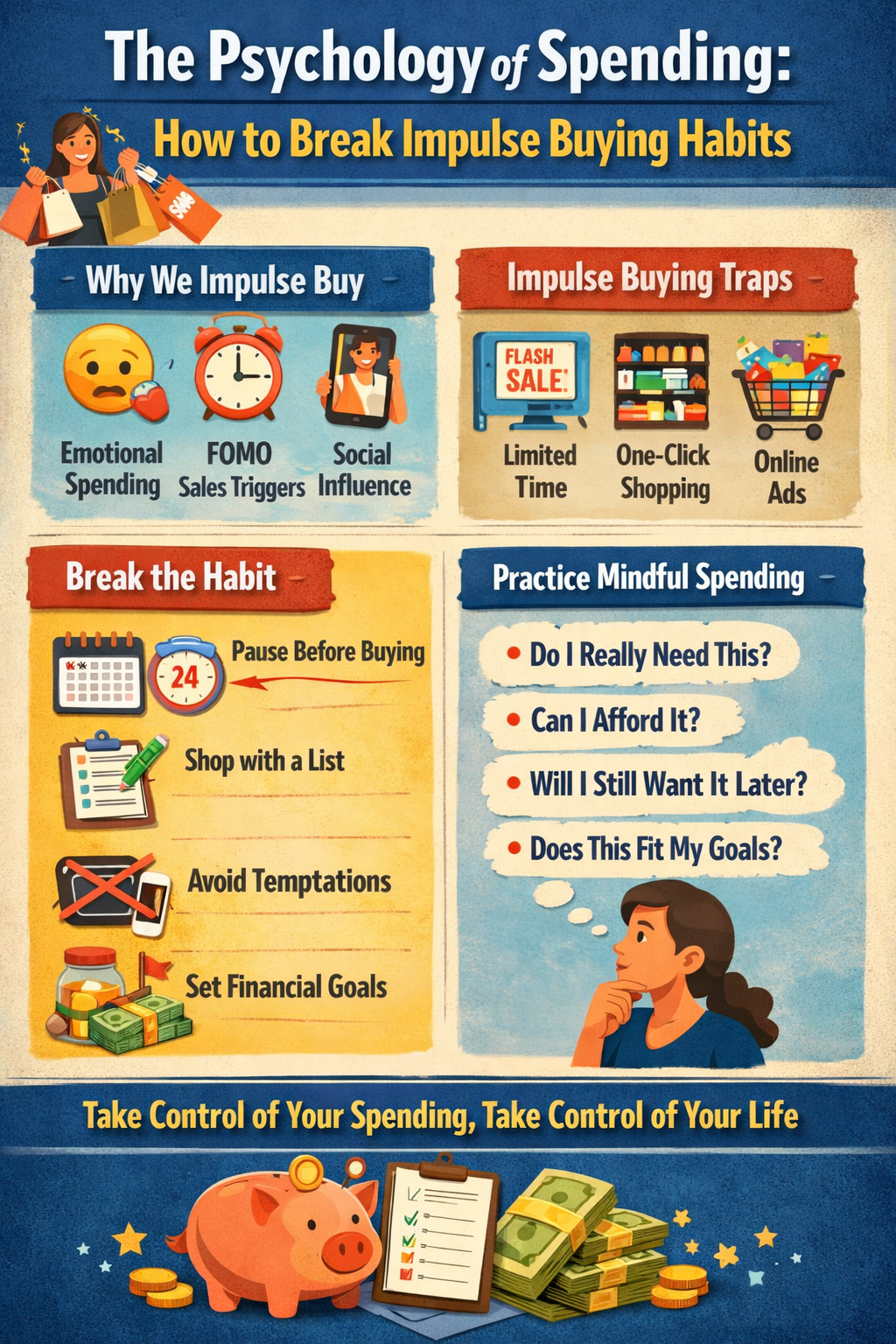
Why People Buy Impulsively
There are several psychological reasons behind unplanned spending.
Emotional Spending
Many people shop to cope with emotions such as:
- Stress
- Sadness
- Loneliness
- Anxiety
- Boredom
Shopping can create a short burst of happiness because the brain releases dopamine, the “feel-good” chemical. This temporary reward can make spending feel comforting.
The Fear of Missing Out (FOMO)
Limited-time offers and flash sales trigger urgency. Messages like:
- “Only 2 left!”
- “Sale ends tonight!”
- “Exclusive deal”
make buyers feel they may miss an opportunity if they do not act quickly.
Social Influence
Social media has increased spending triggers. Seeing influencers, friends, or celebrities showcase products can create a desire to keep up.
This often leads to buying items not because they are needed, but because they appear desirable.
Instant Gratification
Humans naturally prefer immediate pleasure over long-term benefits. Buying something now feels rewarding, while saving money for the future feels less exciting.
This is why many people struggle with delayed financial goals.
How Stores Encourage Impulse Buying
Businesses understand consumer psychology and use it to encourage spending.
Strategic Product Placement
Stores place tempting items:
- Near checkout counters
- At eye level
- In high-traffic areas
These placements increase the chance of unplanned purchases.
Online Shopping Triggers
Online stores use techniques such as:
- One-click buying
- Personalized recommendations
- Countdown timers
- Free shipping thresholds
These features make it easier to spend without thinking.
Discounts and Sales
Even when a product is unnecessary, a discount can make it feel like a smart decision.
For example:
Buying a $100 item for $60 may feel like saving money, even if spending $60 was unnecessary.
Signs You May Have an Impulse Buying Problem
You may be struggling with impulse spending if you:
- Buy things you rarely use
- Feel guilty after shopping
- Hide purchases from others
- Spend when emotional
- Have trouble sticking to a budget
- Frequently exceed your monthly spending plan
Recognizing these patterns is the first step toward change.
How to Break Impulse Buying Habits
The good news is that impulse buying can be controlled with intentional strategies.
Create a Waiting Rule
Before buying anything non-essential, wait:
- 24 hours for small purchases
- 7 days for expensive items
This pause gives your emotions time to settle and helps you decide logically.
Ask yourself:
Do I really need this?
Identify Your Spending Triggers
Track what causes your spending urges.
Common triggers include:
- Stress after work
- Social media browsing
- Payday excitement
- Feeling bored at home
Once you know your triggers, you can avoid or manage them.
Shop With a List
Whether online or in-store, always shop with a plan.
A shopping list helps you:
- Stay focused
- Avoid distractions
- Reduce overspending
If it is not on the list, do not buy it.
Remove Temptation
Reduce exposure to spending triggers by:
- Unsubscribing from marketing emails
- Deleting shopping apps
- Unfollowing shopping influencers
- Removing saved credit card details
Making purchases less convenient can reduce impulsive decisions.
Use Cash Instead of Cards
Using physical cash can make spending feel more real.
Studies show people often spend less when using cash because they physically see money leaving their hands.
Set Financial Goals
Clear financial goals can reduce impulse spending.
Examples include:
- Saving for a car
- Paying off debt
- Building an emergency fund
- Investing for retirement
When your goals are visible, random purchases become easier to resist.
Practice Mindful Spending
Before buying, ask:
- Do I need this?
- Will I still want it next week?
- Can I afford it comfortably?
- Does this align with my goals?
Mindful spending helps transform emotional decisions into intentional ones.
The Emotional Side of Spending
Money is often deeply emotional. For many people, spending is not just about buying products, it can be connected to identity, comfort, or self-worth.
Breaking impulse habits may require addressing emotional needs in healthier ways, such as:
- Exercise
- Journaling
- Talking to a friend
- Reading
- Meditation
- Creative hobbies
Replacing emotional shopping with healthier coping methods can create lasting change.
Benefits of Controlling Impulse Buying
When you reduce impulse spending, you can enjoy:
- More savings
- Less financial stress
- Better budgeting
- Increased confidence
- Faster debt repayment
- Greater financial freedom
Small spending changes can create major long-term results.
Final Thoughts
Understanding the psychology of spending can help you recognize why impulse buying happens and how to stop it. Most impulse purchases are driven by emotion, marketing, and the desire for instant gratification rather than genuine need.
By identifying your triggers, slowing down purchases, and focusing on your financial goals, you can break unhealthy spending habits and take control of your money.
The goal is not to never enjoy spending, it is to make sure your money supports the life you truly want.