Top 10 Warning Signs of Low Testosterone in Men
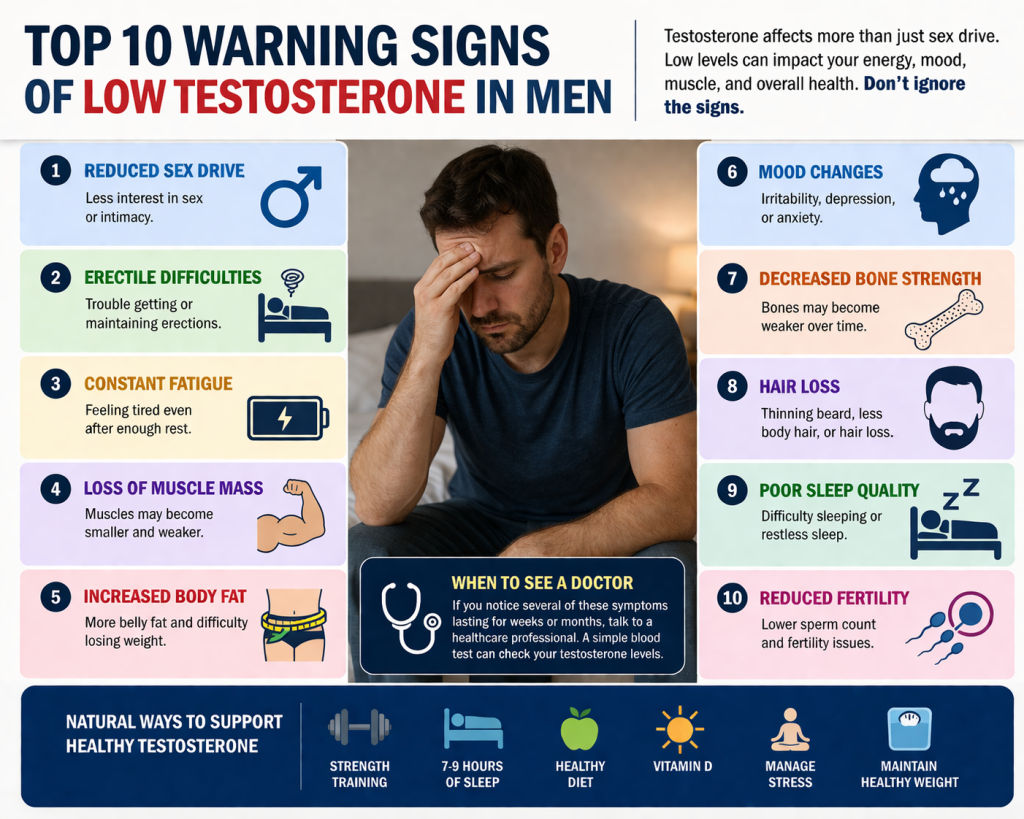
Low testosterone in men can affect far more than sexual health. Testosterone is the primary male hormone responsible for muscle mass, bone strength, mood regulation, energy levels, and reproductive function. As men age, testosterone naturally declines, but when levels drop too low, the symptoms can significantly impact daily life. Recognizing the warning signs of low testosterone in men early can help prevent long-term health complications and improve overall well-being.
Below are the top 10 warning signs of low testosterone in men that should never be ignored.
1. Reduced Sex Drive
One of the earliest signs of low testosterone is a noticeable decline in sexual desire. Testosterone plays a major role in libido, and when levels fall, men may experience:
- Less interest in sex
- Fewer sexual thoughts
- Reduced spontaneous arousal
- Lower overall intimacy desire
A persistent drop in libido may indicate hormonal imbalance. Learn more
2. Erectile Difficulties
Although testosterone does not directly cause erections, it supports the body’s ability to respond sexually. Men with low testosterone may experience:
- Trouble achieving erections
- Difficulty maintaining erections
- Less firm erections
- Reduced morning erections
This symptom can sometimes overlap with other health conditions.
3. Constant Fatigue
Feeling tired despite adequate rest is another common symptom. Men with low testosterone often report:
- Daytime sleepiness
- Lack of stamina
- Reduced motivation
- Mental exhaustion
Persistent fatigue can affect work performance and daily responsibilities.
4. Loss of Muscle Mass
Testosterone helps build and maintain muscle tissue. When levels drop, men may notice:
- Smaller muscles
- Reduced strength
- Slower recovery after exercise
- Increased body weakness
Even with exercise, building muscle can become more difficult.
5. Increased Body Fat
Low testosterone can lead to changes in body composition, including:
- Belly fat gain
- Higher body fat percentage
- Reduced lean muscle
- Difficulty losing weight
Some men may also develop enlarged breast tissue due to hormonal imbalance.
6. Mood Changes
Hormones strongly influence mental health. Low testosterone may contribute to:
- Irritability
- Depression
- Anxiety
- Poor concentration
- Loss of confidence
Men may not realize these emotional changes are hormone-related.
7. Decreased Bone Strength
Testosterone supports healthy bones. Low levels may gradually weaken bone density, increasing the risk of:
- Fractures
- Joint discomfort
- Osteoporosis
- Poor posture
Bone loss can occur silently for years.
8. Hair Loss
Testosterone affects facial and body hair growth. Men with low testosterone may notice:
- Thinning beard
- Reduced chest hair
- Slower body hair growth
- Hair loss on other areas
Hair changes can be subtle at first.
9. Poor Sleep Quality
Sleep problems can both cause and result from low testosterone. Symptoms may include:
- Difficulty falling asleep
- Frequent waking
- Restless sleep
- Sleep apnea worsening
Poor sleep can further reduce hormone production.
10. Reduced Fertility
Testosterone plays a role in sperm production. Men with low levels may experience:
- Lower sperm count
- Reduced semen volume
- Difficulty conceiving
- Lower reproductive health
Fertility issues can sometimes be the first clue.
What Causes Low Testosterone in Men?
Several factors can contribute to declining testosterone levels, including:
- Aging
- Obesity
- Diabetes
- Chronic stress
- Poor sleep
- Certain medications
- Testicular injury
- Hormonal disorders
Identifying the cause helps guide treatment.
How Low Testosterone Is Diagnosed
Doctors usually diagnose low testosterone through:
- Physical examination
- Symptom review
- Blood testing
- Medical history analysis
Testosterone levels are usually highest in the morning, so blood tests are often done early in the day.
Treatment Options for Low Testosterone
Treatment depends on the severity of symptoms and the underlying cause.
Common treatments include:
- Testosterone replacement therapy
- Weight loss
- Better sleep habits
- Exercise
- Stress management
- Dietary improvements
- Managing chronic illnesses
A doctor can recommend the safest option.
Natural Ways to Support Healthy Testosterone
Some lifestyle habits may naturally support testosterone levels.
Helpful strategies:
- Strength training regularly
- Maintaining healthy weight
- Eating protein-rich foods
- Getting enough vitamin D
- Reducing sugar intake
- Sleeping 7–9 hours nightly
- Managing stress
Healthy habits can improve hormone balance over time.
When to See a Doctor
Men should seek medical advice if they experience:
- Persistent fatigue
- Low sex drive
- Mood changes
- Muscle loss
- Weight gain
- Fertility concerns
Early treatment can prevent complications.
Read: Common Causes of Erectile Dysfunction and Treatment Options
Final Thoughts
Recognizing the top 10 warning signs of low testosterone in men can help men take action before symptoms worsen. Low testosterone can affect physical health, emotional well-being, and quality of life, but proper diagnosis and treatment can often restore balance. Men who notice several of these symptoms should speak with a healthcare professional to determine whether low testosterone may be the cause.