Why Flossing Is Essential for Healthy Teeth and Gums
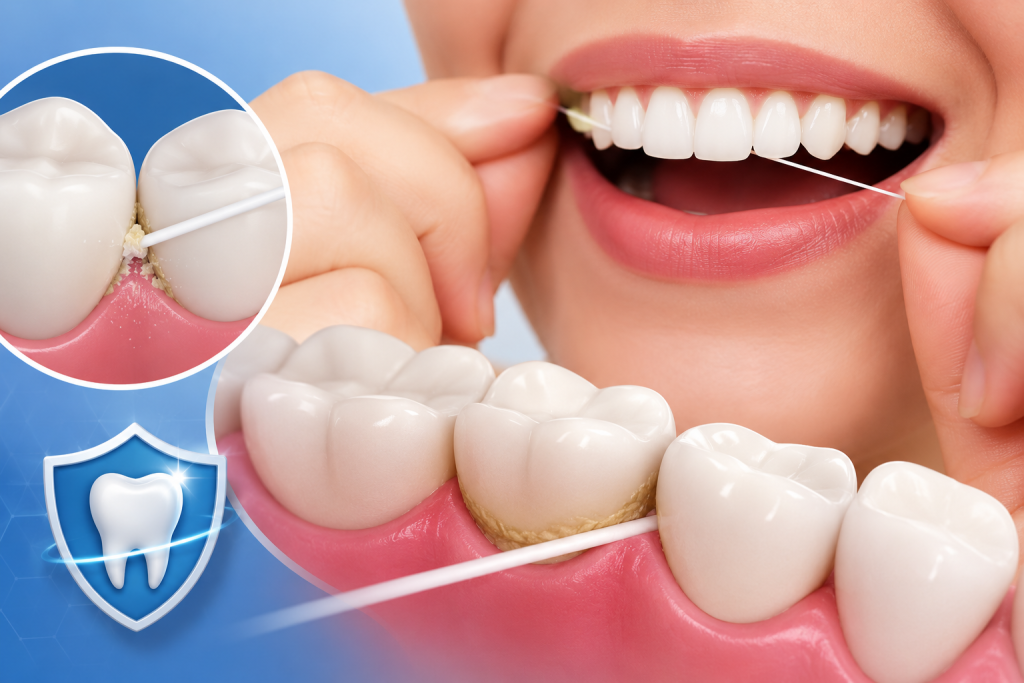
Maintaining good oral hygiene goes beyond brushing your teeth twice a day. While brushing helps remove plaque and food particles from the surfaces of your teeth, it cannot effectively clean the tight spaces between teeth and along the gumline. This is where flossing becomes essential. Flossing is a simple yet powerful habit that plays a major role in protecting your teeth and gums from disease and decay.
What Is Flossing?
Flossing is the process of using a thin strand of dental floss to remove food particles, plaque, and bacteria from between the teeth and under the gumline. These areas are difficult for a toothbrush to reach, making flossing an important part of a complete oral care routine.
Dental professionals recommend flossing at least once a day to maintain healthy teeth and gums. Learn more
How Flossing Protects Your Teeth
Removes Plaque Buildup
Plaque is a sticky film of bacteria that constantly forms on teeth. If plaque is not removed, it hardens into tartar, which can only be removed by a dental professional. Flossing helps eliminate plaque from hidden areas before it causes damage.
Prevents Tooth Decay
Food particles trapped between teeth create an environment where bacteria can thrive. These bacteria produce acids that weaken tooth enamel and lead to cavities. Regular flossing reduces the risk of tooth decay by keeping these spaces clean.
Reduces Bad Breath
Persistent bad breath is often caused by food debris and bacteria trapped between teeth. Flossing removes these particles and helps keep your mouth fresh and clean.
The Importance of Flossing for Gum Health
Prevents Gum Disease
One of the biggest benefits of flossing is its ability to prevent gum disease. When plaque accumulates near the gums, it can cause inflammation known as gingivitis. Symptoms include redness, swelling, and bleeding gums.
Without proper treatment, gingivitis can progress into periodontitis, a more serious gum disease that can damage the gums and supporting bone structure of the teeth.
Reduces Gum Inflammation
Flossing helps remove bacteria that irritate the gums. This reduces swelling and keeps gum tissues healthy and firm.
Helps Prevent Tooth Loss
Healthy gums are essential for supporting your teeth. Gum disease is one of the leading causes of tooth loss in adults. By flossing daily, you can lower your risk of gum infections and maintain stronger teeth for years to come.
Common Mistakes People Make When Flossing
Many people floss incorrectly or skip it altogether. Some common mistakes include:
- Flossing too aggressively and hurting the gums
- Using the same section of floss for the entire mouth
- Skipping the back teeth
- Flossing inconsistently
Proper flossing should be gentle and thorough to avoid damaging the gums.
Tips for Effective Flossing
To get the best results from flossing:
- Use about 18 inches of dental floss
- Gently slide the floss between your teeth
- Curve the floss around each tooth in a C-shape
- Move the floss up and down carefully
- Use a clean section of floss for each tooth
If traditional floss is difficult to use, floss picks, water flossers, or interdental brushes can also be effective alternatives.
The Best Time to Floss
You can floss either before or after brushing your teeth. The most important thing is consistency. Flossing before bedtime is especially helpful because it removes food particles and plaque that build up throughout the day.
Read: Tips for Preventing Tooth Decay Naturally
Final Thoughts
Flossing may seem like a small step in your oral care routine, but its impact on dental health is significant. It helps prevent cavities, gum disease, bad breath, and even tooth loss. Combined with regular brushing, healthy eating, and dental checkups, flossing keeps your teeth and gums healthy and your smile bright.
Making flossing a daily habit is one of the easiest and most effective ways to improve your oral health and protect your smile for the future.