Understanding Dandruff: Causes, Treatment, and Prevention
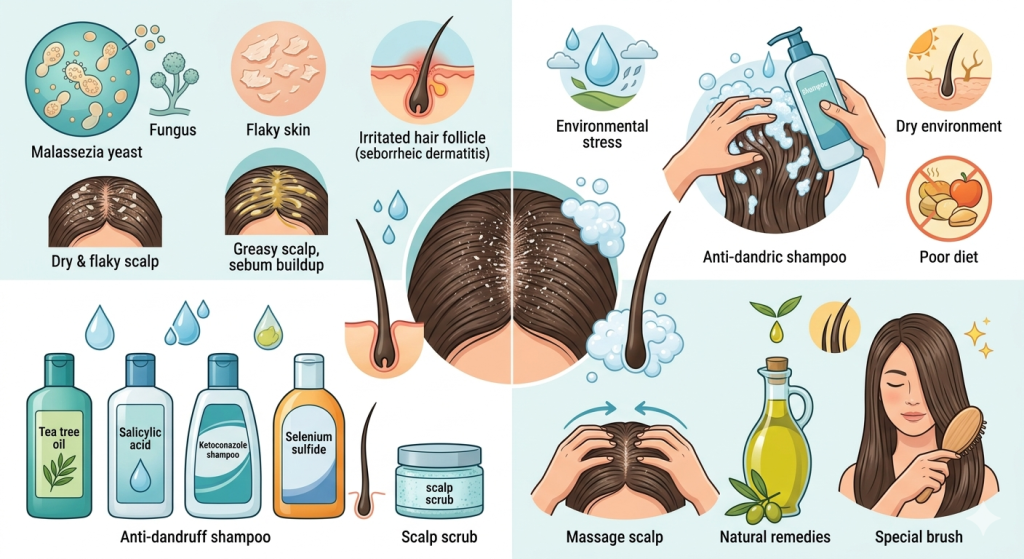
Dandruff is one of the most common scalp conditions, affecting people of all ages. It is characterized by the shedding of small white or yellowish flakes of skin from the scalp and is often accompanied by itching and irritation. While dandruff is not contagious or usually serious, it can be frustrating and sometimes affect self-confidence.
Understanding what causes dandruff and how to manage it effectively can help you maintain a healthy scalp and improve the appearance of your hair.
What Is Dandruff?
Dandruff occurs when the skin on the scalp sheds more rapidly than normal. While skin cells naturally renew themselves, dandruff causes excessive flaking that becomes noticeable on the hair and shoulders.
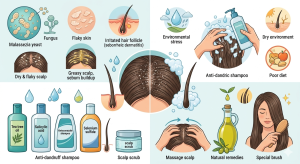
In many cases, dandruff is linked to scalp irritation, excess oil production, or the overgrowth of a naturally occurring yeast called Malassezia. Although dandruff can be persistent, it is often manageable with proper scalp care and treatment. Learn more
Common Symptoms of Dandruff
Signs and symptoms of dandruff may include:
- White or yellow flakes on the scalp
- Flakes visible on hair, clothing, or shoulders
- Itchy scalp
- Scalp irritation or redness
- Dryness or oiliness of the scalp
- Increased flaking during cold or dry weather
Symptoms may vary in severity depending on the underlying cause.
Common Causes of Dandruff
1. Oily Scalp and Seborrheic Dermatitis
One of the most common causes of dandruff is seborrheic dermatitis, a condition that causes oily, irritated skin.
Symptoms may include:
- Greasy scalp flakes
- Red, inflamed skin
- Persistent itching
Seborrheic dermatitis can also affect areas such as the eyebrows, ears, and sides of the nose.
2. Dry Scalp
A dry scalp can lead to small, white flakes and itching. Dry scalp-related dandruff is often more noticeable during colder months when indoor heating reduces air moisture.
3. Overgrowth of Malassezia Yeast
Malassezia is a fungus naturally present on most scalps. In some individuals, excessive growth can irritate the scalp and accelerate skin cell turnover, resulting in dandruff.
4. Infrequent Hair Washing
Not washing your hair regularly can allow oils, dead skin cells, and dirt to accumulate on the scalp, increasing the likelihood of dandruff.
5. Sensitivity to Hair Care Products
Certain shampoos, styling products, hair dyes, or fragrances may cause scalp irritation and flaking.
This condition is sometimes referred to as contact dermatitis.
6. Stress
Stress can weaken the body’s natural defenses and worsen many skin conditions, including dandruff. People often notice increased flaking during periods of emotional or physical stress.
7. Certain Medical Conditions
Some health conditions may increase the risk of dandruff, including:
- Parkinson’s disease
- Weakened immune system disorders
- Eczema
- Psoriasis
These conditions can contribute to scalp inflammation and excessive flaking.
Risk Factors for Dandruff
Several factors can increase your chances of developing dandruff:
- Oily skin and scalp
- Hormonal changes
- Stress
- Cold weather
- Poor scalp hygiene
- Certain neurological conditions
- Sensitivity to hair products
Understanding your risk factors can help you take preventive measures.
Effective Treatments for Dandruff
Anti-Dandruff Shampoos
Specialized shampoos are often the first line of treatment.
Common active ingredients include:
- Zinc pyrithione
- Selenium sulfide
- Ketoconazole
- Salicylic acid
- Coal tar
These ingredients help reduce yeast growth, control oil production, and remove excess skin cells.
Regular Hair Washing
Washing your hair consistently helps remove excess oil, dead skin cells, and product buildup from the scalp.
The ideal frequency depends on your hair type and scalp condition.
Medicated Treatments
For severe or persistent dandruff, a healthcare provider or dermatologist may recommend stronger prescription treatments.
These may include:
- Prescription antifungal shampoos
- Topical corticosteroids
- Specialized scalp treatments
Managing Scalp Irritation
Switching to gentle, fragrance-free hair products may help if sensitivity is contributing to scalp problems.
Natural Remedies That May Help
While medical treatments are often most effective, some natural approaches may support scalp health.
Tea Tree Oil
Tea tree oil has natural antifungal properties that may help reduce dandruff-causing microorganisms.
Always dilute essential oils before applying them to the scalp.
Aloe Vera
Aloe vera may soothe scalp irritation and provide moisturizing benefits.
Coconut Oil
Coconut oil may help reduce dryness and improve scalp hydration.
Apple Cider Vinegar
Some people use diluted apple cider vinegar as a scalp rinse, although scientific evidence supporting its effectiveness is limited.
How to Prevent Dandruff
Maintain Good Scalp Hygiene
Keeping your scalp clean helps prevent the buildup of oils and dead skin cells.
Manage Stress
Reducing stress through exercise, meditation, and adequate rest may help minimize flare-ups.
Eat a Balanced Diet
Nutrients that support scalp health include:
- Zinc
- B vitamins
- Omega-3 fatty acids
- Vitamin D
- Protein
A healthy diet supports both scalp and hair health.
Avoid Harsh Hair Products
Products containing excessive alcohol, fragrances, or harsh chemicals can irritate the scalp and worsen dandruff.
Protect Your Scalp
Exposure to extreme weather conditions can affect scalp health. Wearing appropriate head protection can help maintain moisture balance.
When to See a Doctor
Consult a healthcare professional if:
- Dandruff does not improve with over-the-counter treatments
- The scalp becomes very red or swollen
- Severe itching interferes with daily life
- Hair loss accompanies dandruff
- You suspect a skin condition such as psoriasis or eczema
A proper diagnosis can help identify the underlying cause and guide effective treatment.
The Connection Between Scalp Health and Hair Health
A healthy scalp provides the foundation for healthy hair growth. Persistent inflammation, irritation, and excessive flaking can create an unhealthy environment for hair follicles.
By controlling dandruff and maintaining scalp health, you can help support stronger, healthier-looking hair and reduce discomfort.
Read: Understanding Tooth Sensitivity: Causes and Treatments
Conclusion
Dandruff is a common scalp condition that causes flaking, itching, and irritation. It can result from factors such as oily skin, dry scalp, yeast overgrowth, stress, or sensitivity to hair care products. Fortunately, most cases can be effectively managed with proper scalp hygiene, anti-dandruff shampoos, healthy lifestyle habits, and targeted treatments when necessary.
Understanding the causes of dandruff and taking preventive measures can help you maintain a healthier scalp, reduce flakes, and enjoy improved hair health and confidence.