How Social Connections Influence Mental and Physical Health
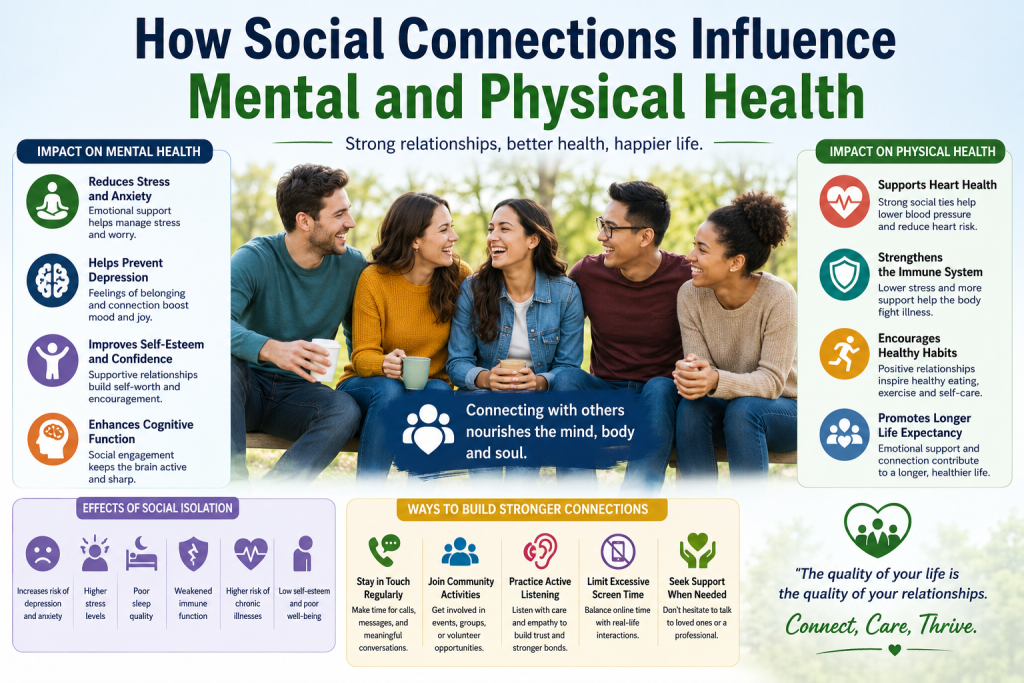
In today’s fast-paced digital world, many people are more connected online than ever before, yet feelings of loneliness and isolation continue to rise. Human beings are naturally social creatures, and meaningful relationships play a major role in maintaining both mental and physical health. Whether through family, friendships, coworkers, or community groups, strong social connections can positively influence overall well-being and quality of life.
Understanding Social Connections
Social connections refer to the relationships and interactions people have with others. These relationships may include close family bonds, friendships, romantic relationships, workplace relationships, or participation in social and community activities. Healthy social interaction provides emotional support, companionship, encouragement, and a sense of belonging.
People with strong social networks often feel more valued, supported, and emotionally secure, which can significantly improve both mental and physical wellness. Learn more
The Impact of Social Connections on Mental Health
1. Reduces Stress and Anxiety
Talking to trusted friends or family members during difficult times can help reduce emotional stress. Sharing worries and feelings often provides comfort and emotional relief. Supportive relationships can lower anxiety levels and help individuals cope better with life’s challenges.
2. Helps Prevent Depression
Loneliness and social isolation are strongly linked to depression. People who maintain healthy social relationships are more likely to experience positive emotions and emotional stability. Feeling connected to others creates a sense of purpose and belonging that supports mental well-being.
3. Improves Self-Esteem and Confidence
Positive social interactions encourage personal growth and self-worth. Being surrounded by supportive people can boost confidence, motivation, and emotional resilience. Encouragement from others often helps individuals pursue goals and overcome setbacks.
4. Enhances Cognitive Function
Social engagement keeps the brain active and stimulated. Conversations, shared activities, and emotional interactions can improve memory, concentration, and problem-solving abilities. Studies suggest that maintaining strong social relationships may lower the risk of cognitive decline in older adults.
The Impact of Social Connections on Physical Health
1. Supports Heart Health
Strong social support has been linked to lower blood pressure and reduced risk of heart disease. People with healthy relationships tend to manage stress better, which positively affects cardiovascular health.
2. Strengthens the Immune System
Chronic loneliness and emotional stress can weaken the immune system. On the other hand, supportive relationships help reduce stress hormones, allowing the body to function more effectively and fight illnesses more efficiently.
3. Encourages Healthy Habits
Friends, family members, and social groups often influence lifestyle choices. Positive social circles can encourage healthy eating, regular exercise, proper sleep, and routine medical checkups. Having accountability partners also increases motivation to maintain healthy habits.
4. Promotes Longer Life Expectancy
Research has shown that individuals with strong social ties tend to live longer than those who are socially isolated. Emotional support and companionship contribute to lower stress levels and healthier living overall.
Effects of Social Isolation
Social isolation can negatively affect both mental and physical health. Common effects include:
- Increased risk of depression and anxiety
- Poor sleep quality
- Higher stress levels
- Weakened immune function
- Increased risk of chronic illnesses
- Reduced self-esteem and emotional well-being
Long-term isolation may also contribute to unhealthy coping behaviors such as substance abuse, overeating, or physical inactivity.
Ways to Build Stronger Social Connections
Stay in Touch Regularly
Make time to communicate with friends and family through calls, messages, or face-to-face conversations.
Join Community Activities
Participating in local events, support groups, religious gatherings, or volunteer work can help create meaningful relationships.
Practice Active Listening
Healthy relationships are built on understanding and communication. Listening attentively strengthens trust and emotional bonds.
Limit Excessive Screen Time
While social media can help people stay connected, real-life interactions remain essential for emotional wellness. Balance online communication with in-person social activities.
Seek Support When Needed
If feelings of loneliness or isolation become overwhelming, talking to a mental health professional can provide guidance and support.
Read: The Importance of Cervical Cancer Screening
Conclusion
Social connections are essential for a healthy and balanced life. Meaningful relationships not only improve emotional well-being but also strengthen physical health by reducing stress, supporting healthy habits, and improving overall quality of life. Building and maintaining strong social bonds can lead to greater happiness, better mental resilience, and a healthier future.
Investing time in relationships is not just beneficial socially, it is a vital part of total health and wellness.