Why First Aid Education Is Essential for Everyone
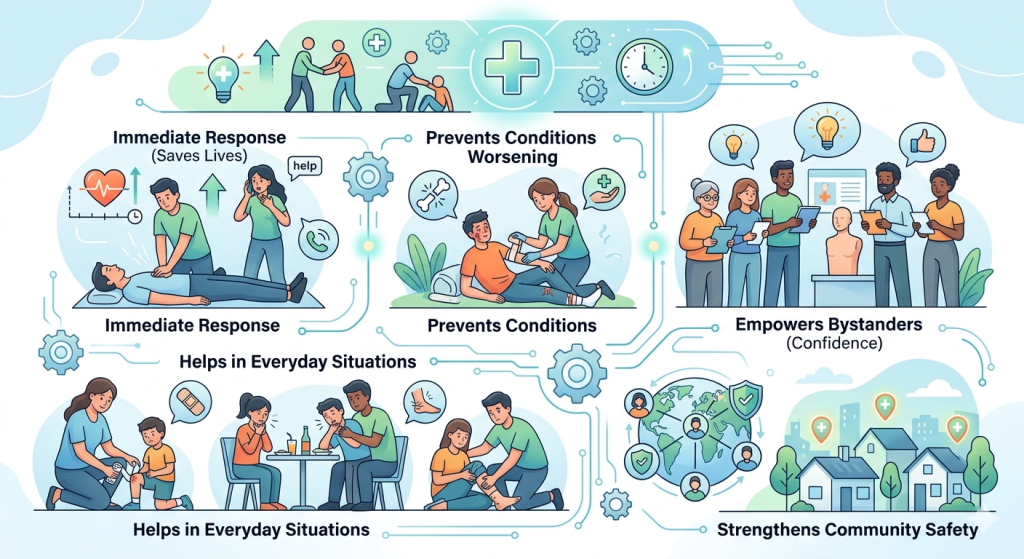
In everyday life, emergencies can happen anywhere at home, in school, on the road, or at work. Many of these situations require immediate action before professional medical help arrives. This is where First Aid becomes not just useful, but potentially life-saving. First aid education equips ordinary people with the knowledge and confidence to respond effectively in critical moments, often making the difference between life and death.
1. Immediate Response Saves Lives
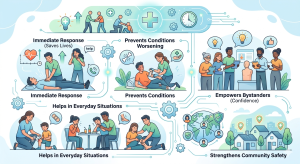
One of the most important reasons first aid education is essential is the time factor. In emergencies such as heart attacks, severe bleeding, choking, or sudden collapse, every second matters. Ambulances and medical professionals may not arrive immediately, especially in busy or remote areas.
With proper first aid training, individuals can stabilize a victim, control bleeding, perform CPR when necessary, and keep the person alive until advanced help arrives. This quick response significantly increases survival chances. Learn more
2. Accidents Can Happen Anywhere, Anytime
Emergencies are unpredictable. A child can choke at home, a colleague may faint at work, or a road accident can occur in front of you. Because these situations are not limited to hospitals or clinics, everyone becomes a potential first responder.
First aid education ensures that people are not helpless observers. Instead, they become active helpers who can take correct steps instead of panicking or waiting passively.
3. Reduces Severity of Injuries
Proper first aid does more than save lives, it also prevents injuries from getting worse. For example:
- Correctly immobilizing a fractured limb prevents further damage.
- Applying pressure to a wound reduces blood loss.
- Cooling a burn immediately reduces tissue damage.
Without basic knowledge, people may unknowingly worsen the situation through incorrect actions. First aid training teaches safe, simple, and effective responses.
4. Builds Confidence in Emergency Situations
Panic is one of the biggest barriers during emergencies. Many people freeze or make mistakes because they are unsure of what to do. First aid education replaces panic with preparedness.
Trained individuals are more likely to stay calm, assess the situation logically, and act decisively. This confidence not only helps the victim but also influences others around to remain calm.
5. Essential for Parents, Teachers, and Caregivers
Certain groups of people benefit even more from first aid knowledge. Parents, teachers, babysitters, and caregivers often deal with children or vulnerable individuals. Children are especially prone to accidents such as falls, cuts, burns, or choking.
Knowing how to respond quickly and correctly is crucial in these environments. First aid education ensures that those responsible for others’ safety can act immediately when needed.
6. Promotes a Safer Community
When more people are trained in first aid, the entire community becomes safer. In public spaces, workplaces, and neighborhoods, trained individuals can respond to emergencies before professionals arrive.
This creates a supportive environment where people look out for one another. It also reduces the burden on emergency services by ensuring initial care is already provided effectively.
7. Encourages Health Awareness and Prevention
First aid education does not only teach emergency response—it also increases awareness of health risks and prevention strategies. People become more mindful of safety practices such as:
- Avoiding hazardous behavior
- Using protective equipment
- Recognizing early signs of medical conditions
This preventive mindset reduces the likelihood of accidents and emergencies in the first place.
8. Workplace Safety and Legal Responsibility
In many workplaces, having employees trained in first aid is not just beneficial, it is often a legal requirement. Work environments such as construction sites, factories, and offices all carry potential risks.
Employers who invest in first aid training improve workplace safety standards, reduce downtime from accidents, and demonstrate responsibility toward employee welfare.
9. Simple Skills with Big Impact
A common misconception is that first aid is complicated or requires medical expertise. In reality, many essential skills are simple to learn and apply, such as:
- Bandaging wounds
- Treating minor burns
- Performing CPR basics
- Helping a choking victim
These simple actions can have a huge impact when applied correctly and quickly.
Read: The Importance of Sexual and Reproductive Health Education
Conclusion
First aid education is not just for healthcare professionals, it is a vital life skill for everyone. Emergencies are unpredictable, but preparation is a choice. Learning First Aid empowers individuals to act decisively, reduce harm, and potentially save lives.
A society where more people understand first aid is a safer, stronger, and more resilient society. Investing time in learning these skills is an investment in life itself.