How Diet Can Impact Vaginal Health and Hygiene
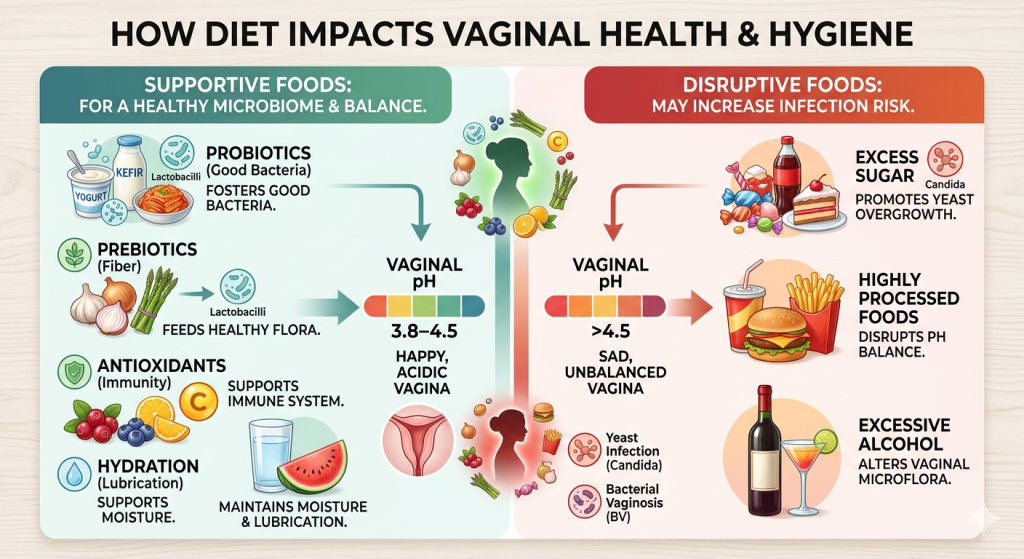
Vaginal health is influenced by many factors, including hygiene practices, hormone levels, lifestyle habits, and nutrition. While many women focus on external hygiene, the foods you eat can play a significant role in maintaining a healthy vaginal environment. A balanced diet supports the body’s natural defenses, helps maintain healthy vaginal bacteria, and may reduce the risk of infections and unpleasant symptoms.
Understanding the connection between diet and vaginal health can help women make informed choices that promote long-term wellness and comfort.
The Connection Between Diet and Vaginal Health
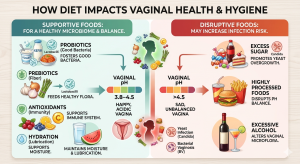
The vagina contains a delicate ecosystem of beneficial bacteria, primarily Lactobacillus species, which help maintain an acidic pH. This acidic environment protects against harmful bacteria and infections.
Poor dietary habits can affect the balance of these microorganisms, potentially increasing the risk of:
- Yeast infections
- Bacterial vaginosis
- Vaginal dryness
- Unpleasant odor
- Urinary tract infections (UTIs)
A nutrient-rich diet helps support the immune system and promotes a healthy vaginal microbiome.
Probiotic-Rich Foods Support Healthy Bacteria
Probiotics are beneficial microorganisms that help maintain balance in the digestive and vaginal microbiomes.
Foods Rich in Probiotics
- Yogurt with live cultures
- Kefir
- Kimchi
- Sauerkraut
- Miso
- Tempeh
These foods may help encourage the growth of beneficial bacteria that support vaginal health and reduce the risk of certain infections. Learn more
Prebiotic Foods Feed Good Bacteria
Prebiotics are fibers that nourish beneficial bacteria and help them thrive.
Healthy Prebiotic Sources
- Garlic
- Onions
- Leeks
- Bananas
- Asparagus
- Oats
- Apples
Including prebiotic foods in your diet can help create an environment that supports healthy bacterial balance.
Hydration Helps Maintain Vaginal Comfort
Water is essential for overall health, including vaginal wellness.
Benefits of Staying Hydrated
- Supports natural lubrication
- Helps maintain healthy tissues
- Reduces irritation and dryness
- Promotes urinary tract health
Aim to drink adequate amounts of water throughout the day, especially during hot weather or physical activity.
Limit Excess Sugar Intake
A diet high in sugar may contribute to yeast overgrowth because yeast thrives on sugar.
Sources of Excess Sugar
- Soft drinks
- Candy
- Sweet pastries
- Sugary cereals
- Processed snacks
Reducing added sugars may help lower the likelihood of recurrent yeast infections and support overall health.
Eat Plenty of Fruits and Vegetables
Fruits and vegetables contain vitamins, minerals, antioxidants, and fiber that support immune function and healthy tissues.
Beneficial Nutrients
Vitamin C
- Supports immune health.
- Helps protect against infections.
Vitamin A
- Supports healthy mucous membranes.
- Contributes to tissue repair.
Antioxidants
- Help reduce inflammation.
- Protect cells from oxidative stress.
Colorful produce such as berries, citrus fruits, carrots, spinach, and bell peppers can provide these essential nutrients.
Healthy Fats Support Hormonal Balance
Hormones play an important role in vaginal lubrication and tissue health.
Sources of Healthy Fats
- Avocados
- Olive oil
- Nuts
- Seeds
- Fatty fish
Healthy fats support hormone production and may help maintain vaginal moisture and comfort.
Foods Rich in Omega-3 Fatty Acids
Omega-3 fatty acids have anti-inflammatory properties and support overall reproductive health.
Good Sources Include
- Salmon
- Sardines
- Mackerel
- Chia seeds
- Flaxseeds
- Walnuts
Regular consumption may contribute to healthy circulation and tissue function.
Cranberries and Urinary Health
Cranberries are often associated with urinary tract health. While they are not a treatment for infections, some research suggests they may help reduce the risk of recurrent urinary tract infections in certain individuals.
Options include:
- Fresh cranberries
- Unsweetened cranberry juice
- Cranberry supplements (under medical guidance)
Avoid Excessive Processed Foods
Highly processed foods often contain excessive sugar, unhealthy fats, and additives that may negatively affect overall health.
Examples include:
- Fast food
- Packaged snacks
- Sugary beverages
- Processed desserts
A diet centered on whole foods can better support immune and vaginal health.
Iron-Rich Foods Are Important for Women
Women lose iron during menstruation, making adequate intake essential.
Iron-Rich Foods
- Lean red meat
- Beans
- Lentils
- Spinach
- Pumpkin seeds
Proper iron levels support energy production and overall well-being.
The Role of Vitamin D
Vitamin D supports immune function and may contribute to maintaining a healthy balance of vaginal bacteria.
Sources of Vitamin D
- Sunlight exposure
- Fatty fish
- Egg yolks
- Fortified dairy products
Consult a healthcare professional if you suspect a deficiency.
Foods That May Help Reduce Vaginal Odor
While vaginal odor is normal and varies among individuals, certain dietary habits may influence body odor.
Foods that may support freshness include:
- Water-rich fruits
- Leafy greens
- Yogurt
- Fresh vegetables
Conversely, excessive consumption of highly processed foods may contribute to stronger body odors.
When Diet Alone Is Not Enough
Although nutrition is important, dietary changes cannot treat all vaginal health concerns.
Seek medical advice if you experience:
- Persistent itching
- Burning sensations
- Unusual discharge
- Strong unpleasant odors
- Pain during urination
- Frequent infections
These symptoms may indicate an underlying condition requiring professional evaluation.
Read: How to Maintain Proper Vaginal Hygiene Naturally
Conclusion
Diet plays a significant role in vaginal health and hygiene. Consuming probiotic-rich foods, staying hydrated, limiting excess sugar, eating plenty of fruits and vegetables, and choosing healthy fats can help support a balanced vaginal microbiome and overall reproductive wellness.
While good hygiene practices remain important, nourishing your body from within is one of the most effective natural ways to maintain vaginal health. By making healthy dietary choices consistently, women can support comfort, reduce infection risks, and promote long-term intimate wellness.