10 Mistakes People Make When Trying to Lose Weight
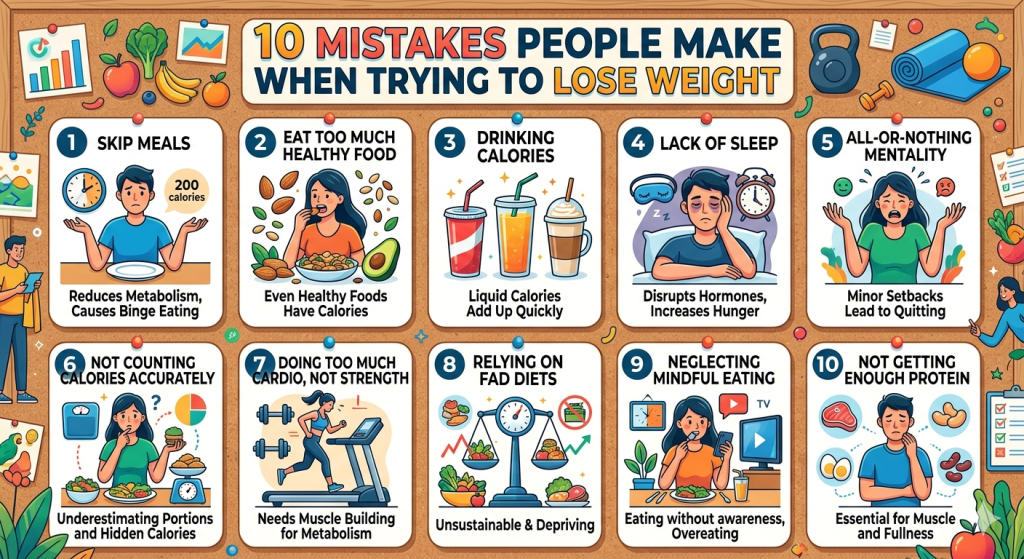
Losing weight can feel challenging, especially when results don’t match your efforts. Many people follow strict diets or intense workouts but still struggle to see progress. The truth is, weight loss is not just about eating less or exercising more it’s about avoiding common mistakes that can slow you down.
In this article, we’ll explore the 10 most common mistakes people make when trying to lose weight and how you can avoid them for better, lasting results.
1. Skipping Meals
One of the biggest mistakes is skipping meals, especially breakfast. Many believe that eating less frequently will help them lose weight faster. However, this often backfires.
When you skip meals, your metabolism slows down, and you’re more likely to overeat later in the day. This can lead to weight gain instead of weight loss.
What to do instead:
Eat balanced meals regularly to keep your energy levels stable and prevent overeating. Learn more
2. Cutting Calories Too Much
Reducing calories is important, but cutting them too drastically can harm your body.
Extreme calorie restriction can:
- Slow your metabolism
- Cause muscle loss
- Lead to fatigue and nutrient deficiencies
What to do instead:
Aim for a moderate calorie deficit that allows steady and sustainable weight loss.
3. Not Eating Enough Protein
Protein plays a key role in weight loss. It helps you feel full longer and supports muscle maintenance.
Without enough protein, you may:
- Feel hungry more often
- Lose muscle instead of fat
- Struggle to stay on track
What to do instead:
Include protein-rich foods like eggs, fish, beans, and lean meat in your meals.
4. Relying Only on Exercise
Exercise is important, but it’s not enough on its own. Many people overestimate how many calories they burn and underestimate how much they eat.
What to do instead:
Combine regular exercise with a healthy diet for the best results.
5. Drinking Your Calories
Sugary drinks like soda, juice, and flavored coffee can add a lot of hidden calories to your diet.
These drinks don’t make you feel full, so you end up consuming more calories than you realize.
What to do instead:
Drink water, herbal tea, or low-calorie beverages instead.
6. Not Getting Enough Sleep
Sleep is often overlooked in weight loss, but it plays a crucial role.
Lack of sleep can:
- Increase hunger hormones
- Reduce motivation to exercise
- Lead to unhealthy food choices
What to do instead:
Aim for 7–9 hours of quality sleep each night.
7. Expecting Quick Results
Many people expect rapid weight loss, and when it doesn’t happen, they get discouraged and give up.
Healthy weight loss takes time, and quick fixes are often not sustainable.
What to do instead:
Focus on long-term progress rather than immediate results.
8. Following Fad Diets
Fad diets promise quick results but are often unrealistic and difficult to maintain.
They may cut out entire food groups, leading to nutrient deficiencies and cravings.
What to do instead:
Choose a balanced and sustainable eating plan that fits your lifestyle. Learn more
9. Ignoring Portion Sizes
Even healthy foods can lead to weight gain if eaten in large amounts.
Portion control is essential for managing calorie intake.
What to do instead:
Be mindful of serving sizes and avoid overeating.
10. Being Too Hard on Yourself
Weight loss is a journey, and setbacks are normal. Being overly critical can lead to stress and emotional eating.
What to do instead:
Practice self-compassion and stay consistent with your efforts.
Tips for Successful Weight Loss
To avoid these mistakes, keep these tips in mind:
- Eat balanced meals with protein, healthy fats, and carbs
- Stay hydrated throughout the day
- Exercise regularly
- Get enough sleep
- Be patient and consistent
Conclusion
Losing weight is not just about dieting or exercising, it’s about making smart, sustainable choices. By avoiding these common mistakes, you can improve your chances of success and achieve your goals in a healthy way.
Remember, small changes over time lead to big results. Stay consistent, be patient, and focus on building habits that support your long-term health.