The Hidden Dangers of Too Much Salt in Your Daily Diet
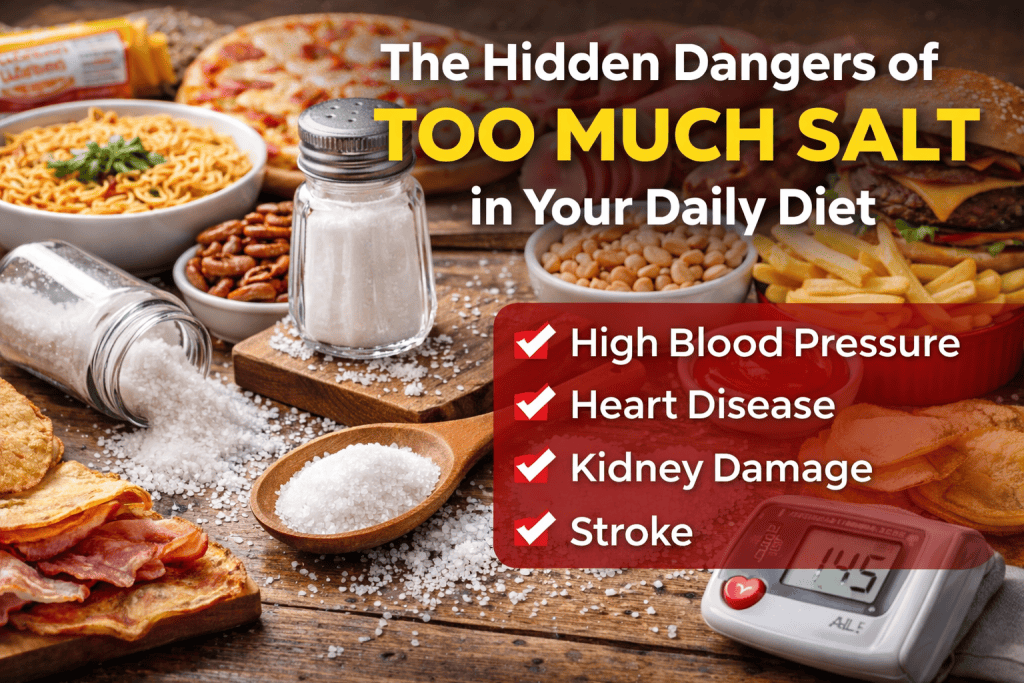
Salt is an essential part of our diet. It helps maintain fluid balance, supports nerve function, and plays a role in muscle contraction. However, while the body needs a small amount of sodium to function properly, consuming too much salt can quietly harm your health over time. Many people exceed the recommended daily intake without even realizing it, mainly because salt is hidden in many processed and packaged foods.
In this article, we’ll explore the hidden dangers of excessive salt consumption, how it affects your body, and practical ways to reduce your intake for better health.
Why Too Much Salt Is a Problem
Salt contains sodium, a mineral that helps regulate fluids in your body. However, when you consume too much sodium, your body retains excess water to balance it. This increased fluid puts extra pressure on your blood vessels, which can lead to serious health problems.
Health experts recommend limiting sodium intake to about 2,300 mg per day (roughly one teaspoon of salt), yet many people consume far more than this amount daily.
1. High Blood Pressure (Hypertension)
One of the most well-known dangers of excessive salt intake is high blood pressure. When there is too much sodium in the bloodstream, the body holds onto water, increasing blood volume. This puts extra strain on the walls of your arteries.
Over time, high blood pressure can damage blood vessels and increase the risk of heart attacks and strokes.
2. Increased Risk of Heart Disease
Excess salt intake is closely linked to heart disease. High blood pressure caused by too much sodium can weaken the heart and damage arteries, making it harder for blood to flow properly.
This increases the risk of:
- Heart attacks
- Stroke
- Heart failure
Reducing salt intake is one of the simplest ways to protect your heart. Learn more
3. Kidney Damage
Your kidneys play a crucial role in filtering excess sodium from your body. However, when you consume too much salt, your kidneys have to work harder to remove it.
Over time, this extra strain can lead to kidney damage or worsen existing kidney conditions. High sodium levels can also cause fluid retention, which further affects kidney function.
4. Water Retention and Bloating
Have you ever felt swollen or bloated after eating salty foods? That’s because excess sodium causes your body to retain water.
This can lead to:
- Puffy face
- Swollen hands and feet
- Temporary weight gain
Although this may seem harmless, frequent water retention can be a sign that your salt intake is too high.
5. Increased Risk of Stroke
Too much salt can increase the risk of stroke by raising blood pressure and damaging blood vessels in the brain.
Over time, weakened or narrowed blood vessels can lead to blockages or ruptures, which are the main causes of stroke.
6. Weakening of Bones (Osteoporosis)
Excess sodium can cause your body to lose calcium through urine. Calcium is essential for strong bones, and losing too much of it can weaken your bone structure over time.
This increases the risk of:
- Bone thinning
- Fractures
- Osteoporosis
7. Stomach Health Issues
A high-salt diet has been linked to stomach problems, including irritation of the stomach lining. Some studies also suggest that excessive salt intake may increase the risk of stomach cancer.
Salt can damage the protective lining of the stomach, making it more vulnerable to harmful bacteria and inflammation.
8. Dehydration
Ironically, eating too much salt can make you dehydrated. When sodium levels are high, your body needs more water to maintain balance.
This can cause:
- Increased thirst
- Dry mouth
- Fatigue
- Headaches
9. Hidden Sources of Salt
Many people think they consume too much salt only from adding it to food, but most sodium actually comes from processed and packaged foods.
Common hidden sources include:
- Instant noodles
- Bread
- Canned foods
- Fast food
- Sauces and seasonings
- Processed meats
Even foods that don’t taste salty can contain high levels of sodium. Learn more
10. How to Reduce Your Salt Intake
Reducing salt doesn’t mean your food has to taste bland. Here are simple ways to cut back:
✔ Cook More at Home
Preparing meals yourself allows you to control how much salt goes into your food.
✔ Read Food Labels
Check sodium content on packaged foods and choose lower-sodium options.
✔ Use Natural Seasonings
Spices, herbs, garlic, ginger, and lemon can add flavor without extra salt.
✔ Limit Processed Foods
Focus on fresh, whole foods instead of packaged items. Read more
✔ Drink More Water
Staying hydrated helps your body flush out excess sodium.
Conclusion
Salt is necessary for good health, but too much of it can silently damage your body over time. From high blood pressure and heart disease to kidney damage and bone loss, the effects of excessive sodium intake can be serious.
The good news is that small, consistent changes can make a big difference. By becoming more aware of hidden salt in your diet and making healthier food choices, you can protect your body and improve your overall well-being.
Start paying attention to your salt intake today, your heart, kidneys, and overall health will thank you.