Understanding Oral Thrush: Symptoms and Treatment Options
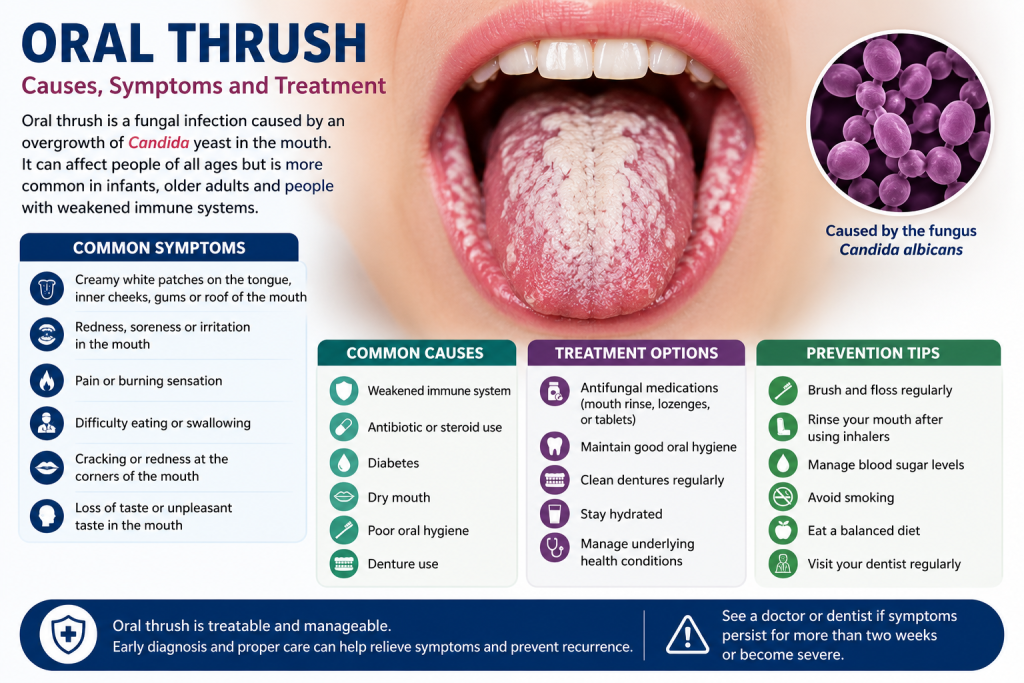
Oral thrush is a common fungal infection that affects the mouth and throat. It occurs when a type of fungus called Candida albicans, which normally lives harmlessly in the mouth, grows excessively and causes infection. While oral thrush can affect people of all ages, it is more common in infants, older adults, individuals with weakened immune systems, and those taking certain medications.
Although oral thrush is usually not serious, it can cause discomfort and may indicate an underlying health issue. Understanding its symptoms, causes, and treatment options can help ensure prompt management and better oral health.
What Is Oral Thrush?
Oral thrush, also known as oral candidiasis, is an infection caused by an overgrowth of Candida yeast in the mouth. Under normal conditions, beneficial bacteria and the immune system help keep yeast levels under control. However, when this balance is disrupted, the fungus can multiply and cause visible symptoms.
The infection most commonly affects:
- The tongue
- Inner cheeks
- Roof of the mouth
- Gums
- Tonsils
- Back of the throat
In severe cases, the infection may spread to the esophagus. Learn more
Common Symptoms of Oral Thrush
The symptoms of oral thrush can vary depending on the severity of the infection.
White Patches in the Mouth
One of the most recognizable signs is creamy white lesions that appear on the tongue, cheeks, gums, or throat.
These patches may:
- Look similar to cottage cheese
- Be slightly raised
- Cause discomfort when touched
Redness and Irritation
Affected areas may become:
- Red
- Inflamed
- Sensitive
This irritation can make eating and speaking uncomfortable.
Pain or Burning Sensation
Many individuals experience:
- Mouth soreness
- Burning sensations
- General oral discomfort
Symptoms may worsen when consuming spicy or acidic foods.
Difficulty Eating or Swallowing
Severe cases can make:
- Chewing uncomfortable
- Swallowing painful
- Drinking difficult
Cracking at the Corners of the Mouth
Some people develop painful cracks and redness at the corners of the lips, a condition known as angular cheilitis.
Loss of Taste
Oral thrush may temporarily affect the sense of taste or create an unpleasant taste in the mouth.
Causes of Oral Thrush
Several factors can disrupt the natural balance of microorganisms in the mouth and increase the risk of oral thrush.
Weakened Immune System
People with weakened immunity are more susceptible to fungal infections.
This includes individuals with:
- HIV/AIDS
- Cancer
- Autoimmune disorders
- Organ transplants
Antibiotic Use
Antibiotics can eliminate beneficial bacteria that normally help control yeast growth, allowing Candida to multiply.
Corticosteroid Inhalers
Individuals who use inhaled corticosteroids for asthma or chronic respiratory conditions may develop oral thrush if they do not rinse their mouth after use.
Diabetes
Poorly controlled diabetes can increase sugar levels in saliva, creating an environment that encourages fungal growth.
Dry Mouth
Saliva helps regulate microorganisms within the mouth. Reduced saliva production can increase the risk of infection.
Dry mouth may result from:
- Certain medications
- Medical conditions
- Dehydration
- Radiation therapy
Denture Use
Poorly fitted dentures or inadequate denture hygiene can create conditions that promote yeast overgrowth.
Risk Factors
Certain factors increase the likelihood of developing oral thrush:
- Advanced age
- Infancy
- Smoking
- Poor oral hygiene
- Weakened immune function
- Long-term antibiotic use
- Diabetes
- Dry mouth
- Denture use
Understanding these risk factors can help guide preventive measures.
How Oral Thrush Is Diagnosed
A healthcare provider or dentist can often diagnose oral thrush through a visual examination of the mouth.
Additional tests may include:
- Microscopic examination of oral tissue samples
- Throat cultures
- Blood tests if an underlying condition is suspected
Early diagnosis helps ensure effective treatment and prevents complications.
Treatment Options for Oral Thrush
Antifungal Medications
Antifungal treatments are the primary therapy for oral thrush.
Common options include:
- Antifungal mouth rinses
- Lozenges
- Oral antifungal tablets
The choice of medication depends on the severity of the infection and the patient’s overall health.
Improving Oral Hygiene
Maintaining excellent oral hygiene can help reduce fungal growth and support recovery.
Important practices include:
- Brushing teeth twice daily
- Flossing regularly
- Cleaning the tongue
- Replacing toothbrushes after infection resolves
Denture Care
Individuals who wear dentures should:
- Clean dentures thoroughly every day
- Remove dentures at night
- Ensure proper denture fit
Good denture hygiene reduces the risk of recurring infections.
Managing Underlying Conditions
Addressing conditions such as diabetes, dry mouth, or immune disorders can help prevent repeated episodes of oral thrush.
Home Care Tips
While medical treatment is often necessary, supportive home care may improve comfort.
Rinse with Salt Water
A saltwater rinse may help soothe irritation and keep the mouth clean.
Stay Hydrated
Drinking adequate water helps maintain saliva production and supports oral health.
Limit Sugar Intake
Excess sugar may encourage fungal growth, so reducing sugary foods and beverages may be beneficial.
Eat Yogurt with Live Cultures
Probiotic-rich foods may help support a healthy balance of microorganisms in the mouth and digestive system.
How to Prevent Oral Thrush
Practice Good Oral Hygiene
Consistent oral care remains one of the most effective prevention strategies.
Rinse After Using Inhalers
People using corticosteroid inhalers should rinse their mouth thoroughly after each use.
Manage Blood Sugar Levels
Proper diabetes management can significantly reduce the risk of fungal infections.
Avoid Smoking
Smoking can disrupt the natural balance of the mouth and increase susceptibility to oral infections.
Attend Regular Dental Checkups
Routine dental visits can help detect oral health issues before they become serious.
When to Seek Medical Attention
Consult a healthcare provider if:
- White patches persist for more than two weeks
- Pain becomes severe
- Swallowing becomes difficult
- Symptoms recur frequently
- You have a weakened immune system
- Home care measures do not improve symptoms
Prompt treatment helps prevent complications and ensures faster recovery.
Potential Complications
In healthy individuals, oral thrush is usually mild and manageable. However, if left untreated, the infection may spread or recur, especially in people with weakened immune systems.
Possible complications include:
- Difficulty eating and drinking
- Nutritional deficiencies
- Esophageal infection
- Recurrent fungal infections
Early intervention greatly reduces these risks.
Read: Mouth Ulcers: Causes, Treatment, and Prevention Tips
Conclusion
Oral thrush is a common fungal infection caused by an overgrowth of Candida yeast in the mouth. It can lead to white patches, soreness, difficulty swallowing, and other uncomfortable symptoms. Risk factors such as antibiotic use, diabetes, weakened immunity, dry mouth, and denture use can increase the likelihood of developing the condition.
Fortunately, oral thrush is often treatable with antifungal medications, good oral hygiene, and proper management of underlying health conditions. By recognizing symptoms early and following preventive measures, individuals can protect their oral health and reduce the risk of future infections.