Teeth Whitening Methods: What Works and What Doesn’t
A bright, white smile is often associated with good health, confidence, and beauty. Because of this, teeth whitening has become one of the most popular dental treatments worldwide. However, not all whitening methods are equally effective or safe. Some deliver real, lasting results, while others may be ineffective or even harmful to your enamel.
This guide breaks down the most common teeth whitening methods, explaining what actually works and what you should avoid.
What Causes Teeth Discoloration?
Before choosing a whitening method, it helps to understand why teeth become stained. Common causes include:
- Coffee, tea, and red wine consumption
- Smoking or tobacco use
- Poor oral hygiene
- Aging (enamel naturally thins over time)
- Certain medications
- Excessive fluoride exposure during childhood
Once stains set into the enamel, regular brushing alone is often not enough to remove them. Learn more
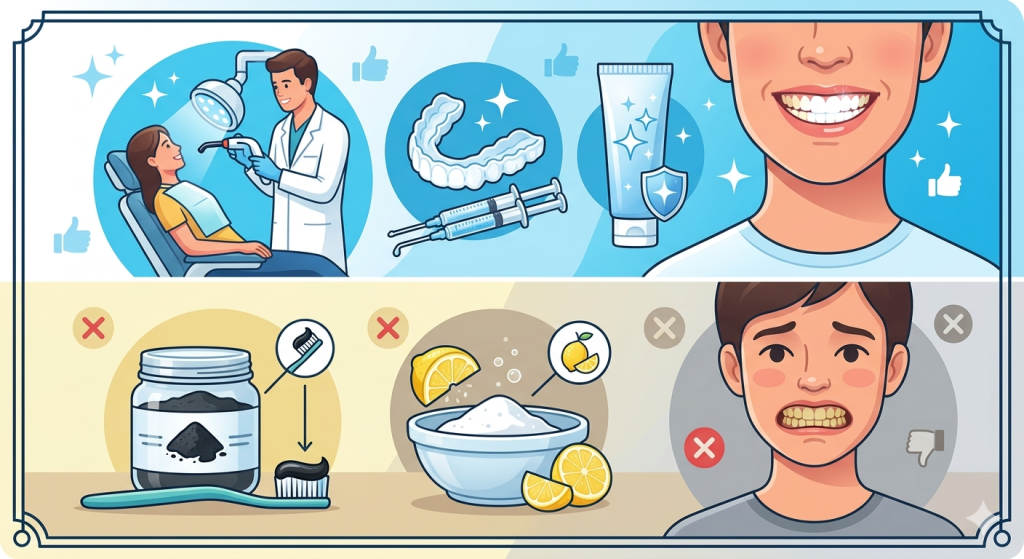
Teeth Whitening Methods That Actually Work
1. Professional Dental Whitening (Most Effective)
In-office whitening performed by a dentist is the fastest and most reliable method.
How it works:
Dentists apply a high-strength bleaching agent, sometimes activated with a special light or laser.
Benefits:
- Immediate visible results (1–2 sessions)
- Safe under professional supervision
- Long-lasting effects
Best for: Deep stains and fast results
2. Dentist-Prescribed Whitening Kits
These include custom-made trays and professional whitening gel for home use.
How it works:
You wear trays filled with whitening gel for a set period daily.
Benefits:
- Gradual, controlled whitening
- Custom fit reduces gum irritation
- Effective and safe
Best for: People who prefer at-home treatment with professional guidance
3. Whitening Toothpaste (Mild Effect)
Whitening toothpaste removes surface stains rather than deep discoloration.
How it works:
Contains mild abrasives and polishing agents.
Benefits:
- Affordable and widely available
- Helps maintain whiteness after treatment
Limitations:
- Does not significantly change tooth color
- Results are slow and subtle
Best for: Maintenance, not major whitening
4. Whitening Strips (Moderately Effective)
Over-the-counter strips coated with peroxide gel.
How it works:
Applied daily for 7–14 days depending on the product.
Benefits:
- Noticeable results for mild staining
- Easy to use at home
Limitations:
- Can cause tooth sensitivity
- Uneven whitening if not applied properly
Teeth Whitening Methods That Don’t Work (or Are Risky)
1. Lemon Juice and Baking Soda
This popular DIY method is highly discouraged.
Why it’s bad:
- Lemon juice is highly acidic and erodes enamel
- Baking soda can be too abrasive with frequent use
Result: Temporary brightness but long-term damage
2. Activated Charcoal Products
Often marketed as “natural whitening.”
Reality:
- Removes surface stains only
- Can be abrasive and wear down enamel over time
- Limited scientific support
3. Excessive Brushing
Brushing harder or more frequently does not whiten teeth.
Risk:
- Gum recession
- Enamel wear
- Tooth sensitivity
4. DIY Hydrogen Peroxide Use
Some people attempt whitening with household hydrogen peroxide.
Danger:
- Incorrect concentration can damage gums
- May cause irritation or burns
- Should only be used in regulated dental products
How to Maintain a White Smile
Once you achieve your desired shade, maintenance is key:
- Brush twice daily with fluoride toothpaste
- Reduce coffee, tea, and red wine intake
- Avoid smoking or tobacco
- Rinse mouth after eating staining foods
- Visit the dentist regularly for cleaning
Read: How to Protect Your Teeth from Acidic Foods and Drinks
Conclusion
Not all teeth whitening methods are equal. While professional treatments and dentist-approved kits are safe and effective, many DIY remedies can damage your enamel and lead to long-term dental issues. The best approach is to consult a dentist before starting any whitening routine and choose methods backed by science.
A healthy smile is not just about whiteness, it’s about strong, well-cared-for teeth.