Parkinson’s Disease in Elderly Patients: Symptoms and Treatment Options
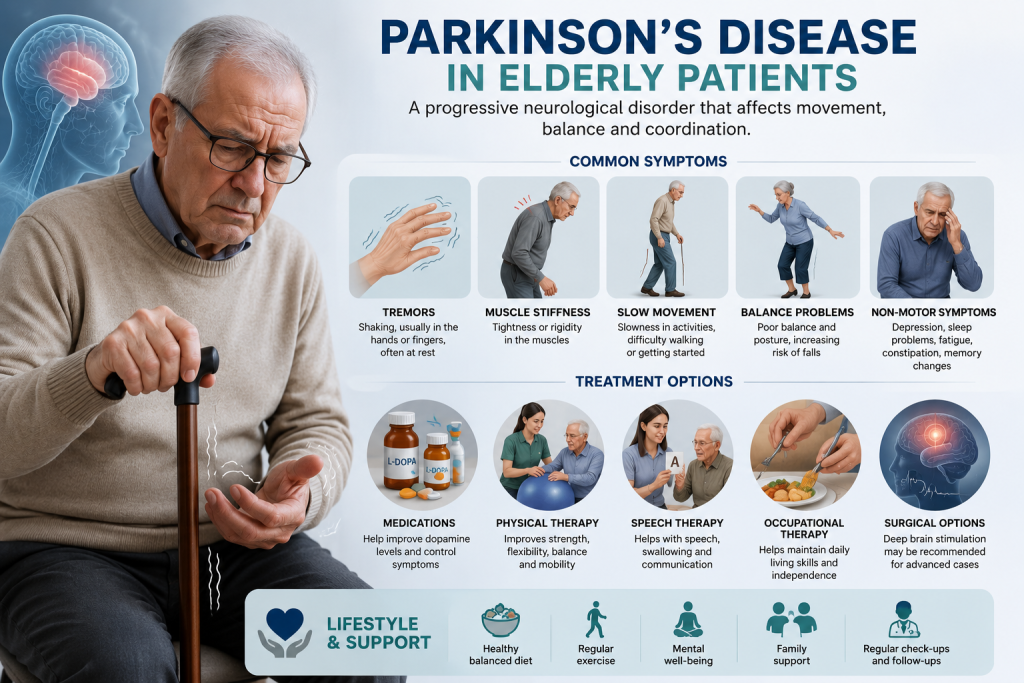
Parkinson’s disease is a progressive neurological disorder that mainly affects movement and coordination. It is more common in older adults and usually develops gradually over time. The condition occurs when nerve cells in the brain that produce dopamine begin to deteriorate or die. Dopamine is an important chemical that helps control body movements, balance, and coordination. As dopamine levels decrease, individuals may experience tremors, stiffness, and difficulty performing everyday activities.
Parkinson’s disease is one of the most common neurological disorders affecting elderly people worldwide. Although it can occur in younger individuals, the risk increases significantly with age. Most cases are diagnosed after the age of 60. As life expectancy continues to rise globally, healthcare experts expect the number of elderly patients living with Parkinson’s disease to increase in the coming years. Learn more
One of the earliest and most noticeable symptoms of Parkinson’s disease is tremor, especially in the hands, fingers, or arms. These tremors often occur when the body is at rest and may begin on one side before affecting both sides. Elderly patients may also notice shaking in the jaw, chin, or legs. While tremors are common, not every person with Parkinson’s disease experiences them in the same way.
Another major symptom is muscle stiffness or rigidity. Patients often feel tightness in their muscles, making movement uncomfortable and difficult. Stiff muscles can reduce flexibility, limit mobility, and contribute to pain. Many elderly individuals with Parkinson’s disease struggle with simple daily tasks such as getting out of bed, dressing, or walking short distances due to this stiffness.
Slowness of movement, known medically as bradykinesia, is another key feature of Parkinson’s disease. Elderly patients may walk more slowly, take shorter steps, or find it difficult to start moving. Activities that once seemed simple, such as buttoning clothes or writing, may begin to take much longer. Over time, facial expressions may also become reduced, causing what is sometimes described as a “masked face.”
Balance and posture problems are also common in advanced stages of the disease. Many elderly patients develop a stooped posture and experience difficulty maintaining stability while standing or walking. This increases the risk of falls and injuries, which can seriously affect quality of life in older adults. Fall prevention becomes an important part of managing Parkinson’s disease in elderly patients.
Parkinson’s disease can also cause non-motor symptoms that affect overall well-being. These may include depression, anxiety, sleep disturbances, constipation, fatigue, memory problems, and reduced sense of smell. Some patients may experience cognitive decline or develop dementia in later stages. Because these symptoms are less visible, they are sometimes overlooked even though they significantly affect daily life.
The exact cause of Parkinson’s disease is not fully understood, but researchers believe it results from a combination of genetic and environmental factors. Aging itself is considered one of the biggest risk factors. Exposure to certain toxins, head injuries, and family history may also increase the risk of developing the disease.
There is currently no cure for Parkinson’s disease, but several treatment options can help manage symptoms and improve quality of life. Medications are usually the first line of treatment. One of the most commonly prescribed drugs is levodopa, which helps increase dopamine levels in the brain. Other medications may help control tremors, improve movement, or reduce muscle stiffness.
Physical therapy plays an important role in treatment, especially for elderly patients. Exercises that focus on balance, flexibility, strength, and coordination can help maintain mobility and reduce fall risk. Regular physical activity has also been shown to improve mood, sleep quality, and overall physical health in people living with Parkinson’s disease.
Speech therapy may help patients who develop difficulty speaking or swallowing. Parkinson’s disease can weaken the muscles used for communication and eating, making speech softer and swallowing more challenging. Speech therapists teach techniques to improve communication and reduce the risk of choking or aspiration.
Occupational therapy is another valuable treatment option for elderly patients. Occupational therapists help individuals adapt their daily activities and living environments to maintain independence. This may include using assistive devices, modifying home layouts, or learning safer ways to perform everyday tasks.
Nutrition also plays a role in managing Parkinson’s disease. A healthy, balanced diet can support overall health, improve digestion, and help maintain energy levels. Fiber-rich foods and adequate hydration are especially important because constipation is common in Parkinson’s patients. Some medications may interact with certain foods, so dietary guidance from healthcare professionals can be beneficial.
In some advanced cases, surgical treatments such as deep brain stimulation may be recommended. This procedure involves implanting electrodes in specific parts of the brain to help control movement-related symptoms. While surgery is not suitable for everyone, it may improve quality of life for selected patients whose symptoms are difficult to manage with medication alone.
Family support and caregiving are extremely important for elderly individuals with Parkinson’s disease. As symptoms progress, patients may require assistance with mobility, medication management, personal care, and emotional support. Caregivers often play a major role in helping patients maintain dignity, independence, and safety.
Mental health support is equally important. Living with a chronic neurological condition can be emotionally challenging for both patients and their families. Counseling, support groups, and social engagement can help reduce feelings of isolation, anxiety, and depression.
Researchers continue to study Parkinson’s disease in hopes of discovering better treatments and possible cures. Advances in neuroscience, genetics, and medical technology are improving understanding of the disease and offering hope for future therapies.
Read: Preventive Healthcare vs Emergency Treatment: Which Saves More Money?
In conclusion, Parkinson’s disease is a serious neurological condition that commonly affects elderly patients and can greatly impact movement, independence, and quality of life. Early recognition of symptoms such as tremors, stiffness, slow movement, and balance problems is important for timely diagnosis and treatment. Although there is currently no cure, medications, therapy, healthy lifestyle habits, and strong family support can help elderly patients manage symptoms and live more comfortably for many years.