Emergency Funds: Why You Need One and How to Build It
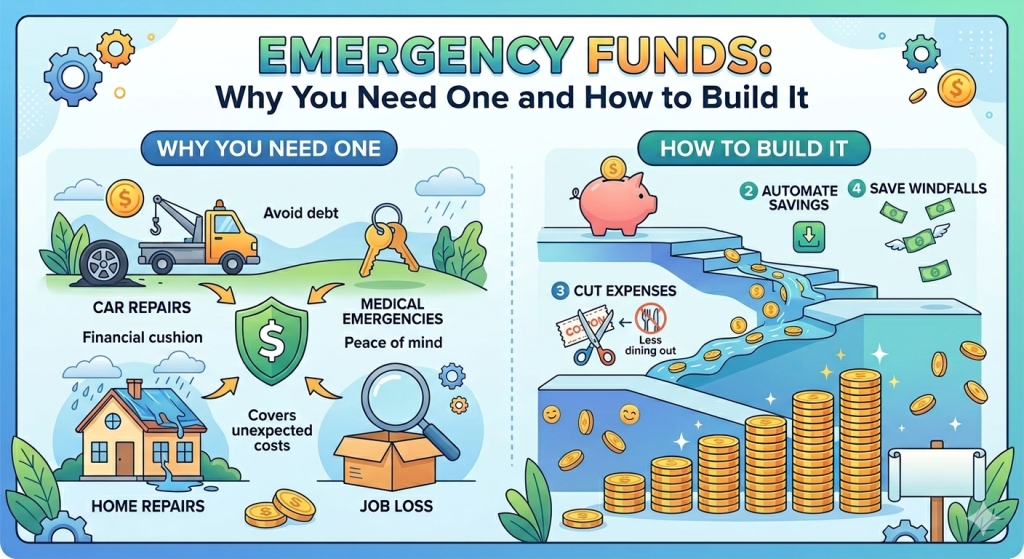
An emergency fund is one of the most important foundations of financial stability, yet many people ignore it until a crisis happens. Simply put, an emergency fund is money you set aside specifically for unexpected expenses such as medical emergencies, job loss, urgent repairs, or sudden family needs.
In this guide, you will learn why emergency funds are essential, how much you need, and step-by-step how to build one even on a low income.
What Is an Emergency Fund?
An emergency fund is a dedicated savings account that is only used for unexpected and urgent financial situations.
Examples include:
- Medical emergencies
- Sudden job loss
- Car or home repairs
- Unexpected travel
- Family emergencies
It is NOT meant for:
- Shopping
- Vacations
- Entertainment
- Luxury purchases
Think of it as your financial safety net. Learn more
Why Emergency Funds Are Important
1. It Protects You From Debt
Without savings, most people rely on loans or credit cards during emergencies. This often leads to high-interest debt that becomes difficult to repay.
An emergency fund helps you handle unexpected expenses without borrowing money.
2. It Reduces Financial Stress
Financial stress is one of the leading causes of anxiety and poor mental health. Knowing you have backup savings gives you peace of mind and confidence.
3. It Prevents Financial Collapse During Job Loss
Losing a job can happen unexpectedly. An emergency fund gives you time to:
- Find a new job
- Adjust your expenses
- Avoid panic borrowing
4. It Helps You Stay Focused on Long-Term Goals
When emergencies happen and you have no savings, you may be forced to withdraw investments or delay important goals. An emergency fund protects your financial progress.
How Much Should You Save in an Emergency Fund?
Experts recommend saving 3 to 6 months of living expenses.
Example:
If your monthly expenses are:
- Rent
- Food
- Transportation
- Utilities
Let’s say total = $300/month (or equivalent in local currency)
Your emergency fund target should be:
- Minimum: 3 months = $900
- Ideal: 6 months = $1,800
Start small if this seems difficult.
Step-by-Step: How to Build an Emergency Fund
Step 1: Set a Clear Goal
Decide how much you want to save. Start with a small target like:
- $50
- $100
- One month of expenses
Small goals are easier to achieve.
Step 2: Create a Monthly Budget
Track your income and expenses carefully.
Divide your money into:
- Needs (rent, food, transport)
- Wants (entertainment, shopping)
- Savings (emergency fund)
Even saving 5–10% of your income is a great start.
Step 3: Open a Separate Savings Account
Do not mix your emergency fund with your spending money.
A separate account helps you avoid temptation and track progress easily.
Step 4: Automate Your Savings
Set up automatic transfers so money moves into your savings account immediately after you receive income.
This ensures consistency.
Step 5: Cut Unnecessary Expenses
Look for areas where you can reduce spending:
- Eat out less
- Cancel unused subscriptions
- Buy only what you need
Redirect that money into your emergency fund.
Step 6: Increase Your Income
If possible, add extra income streams such as:
- Freelancing
- Side jobs
- Online work
- Small business
Even small extra income can speed up your savings.
Step 7: Save Windfalls and Bonuses
If you receive:
- Gifts
- Bonuses
- Tax refunds
- Unexpected income
Put a portion or all of it into your emergency fund. Learn more
Common Mistakes to Avoid
1. Using the fund for non-emergencies
2. Not having a clear savings goal
3. Mixing savings with spending money
4. Giving up too early
Consistency is key.
Where Should You Keep Your Emergency Fund?
Your emergency fund should be:
- Safe
- Easily accessible
- Not risky
Best options include:
- Savings account
- Money market account
- Digital savings platforms with withdrawal access
Avoid risky investments like stocks or crypto for emergency funds.
Benefits of Having an Emergency Fund
Once you build an emergency fund, you will enjoy:
- Financial security
- Reduced stress
- Better decision-making
- Freedom from debt traps
- Confidence in handling emergencies
Final Thoughts
An emergency fund is not just a financial habit, it is a life-saving financial shield. It protects you from unexpected problems and gives you control over your money and future.
Start small, stay consistent, and build gradually. Even if you begin with a tiny amount, what matters most is discipline and consistency.
Your future financial stability depends on the steps you take today.