Multiple Sclerosis: Understanding Symptoms, Causes, and Treatment
Multiple sclerosis (MS) is a chronic neurological disease that affects the central nervous system, including the brain and spinal cord. It is considered an autoimmune condition in which the immune system mistakenly attacks the protective covering of nerve fibers, disrupting communication between the brain and the rest of the body.
MS affects millions of people worldwide and can lead to a wide range of physical, mental, and emotional challenges. Although there is currently no permanent cure, advances in medical treatment and supportive therapies have helped many individuals manage symptoms and maintain active lifestyles.
Understanding multiple sclerosis, its symptoms, causes, diagnosis, and management strategies is essential for improving quality of life and promoting early intervention.
What Is Multiple Sclerosis?
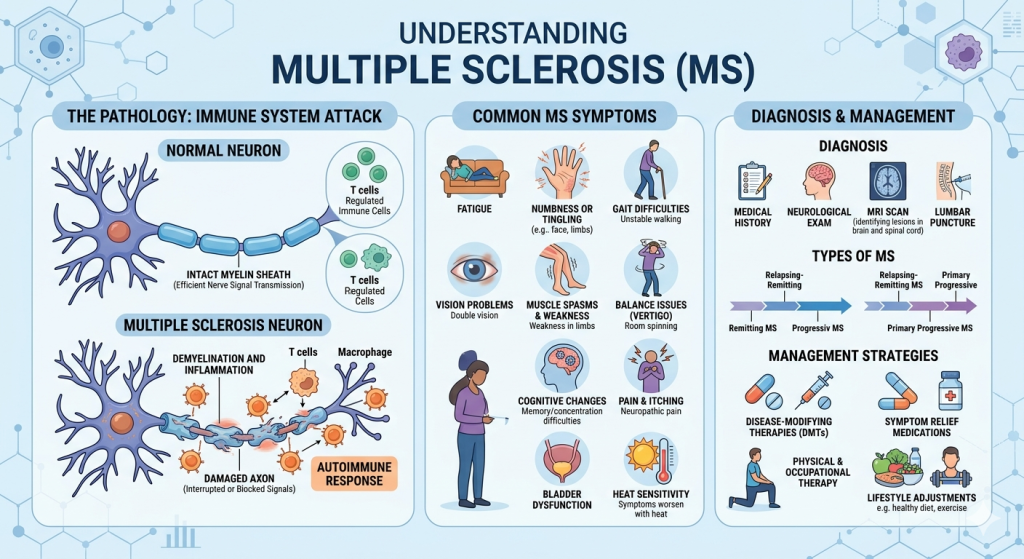
Multiple sclerosis is a disease in which the immune system attacks myelin, the protective coating surrounding nerve fibers. Myelin helps electrical signals travel efficiently between the brain, spinal cord, and other parts of the body.
When myelin becomes damaged, communication between nerves slows down or becomes disrupted. Over time, the disease may also damage the nerves themselves.
MS is unpredictable and varies greatly from person to person. Some individuals experience mild symptoms, while others may develop significant disability. Learn more
Types of Multiple Sclerosis
There are different forms of MS depending on how symptoms develop and progress.
1. Relapsing-Remitting MS (RRMS)
This is the most common type. Patients experience periods of symptom flare-ups followed by partial or complete recovery.
2. Secondary Progressive MS (SPMS)
Some people with RRMS eventually transition into SPMS, where symptoms gradually worsen over time.
3. Primary Progressive MS (PPMS)
This type involves steadily worsening symptoms without clear relapses or remissions.
4. Progressive-Relapsing MS
This rare form includes progressive symptoms with occasional flare-ups.
Common Symptoms of Multiple Sclerosis
MS symptoms depend on which nerves are affected and how severe the damage becomes.
Common symptoms include:
- Fatigue
- Muscle weakness
- Numbness or tingling
- Difficulty walking
- Poor balance and coordination
- Blurred or double vision
- Dizziness
- Muscle spasms
- Tremors
- Difficulty speaking
- Memory and concentration problems
Some individuals may also experience emotional changes such as depression or anxiety.
Causes of Multiple Sclerosis
The exact cause of MS remains unknown, but experts believe several factors contribute to the disease.
1. Autoimmune Reaction
The immune system mistakenly attacks healthy nerve tissue.
2. Genetic Factors
Family history may increase the risk of developing MS.
3. Environmental Factors
Low vitamin D levels, smoking, viral infections, and limited sunlight exposure may contribute to disease risk.
4. Viral Infections
Certain viruses, including Epstein-Barr virus (EBV), have been linked to MS development.
Risk Factors for Multiple Sclerosis
Several factors may increase the likelihood of developing MS:
- Age between 20 and 40 years
- Female gender
- Family history of MS
- Smoking
- Autoimmune disorders
- Low vitamin D levels
MS is more common in regions farther from the equator, where sunlight exposure may be lower.
How Multiple Sclerosis Affects the Body
MS can affect different body systems depending on the location of nerve damage.
Nervous System
Damage to nerves interferes with movement, sensation, and coordination.
Vision Problems
Inflammation of the optic nerve may lead to blurred vision or eye pain.
Mobility Challenges
Muscle weakness and poor coordination can affect walking and balance.
Cognitive Changes
Some people experience:
- Memory difficulties
- Slower thinking
- Trouble concentrating
Emotional Impact
Living with a chronic neurological condition can increase stress, anxiety, and depression.
Diagnosing Multiple Sclerosis
Diagnosing MS can be challenging because symptoms often resemble other neurological disorders.
Doctors may use:
- Neurological examinations
- MRI scans
- Blood tests
- Lumbar puncture (spinal tap)
- Evoked potential tests
MRI imaging helps identify damage in the brain and spinal cord.
Treatment Options for Multiple Sclerosis
Although MS cannot currently be cured, treatments can reduce symptoms, slow disease progression, and improve quality of life.
1. Disease-Modifying Therapies (DMTs)
These medications help reduce the frequency and severity of flare-ups.
2. Corticosteroids
Steroids may be used during flare-ups to reduce inflammation.
3. Physical Therapy
Physical therapy helps improve:
- Strength
- Balance
- Mobility
- Flexibility
4. Medications for Symptoms
Doctors may prescribe medications to help manage:
- Muscle spasms
- Pain
- Fatigue
- Bladder problems
- Depression
5. Occupational Therapy
Occupational therapy helps individuals maintain independence in daily activities.
Lifestyle Changes That Help Manage MS
Healthy lifestyle habits can support overall wellbeing and symptom control.
Regular Exercise
Low-impact exercises such as:
- Walking
- Swimming
- Yoga
- Stretching
can improve strength and flexibility.
Balanced Nutrition
Eating nutritious foods helps support immune health and energy levels.
Stress Management
Stress may worsen symptoms in some individuals. Relaxation techniques and emotional support can be beneficial.
Adequate Rest
Fatigue is common in MS, making quality sleep and proper rest essential.
Emotional and Mental Health Support
Many people with MS benefit from:
- Counseling
- Support groups
- Mental health therapy
- Family support
Emotional wellbeing is an important part of long-term disease management.
Complications of Multiple Sclerosis
Severe MS may lead to:
- Difficulty walking
- Paralysis
- Chronic pain
- Speech problems
- Swallowing difficulties
- Bladder and bowel dysfunction
Early treatment can help reduce complications and slow progression.
Living With Multiple Sclerosis
Many individuals with MS continue to work, raise families, and live fulfilling lives. Advances in treatment, rehabilitation, and assistive technology have improved outcomes significantly.
Maintaining strong medical support and healthy habits can help individuals adapt to changing symptoms over time.
The Importance of Early Diagnosis
Early diagnosis and treatment are critical for slowing disease progression and protecting nerve function. Increased public awareness may help individuals seek medical attention sooner when symptoms first appear.
Read: Cerebral Palsy: Understanding Symptoms, Causes, and Management
Conclusion
Multiple sclerosis is a chronic autoimmune disease that affects the brain, spinal cord, and nervous system. Symptoms such as fatigue, muscle weakness, balance problems, and vision disturbances can vary greatly between individuals.
Although there is currently no cure for MS, modern treatments, physical therapy, healthy lifestyle habits, and emotional support can help manage symptoms and improve quality of life. Early diagnosis and ongoing medical care remain essential for reducing complications and helping individuals live active and meaningful lives.