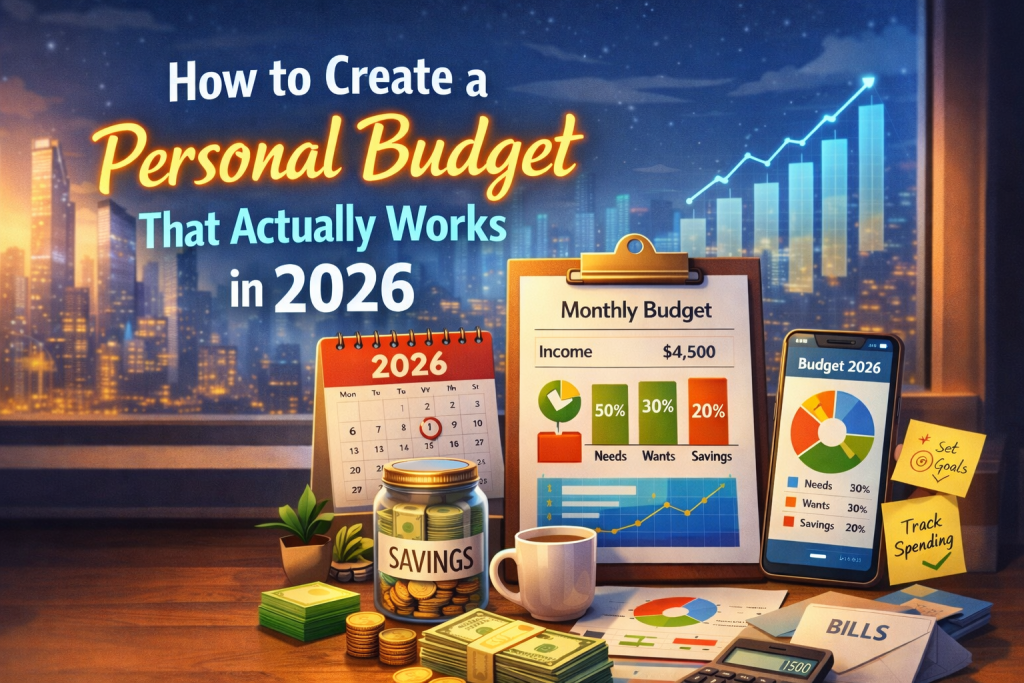
How to Create a Personal Budget That Actually Works in 2026
Introduction
How to create a personal budget that actually works in 2026 is one of the most important skills you need to achieve financial stability and peace of mind. With rising living costs, inflation, and increasing financial responsibilities, managing your money effectively is no longer optional, it’s essential. A well-structured budget helps you control your spending, save consistently, and reach your financial goals faster.
What Is a Personal Budget?
A personal budget is a financial plan that tracks your income and expenses over a specific period, usually monthly. It helps you understand where your money is going and ensures you are spending within your means. Learn more
Why You Need a Budget in 2026
1. Rising Cost of Living
Expenses like rent, food, and transportation continue to increase, making budgeting more important than ever.
2. Financial Awareness
A budget gives you clarity about your income and spending habits.
3. Helps You Save More
With a budget, you can prioritize savings and avoid unnecessary expenses.
4. Reduces Financial Stress
Knowing where your money goes helps you feel more in control.
Step-by-Step Guide on How to Create a Personal Budget That Actually Works in 2026
Step 1: Calculate Your Total Income
Start by determining how much money you earn each month. Include:
- Salary
- Side hustle income
- Business earnings
- Passive income
Step 2: Track Your Expenses
Write down all your monthly expenses, including:
- Rent
- Food
- Transportation
- Utilities
- Entertainment
Tracking your expenses helps you identify spending patterns.
Step 3: Categorize Your Spending
Divide your expenses into categories:
- Needs: Essentials like food and housing
- Wants: Non-essential spending
- Savings: Emergency fund, investments
Step 4: Use the 50/30/20 Rule
A popular budgeting method is the 50/30/20 rule:
- 50% for needs
- 30% for wants
- 20% for savings
This simple structure makes budgeting easier to follow.
Step 5: Set Financial Goals
Your budget should align with your goals, such as:
- Saving for a house
- Paying off debt
- Building an emergency fund
Step 6: Cut Unnecessary Expenses
Identify areas where you can reduce spending, such as:
- Eating out frequently
- Subscriptions you don’t use
- Impulse purchases
Step 7: Automate Your Savings
Set up automatic transfers to your savings account. This ensures consistency and discipline.
Step 8: Monitor and Adjust Regularly
A budget is not fixed. Review it monthly and adjust based on your income and expenses.
Best Budgeting Methods in 2026
Zero-Based Budgeting
Every dollar is assigned a purpose, leaving no money unaccounted for.
Envelope System
Allocate cash for specific spending categories.
Digital Budgeting Apps
Use apps to track spending and manage finances efficiently.
Common Budgeting Mistakes to Avoid
1. Not Tracking Expenses
Without tracking, your budget becomes ineffective.
2. Setting Unrealistic Goals
Overly strict budgets are hard to maintain.
3. Ignoring Small Expenses
Small daily purchases can add up significantly.
4. Not Reviewing Your Budget
Failing to adjust your budget leads to poor financial planning.
Practical Tips for a Budget That Works
- Start simple and build gradually
- Be honest about your spending habits
- Focus on consistency, not perfection
- Reward yourself occasionally to stay motivated
Benefits of a Personal Budget
- Better money management
- Increased savings
- Reduced debt
- Financial independence
Example of a Simple Monthly Budget
- Income: $1,000
- Needs: $500
- Wants: $300
- Savings: $200
This structure ensures balanced financial management.
Learn more in: Beginner’s Guide to Investing in Stocks for Passive Income
Conclusion
Learning how to create a personal budget that actually works in 2026 is a powerful step toward financial success. A good budget helps you control your finances, avoid unnecessary debt, and achieve your goals faster.
The key is consistency, discipline, and regular adjustments. Start today, and over time, your budget will become a tool that empowers your financial future.