How to Prevent Ear Infections in Children
Ear infections are among the most common health problems affecting children, especially infants and toddlers. While many ear infections are mild and resolve with proper treatment, recurrent infections can cause discomfort, sleep disturbances, hearing problems, and even delays in speech and language development. The good news is that many ear infections can be prevented through healthy habits, proper hygiene, and timely medical care.
Understanding why ear infections occur and taking proactive steps to reduce risk can help keep your child’s ears healthy and comfortable.
What Causes Ear Infections in Children?
Most childhood ear infections occur in the middle ear, the space behind the eardrum. These infections often develop after a cold, flu, or upper respiratory infection.
Children are more susceptible because their Eustachian tubes, the small passages connecting the middle ear to the back of the throat are shorter and more horizontal than those of adults. This structure makes it easier for fluid to become trapped and infected. Learn more
Common causes and risk factors include:
- Colds and respiratory infections
- Allergies
- Exposure to tobacco smoke
- Bottle-feeding while lying down
- Poor hand hygiene
- Frequent exposure to germs in daycare settings
- Enlarged adenoids
- Family history of ear infections
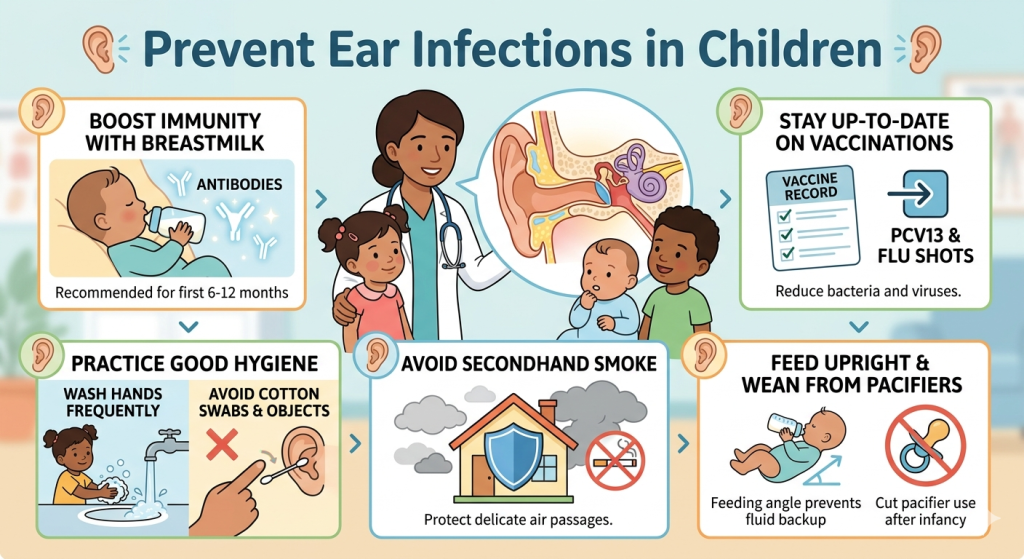
Breastfeed When Possible
Breastfeeding provides antibodies that help strengthen a baby’s immune system and reduce the risk of infections.
Research suggests that breastfeeding for at least the first six months of life may lower the likelihood of developing ear infections.
Benefits include:
- Enhanced immune protection
- Reduced respiratory infections
- Improved overall health
If breastfeeding is not possible, consult your pediatrician about the best feeding options for your child.
Avoid Bottle-Feeding While Lying Flat
When a baby drinks from a bottle while lying down, milk can flow into the Eustachian tubes and middle ear, increasing the risk of infection.
To reduce this risk:
- Hold your baby in a semi-upright position during feedings.
- Avoid putting your child to bed with a bottle.
- Ensure proper feeding techniques during infancy.
These simple practices can help protect the ears from fluid buildup.
Keep Vaccinations Up to Date
Vaccines play an important role in preventing illnesses that can lead to ear infections.
Particularly important vaccines include:
- Pneumococcal vaccine
- Influenza (flu) vaccine
- Routine childhood immunizations
By preventing respiratory infections, vaccinations can indirectly reduce the risk of middle ear infections.
Practice Good Hand Hygiene
Viruses and bacteria that cause colds often spread through hand contact.
Teach children to:
- Wash hands frequently with soap and water.
- Wash hands before eating.
- Wash hands after coughing, sneezing, or using the bathroom.
- Use hand sanitizer when soap and water are unavailable.
Good hygiene helps reduce exposure to germs that may trigger ear infections.
Minimize Exposure to Tobacco Smoke
Secondhand smoke significantly increases the risk of ear infections in children.
Smoke can:
- Irritate the Eustachian tubes
- Increase mucus production
- Reduce the body’s ability to fight infections
To protect your child:
- Maintain a smoke-free home.
- Avoid smoking in vehicles.
- Keep children away from environments where people smoke.
Reducing smoke exposure benefits both ear health and overall respiratory health.
Manage Allergies Effectively
Allergies can cause inflammation and congestion that block the Eustachian tubes.
Symptoms may include:
- Runny nose
- Nasal congestion
- Sneezing
- Itchy eyes
If your child has allergies, work with a healthcare provider to identify triggers and develop an appropriate treatment plan.
Reduce Exposure to Illness
Children in daycare or crowded environments are exposed to more germs, which can increase the likelihood of respiratory infections and ear problems.
Helpful preventive measures include:
- Encouraging regular handwashing.
- Keeping sick children at home when possible.
- Teaching children to cover coughs and sneezes.
- Cleaning commonly touched surfaces regularly.
Reducing the spread of infections can lower the risk of ear complications.
Promote Healthy Sleeping Habits
Adequate sleep supports a strong immune system and helps the body fight infections more effectively.
Children should receive age-appropriate amounts of sleep each day:
- Infants: 12–16 hours including naps
- Toddlers: 11–14 hours
- Preschoolers: 10–13 hours
- School-age children: 9–12 hours
Good sleep habits contribute to overall health and infection prevention.
Prevent Swimmer’s Ear
While middle ear infections are most common in young children, older children may develop swimmer’s ear, an infection of the outer ear canal.
To help prevent swimmer’s ear:
- Dry ears thoroughly after swimming.
- Use a clean towel to remove moisture.
- Tilt the head to drain trapped water.
- Wear properly fitted swim earplugs if recommended.
Avoid inserting cotton swabs or objects into the ear canal.
Recognize Early Warning Signs
Prompt treatment can prevent complications and reduce discomfort.
Common symptoms of ear infections include:
- Ear pain
- Tugging or pulling at the ear
- Fussiness or irritability
- Difficulty sleeping
- Fever
- Fluid drainage from the ear
- Temporary hearing difficulties
- Loss of balance
Seek medical advice if these symptoms occur, especially in infants and young children.
When to See a Doctor
Consult a healthcare provider if your child experiences:
- Severe ear pain
- High fever
- Ear drainage
- Symptoms lasting more than a few days
- Recurrent ear infections
- Noticeable hearing problems
Early diagnosis and treatment can help prevent complications and support healthy hearing development.
Read: Can Earbuds Damage Your Hearing? What You Need to Know
Conclusion
Ear infections are common in childhood, but many can be prevented through simple lifestyle and hygiene practices. Breastfeeding, proper feeding positions, regular handwashing, vaccination, smoke-free environments, and prompt management of allergies all play important roles in reducing risk. By taking proactive steps and recognizing early symptoms, parents can help protect their children from ear infections and support healthy hearing throughout childhood.