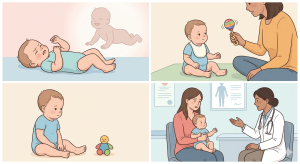
Signs of Developmental Delays in Babies and When to Seek Help
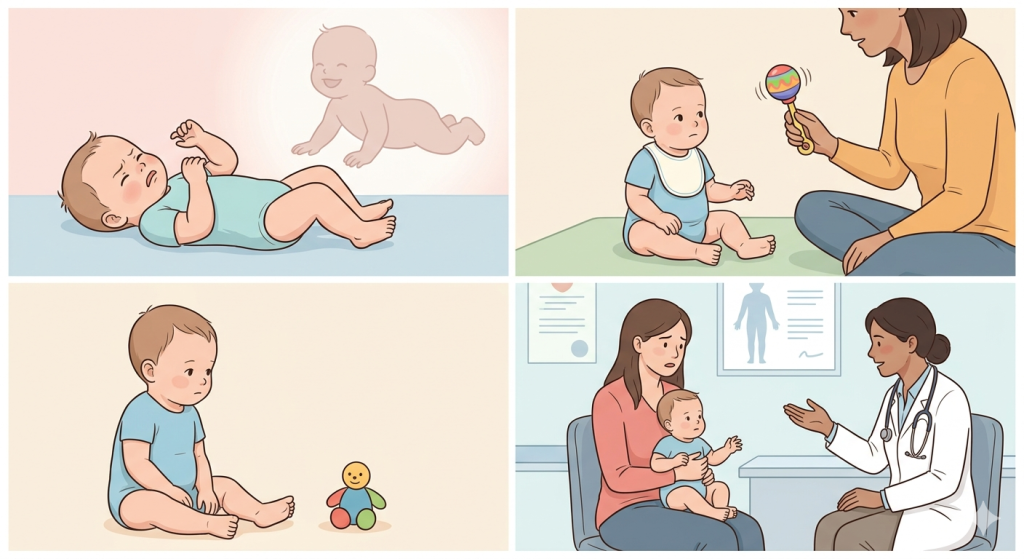
Every baby develops at their own pace, but there are general developmental milestones that most children reach within certain age ranges. These milestones include physical growth, movement, communication, social interaction, and cognitive skills. When a baby consistently misses several milestones, it may be a sign of developmental delay.
Understanding the early warning signs helps parents take timely action and ensure their child gets the support they need.
What Are Developmental Delays?
Developmental delays occur when a baby does not reach expected milestones in areas such as:
- Movement (gross and fine motor skills)
- Speech and language
- Social and emotional development
- Thinking and problem-solving skills
A delay does not always mean a permanent condition. Many babies catch up with early intervention and proper care. Learn more
Common Signs of Developmental Delays in Babies
1. Motor Skill Delays
Motor skills involve movement and coordination. Watch for:
- Not holding head up by 3–4 months
- Not rolling over by 6 months
- Not sitting without support by 9 months
- Not crawling by 12 months
- Not standing or attempting to walk by 18 months
Babies may also appear unusually stiff or very floppy.
2. Speech and Language Delays
Early communication is a key developmental area. Possible signs include:
- Not cooing or making sounds by 3–4 months
- No babbling (e.g., “ba-ba,” “da-da”) by 6–9 months
- No response to name by 9–12 months
- No clear words by 12–18 months
- Limited gestures like pointing or waving
3. Social and Emotional Delays
Social interaction is important for bonding and learning. Warning signs include:
- Limited eye contact
- Not smiling socially by 3 months
- Lack of interest in caregivers
- Not showing emotions (happy, sad, excited)
- Not engaging in simple games like peek-a-boo
4. Cognitive (Thinking) Delays
Cognitive skills involve learning and understanding. Possible signs include:
- Not tracking objects with eyes by 3–4 months
- Little curiosity about surroundings
- Difficulty recognizing familiar people
- Not responding to simple instructions by 12 months
5. Feeding and Physical Growth Concerns
Sometimes delays show up in daily activities:
- Difficulty sucking or swallowing
- Poor weight gain or growth
- Trouble coordinating feeding movements
- Persistent muscle weakness
Causes of Developmental Delays
There are several possible reasons, including:
- Premature birth
- Genetic or chromosomal conditions
- Neurological disorders
- Hearing or vision problems
- Lack of stimulation or interaction
- Complications during pregnancy or birth
In many cases, the exact cause is unknown early on.
When to Seek Help
Parents should consult a pediatrician if they notice:
- Missing multiple milestones for age
- Loss of previously learned skills (regression)
- No response to sounds or visual cues
- Persistent feeding difficulties
- Very unusual muscle tone (too stiff or too floppy)
- Concerns that something “just doesn’t feel right”
Early evaluation is always better than waiting.
Why Early Intervention Matters
Early intervention can significantly improve a child’s development. Support may include:
- Speech therapy
- Physical therapy
- Occupational therapy
- Hearing or vision support
- Developmental stimulation programs
The earlier a delay is identified, the better the chances of improvement.
How Parents Can Support Healthy Development
Parents play a major role in helping babies grow and learn:
- Talk, sing, and read to your baby daily
- Encourage tummy time and movement
- Play interactive games like peek-a-boo
- Respond to your baby’s sounds and gestures
- Provide a safe, stimulating environment
- Attend regular pediatric checkups
Read: How Much Sleep Does a Baby Need at Every Age?
Conclusion
Developmental delays in babies can be worrying, but early recognition and intervention make a major difference. While every child develops differently, consistent delays in movement, speech, social interaction, or learning should not be ignored. Trust your instincts as a parent and seek medical advice when concerned. With early support, many children go on to reach their full developmental potential and thrive.