How to Prevent Diaper Rash and Keep Baby Comfortable
Diaper rash is one of the most common skin conditions affecting babies. It appears as red, irritated skin in the diaper area and can cause discomfort, fussiness, and disrupted sleep. While diaper rash is usually not serious, it can be painful for babies and stressful for parents. Fortunately, with proper diapering habits and skincare, most cases of diaper rash can be prevented.
What Is Diaper Rash?
Diaper rash, also known as diaper dermatitis, is an irritation of the skin covered by a diaper. It often develops when a baby’s delicate skin is exposed to moisture, friction, urine, or stool for extended periods. The rash can range from mild redness to more severe inflammation with bumps or sores. Learn more
Common Causes of Diaper Rash
Understanding the causes of diaper rash can help parents take preventive measures.
Prolonged Exposure to Wetness
When a baby remains in a wet or soiled diaper for too long, the skin becomes irritated and more susceptible to rashes.
Friction and Chafing
Tight-fitting diapers or frequent rubbing against the skin can cause irritation, especially in active babies.
Sensitive Skin
Some babies have sensitive skin that reacts to certain diaper brands, wipes, soaps, or laundry detergents.
Introduction of New Foods
As babies begin eating solid foods, changes in stool consistency and frequency can increase the risk of diaper rash.
Yeast or Bacterial Infections
A warm, moist diaper environment can encourage the growth of yeast and bacteria, leading to more severe rashes.
Antibiotic Use
Antibiotics may alter the natural balance of bacteria, increasing the likelihood of yeast-related diaper rashes.
Signs and Symptoms of Diaper Rash
Parents should watch for the following signs:
- Red or pink patches on the diaper area
- Skin irritation around the buttocks, thighs, and genital region
- Dry, flaky, or peeling skin
- Increased fussiness during diaper changes
- Small bumps or blisters in severe cases
Early recognition allows for prompt treatment and prevention of worsening symptoms.
Effective Ways to Prevent Diaper Rash
Change Diapers Frequently
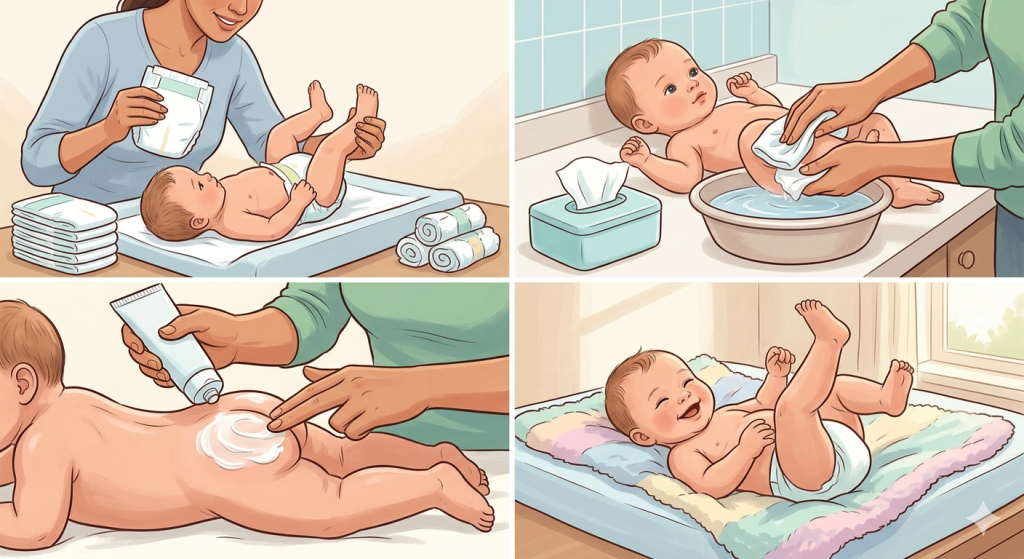
One of the most effective prevention methods is changing diapers as soon as they become wet or soiled. Frequent diaper changes reduce skin exposure to moisture and irritants.
Clean Gently During Diaper Changes
Use warm water and a soft cloth or fragrance-free baby wipes to clean the diaper area. Avoid rubbing the skin harshly, as this can worsen irritation.
Allow the Skin to Dry Completely
Before putting on a new diaper, ensure the baby’s skin is completely dry. Pat the area gently rather than rubbing it.
Use a Barrier Cream
Applying a protective ointment or diaper cream containing zinc oxide or petroleum jelly helps create a barrier between the skin and moisture.
Choose the Right Diaper Size
A properly fitting diaper reduces friction and allows airflow. Avoid diapers that are too tight around the waist or legs.
Give Your Baby Diaper-Free Time
Allowing babies to spend short periods without a diaper can help keep the skin dry and promote healing.
Select Gentle Products
Choose fragrance-free diapers, wipes, soaps, and detergents designed for sensitive baby skin. Avoid products with harsh chemicals that may trigger irritation.
Change Diapers Promptly After Bowel Movements
Stool contains enzymes that can quickly irritate delicate skin. Immediate diaper changes after bowel movements can significantly reduce rash risk.
How to Treat Mild Diaper Rash
If diaper rash develops despite preventive efforts, simple home care measures can often help.
- Increase diaper-changing frequency.
- Apply a thick layer of diaper rash cream.
- Keep the diaper area clean and dry.
- Provide more diaper-free time.
- Use super-absorbent diapers to reduce moisture.
Most mild diaper rashes improve within a few days with consistent care.
When to Contact a Pediatrician
Seek medical advice if:
- The rash does not improve after several days.
- The rash becomes severe or spreads.
- Blisters, pus, or open sores develop.
- Your baby has a fever along with the rash.
- You suspect a yeast or bacterial infection.
A healthcare provider can determine whether prescription treatments are necessary.
Tips for Keeping Your Baby Comfortable
Beyond preventing diaper rash, parents can help keep babies comfortable by:
- Dressing them in breathable cotton clothing.
- Avoiding overly tight diapers and clothing.
- Maintaining good hygiene routines.
- Monitoring skin for early signs of irritation.
- Using gentle skincare products specifically formulated for infants.
Read: Understanding Colic in Babies: Causes and Solutions
Conclusion
Diaper rash is a common but largely preventable condition that affects many babies during their early years. Frequent diaper changes, gentle cleaning, proper skin protection, and allowing the skin to stay dry are key strategies for prevention. By following these simple practices, parents can help keep their baby’s skin healthy, comfortable, and free from irritation. Consistent care not only reduces the risk of diaper rash but also promotes overall skin health and well-being for your little one.