Why More Adults Are Experiencing Early Joint Problems
Health & Wellness | 8 min read
You don’t have to be in your 60s to feel stiffness in your knees or aching in your hips. Increasingly, adults in their 30s and 40s are walking into clinics with complaints that were once considered problems of old age. Here is what is driving this silent epidemic and what you can do about it.
The Anatomy of the Problem
Joints are complex structures. Cartilage, synovial fluid, tendons, and ligaments all work in precise coordination. When any part of this system breaks down faster than the body can repair it, pain, inflammation, and reduced mobility follow. Cartilage in particular has no blood supply of its own, meaning it heals slowly and poorly once damaged. This is why joint problems tend to sneak up on people. By the time they are noticeable, the damage has often been building for years. Learn more
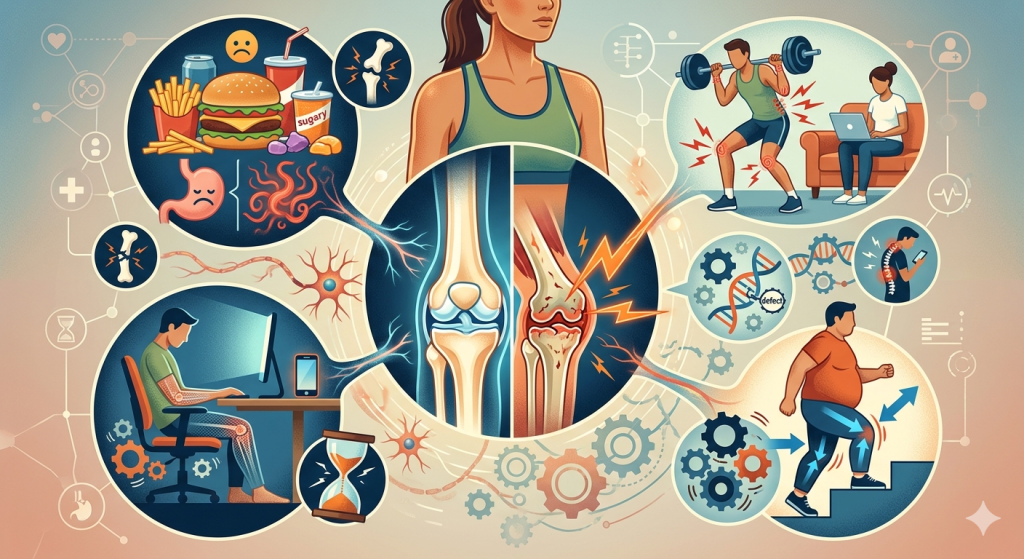
The Six Main Culprits
Understanding why early joint problems are rising means looking honestly at how modern life has changed.
Sedentary Lifestyles
Sitting for most of the day puts constant compressive load on the hips, knees, and lower back. Unlike dynamic movement, prolonged sitting prevents synovial fluid from lubricating joint surfaces, essentially starving cartilage of the nutrients it needs to stay healthy. The body is designed to move, and when it does not, joints quietly deteriorate.
Excess Body Weight
Every extra kilogram of body weight places significantly higher force on the knees with every step taken. But weight is not just a mechanical burden. Fat tissue actively produces inflammatory chemicals that accelerate cartilage breakdown throughout the body, even in non-weight-bearing joints like the wrists and fingers.
Overtraining and Repetitive Stress
The rise of fitness culture has brought a paradox. People go from little movement to extreme exercise without proper conditioning. Running long distances without building up gradually, doing daily high-impact workouts, or repeating the same movement patterns at work can erode joint surfaces faster than the body can rebuild them.
Poor Nutrition and Inflammation
Diets high in processed foods, refined sugars, and seed oils promote systemic inflammation, a slow-burning fire that damages tissues over time. Deficiencies in key nutrients like vitamin D, omega-3 fatty acids, and collagen precursors also leave joints undernourished and increasingly vulnerable to wear.
Poor Posture and Tech Neck
Smartphones and laptops have created an epidemic of forward head posture and rounded shoulders. Tilting the head forward even slightly multiplies the load on the cervical spine. Over years, this misalignment cascades downward, stressing the thoracic spine, hips, and knees through altered movement patterns the body was never designed for.
Chronic Stress and Poor Sleep
Cortisol, the primary stress hormone, suppresses the immune response and impairs the body’s ability to repair connective tissue. Sleep is when growth hormone peaks and joints are actively restored. Consistently falling short on rest deprives the body of its most powerful natural repair window, night after night.
Warning Signs to Watch For
Early joint problems rarely announce themselves loudly. Most people dismiss the first signals until significant damage has occurred. Be alert to morning stiffness that lingers after waking, clicking or grinding sounds during movement, recurring swelling or warmth around joints, and a gradual reduction in your range of motion, especially when climbing stairs, squatting, or reaching overhead.
What You Can Do Starting Today
The encouraging truth is that many of the factors driving early joint problems are reversible with consistent lifestyle changes.
Move more, but smarter. Low-impact daily movement like swimming, cycling, walking, and yoga preserves cartilage health without the wear of high-impact exercise. Strength training that builds muscle around joints is especially protective and often underrated.
Break up long periods of sitting. Stand and move briefly every forty-five minutes or so. Even a short walk restores synovial fluid circulation and reduces the compressive load building in your joints.
Eat anti-inflammatory foods. Prioritise fatty fish, leafy greens, berries, olive oil, and turmeric. Cut back on ultra-processed foods and excess sugar. A vitamin D check is also worthwhile as deficiency is extremely common and directly linked to joint deterioration.
Stay well hydrated. Cartilage is made up mostly of water. Chronic mild dehydration reduces its ability to absorb shock and cushion movement. Drinking adequate water daily, and more if you are active, is one of the simplest joint health habits you can build.
Prioritise sleep. Getting a full night of restful sleep creates the hormonal environment your joints need to repair themselves. Poor sleep does not just leave you tired. It actively accelerates tissue breakdown and blunts your body’s recovery capacity.
See a physiotherapist early. Do not wait until pain becomes debilitating. A physiotherapist can identify movement imbalances and faulty mechanics before they cause lasting damage, often resolving in weeks what would take months to treat if left unchecked.
Read: The Benefits of Decluttering Your Home and Mental Space
The Bottom Line
Early joint problems are not inevitable, and they are no longer just an older person’s concern. Modern life has created the perfect conditions for premature joint wear, but the same lifestyle choices that create the problem can also reverse it. The window for prevention is wide open, and your joints are worth protecting now.