Common Childhood Diseases Parents Should Watch Out For
Childhood is a critical stage of growth and development, but it is also a time when children are more vulnerable to infections and illnesses. Their immune systems are still developing, making them more likely to catch common diseases, especially in school and social environments.
For parents, understanding the most common childhood diseases, their symptoms, and when to seek medical care is essential for keeping children healthy and preventing complications.
Why Children Are More Susceptible to Diseases
Children are more prone to illnesses because:
- Their immune system is still developing
- They frequently interact with other children in schools and playgrounds
- They often share toys and personal items
- Hygiene habits are still being learned
- They are more exposed to airborne infections
Because of these factors, infections can spread quickly among children. Learn more
Common Childhood Diseases
1. Common Cold
The common cold is one of the most frequent illnesses in children.
Symptoms:
- Runny or blocked nose
- Sneezing
- Mild cough
- Sore throat
- Slight fever
It usually resolves within a week but can spread easily.
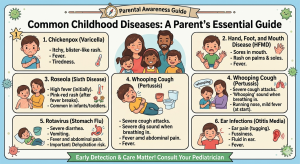
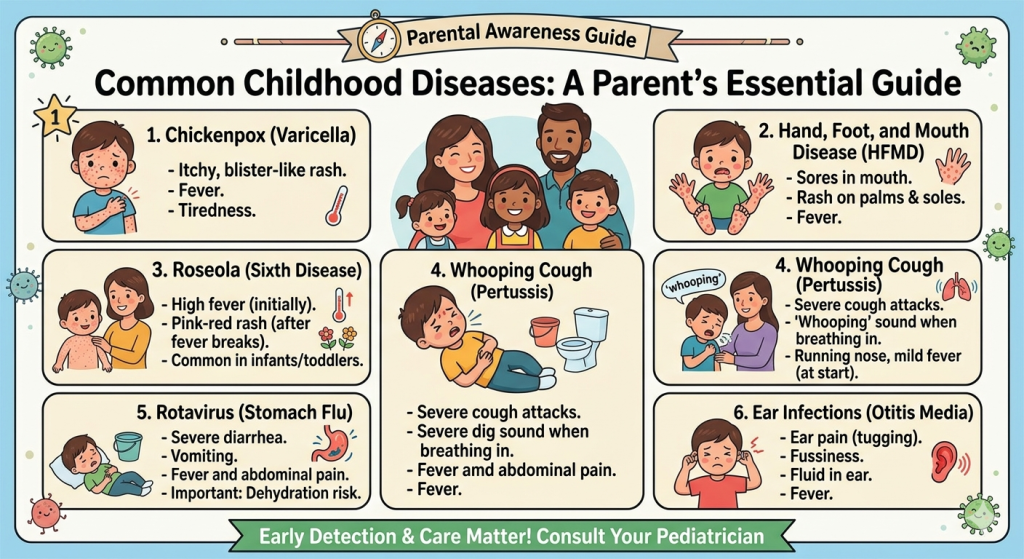
2. Chickenpox
Chickenpox is a viral infection that causes itchy skin rashes and blisters.
Symptoms:
- Red spots that turn into fluid-filled blisters
- Itching
- Fever
- Fatigue
- Loss of appetite
It spreads through direct contact and airborne droplets.
3. Measles
Measles is a highly contagious viral disease.
Symptoms:
- High fever
- Red eyes
- Runny nose
- Cough
- Red rash that spreads across the body
Vaccination is the best prevention.
4. Diarrhea
Diarrhea is common in children and can be caused by infections or contaminated food and water.
Symptoms:
- Frequent loose stools
- Stomach cramps
- Dehydration
- Vomiting (in some cases)
Severe dehydration can be dangerous if not treated quickly.
5. Ear Infections
Ear infections are common in young children, especially after colds.
Symptoms:
- Ear pain
- Fever
- Irritability
- Difficulty sleeping
- Fluid discharge from the ear
6. Tonsillitis
Tonsillitis is inflammation of the tonsils, often caused by infections.
Symptoms:
- Sore throat
- Difficulty swallowing
- Fever
- Swollen tonsils
- Bad breath
7. Hand, Foot, and Mouth Disease (HFMD)
HFMD is a viral infection common in young children.
Symptoms:
- Fever
- Painful mouth sores
- Rash on hands, feet, and buttocks
- Loss of appetite
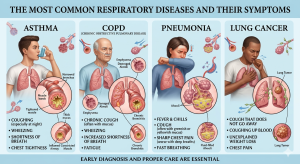
8. Asthma
Asthma is a chronic respiratory condition that affects many children.
Symptoms:
- Wheezing
- Shortness of breath
- Chest tightness
- Frequent coughing, especially at night
Triggers include dust, smoke, and allergens.
Causes of Common Childhood Diseases
Childhood illnesses are often caused by:
- Viral and bacterial infections
- Poor hygiene practices
- Contaminated food or water
- Weak immunity
- Close contact in schools or daycare centers
- Environmental factors such as pollution
How Parents Can Help Prevent Childhood Diseases
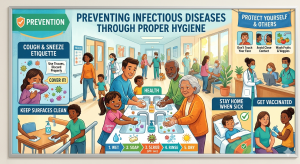
1. Encourage Good Hygiene
- Teach children to wash hands regularly
- Cover mouth when coughing or sneezing
- Keep nails trimmed and clean
2. Ensure Proper Nutrition
- Provide balanced meals rich in vitamins
- Encourage fruits and vegetables
- Ensure adequate hydration
3. Keep Vaccinations Up to Date
Vaccines protect against serious diseases like measles, polio, and whooping cough.
4. Maintain a Clean Environment
- Clean toys and surfaces regularly
- Ensure proper sanitation at home
- Avoid exposure to sick individuals
5. Promote Healthy Habits
- Ensure enough sleep
- Encourage physical activity
- Limit exposure to pollution and smoke
When to See a Doctor
Parents should seek medical help if a child shows:
- High or persistent fever
- Difficulty breathing
- Severe dehydration
- Unusual rash or swelling
- Persistent vomiting or diarrhea
- Symptoms lasting more than a few days
Early treatment can prevent serious complications.
Read: Childhood Anemia: Causes and Nutritional Solutions
Conclusion
Childhood diseases are common, but many can be prevented or managed effectively with proper care and attention. By understanding the symptoms and practicing good hygiene, nutrition, and preventive healthcare, parents can help their children grow up healthy and strong.
Being informed and proactive is the key to protecting children from avoidable health risks.