Understanding Lupus: Symptoms, Diagnosis, and Management
Lupus is a complex autoimmune disease that affects millions of people worldwide. It occurs when the body’s immune system mistakenly attacks healthy tissues and organs, causing inflammation and damage in different parts of the body. Because lupus can affect the skin, joints, kidneys, heart, lungs, brain, and other organs, it is often difficult to diagnose and manage.
The condition varies greatly from person to person. Some individuals experience mild symptoms, while others may face serious health complications. Early recognition, accurate diagnosis, and proper treatment are essential for improving quality of life and preventing long-term organ damage.
What Is Lupus?
Lupus is a chronic autoimmune disease in which the immune system becomes overactive and attacks healthy cells instead of protecting the body from infections.
The most common type is Systemic Lupus Erythematosus (SLE), which can affect multiple organs throughout the body. Other forms of lupus include:
- Cutaneous lupus, which mainly affects the skin
- Drug-induced lupus, triggered by certain medications
- Neonatal lupus, a rare condition affecting newborns
Lupus is more common in women, especially during childbearing years, although men and children can also develop the disease. Learn more
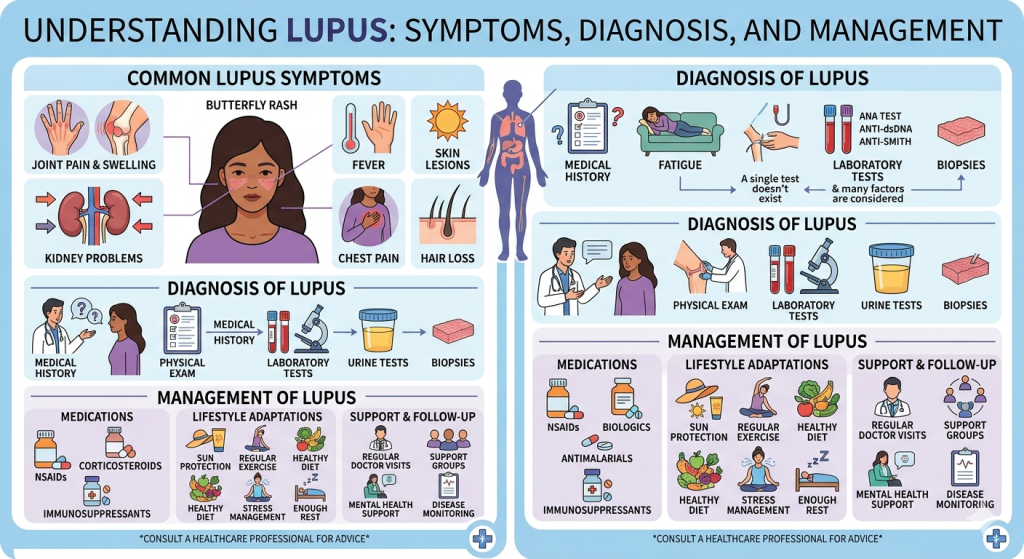
Common Symptoms of Lupus
Lupus symptoms can appear suddenly or develop gradually over time. Symptoms may come and go in periods known as flare-ups and remissions.
1. Fatigue
Persistent and extreme tiredness is one of the most common symptoms of lupus. Many patients experience fatigue even after getting enough rest.
2. Joint Pain and Swelling
Inflammation often affects the joints, causing pain, stiffness, and swelling, especially in the hands, wrists, and knees.
3. Skin Rashes
A butterfly-shaped rash across the cheeks and nose is a classic sign of lupus. Skin sensitivity to sunlight is also common.
4. Fever
Unexplained low-grade fever may occur due to ongoing inflammation in the body.
5. Hair Loss
Some people with lupus experience thinning hair or hair loss during disease flare-ups.
6. Chest Pain
Inflammation around the lungs or heart can cause chest discomfort and breathing difficulties.
7. Kidney Problems
Lupus may damage the kidneys, leading to swelling, high blood pressure, and changes in urination.
8. Neurological Symptoms
Some patients experience:
- Headaches
- Memory problems
- Confusion
- Depression
- Seizures
Causes and Risk Factors of Lupus
The exact cause of lupus remains unknown, but experts believe it results from a combination of genetic, environmental, and hormonal factors.
Possible triggers include:
- Viral infections
- Sunlight exposure
- Stress
- Certain medications
- Hormonal changes
- Smoking
Family history may also increase the risk of developing lupus.
How Lupus Affects the Body
Lupus can cause inflammation in different organs and tissues, leading to a wide range of complications.
Skin and Joints
Painful rashes and arthritis-like symptoms are common.
Kidneys
Kidney inflammation, known as lupus nephritis, can become serious if untreated.
Heart and Blood Vessels
Lupus increases the risk of:
- Heart disease
- Blood clots
- Stroke
- High blood pressure
Lungs
Inflammation in the lungs may cause chest pain and shortness of breath.
Brain and Nervous System
Lupus can affect mental function and emotional wellbeing.
Diagnosing Lupus
Diagnosing lupus can be challenging because its symptoms often resemble those of other diseases.
Doctors may use:
- Medical history evaluation
- Physical examination
- Blood tests
- Urine tests
- Imaging scans
- Antinuclear antibody (ANA) tests
- Organ biopsies when necessary
There is no single test that confirms lupus, so diagnosis usually involves evaluating multiple symptoms and laboratory findings.
Treatment and Management of Lupus
Although there is currently no cure for lupus, proper treatment can help control symptoms and reduce complications.
1. Medications
Doctors may prescribe:
- Anti-inflammatory drugs
- Corticosteroids
- Immunosuppressants
- Antimalarial medications
- Biologic therapies
Treatment depends on the severity and organs affected.
2. Managing Flare-Ups
Patients are encouraged to identify triggers that worsen symptoms and take preventive measures.
Helpful strategies include:
- Avoiding excessive sunlight
- Managing stress
- Getting enough rest
- Following treatment plans carefully
3. Healthy Diet and Nutrition
A balanced diet supports immune health and reduces inflammation.
Recommended habits include:
- Eating fruits and vegetables
- Limiting processed foods
- Reducing excess salt intake
- Staying hydrated
4. Regular Exercise
Gentle physical activity can improve joint flexibility, reduce fatigue, and support heart health.
Activities such as walking, stretching, swimming, and yoga are often beneficial.
5. Routine Medical Monitoring
Regular checkups help monitor disease activity and detect complications early.
Patients with lupus may need ongoing care from specialists such as:
- Rheumatologists
- Kidney specialists
- Dermatologists
- Cardiologists
Mental and Emotional Impact of Lupus
Living with a chronic illness can affect emotional wellbeing. Some individuals with lupus experience:
- Anxiety
- Depression
- Stress
- Social isolation
Support groups, counseling, and emotional support from family and healthcare providers can help improve mental health.
Living Well With Lupus
Many people with lupus successfully manage their condition and maintain active lifestyles. Advances in medical treatment and awareness have improved outcomes significantly.
Healthy lifestyle habits that support lupus management include:
- Prioritizing sleep
- Maintaining regular medical care
- Protecting skin from sunlight
- Avoiding smoking
- Staying physically active
- Managing stress effectively
When to Seek Immediate Medical Attention
Emergency medical care may be necessary if lupus symptoms suddenly worsen, especially if there is:
- Severe chest pain
- Difficulty breathing
- Seizures
- Sudden swelling
- High fever
- Confusion
Prompt treatment can help prevent serious complications.
Read: The Dangers of Untreated Sleep Apnea on Heart Health
Conclusion
Lupus is a chronic autoimmune disease that can affect many parts of the body, including the skin, joints, kidneys, heart, and brain. Symptoms such as fatigue, joint pain, skin rashes, and organ inflammation may vary widely between individuals.
Although lupus has no permanent cure, early diagnosis, proper medical treatment, healthy lifestyle choices, and regular monitoring can help control symptoms and improve quality of life. Increased awareness and ongoing medical advances continue to offer hope for better lupus management and long-term health outcomes.