The Dangers of Untreated Sleep Apnea on Heart Health
Sleep is essential for maintaining good physical and mental health, yet millions of people worldwide suffer from sleep disorders that silently affect their wellbeing. One of the most serious and commonly overlooked conditions is sleep apnea. This disorder causes repeated interruptions in breathing during sleep, reducing oxygen supply to the body and placing significant stress on vital organs, especially the heart.
Although many people dismiss loud snoring or poor sleep quality as minor issues, untreated sleep apnea can lead to severe cardiovascular complications over time. Understanding the relationship between sleep apnea and heart health is important for early diagnosis, proper treatment, and long-term disease prevention.
What Is Sleep Apnea?
Sleep apnea is a sleep disorder in which breathing repeatedly stops and starts during sleep. These pauses in breathing can last from a few seconds to over a minute and may occur multiple times each hour.
The most common type is Obstructive Sleep Apnea (OSA), which happens when throat muscles relax excessively and block the airway during sleep. Another form, Central Sleep Apnea, occurs when the brain fails to send proper signals to the muscles responsible for breathing.
Both types reduce oxygen levels in the blood and disrupt normal sleep patterns. Learn more
Common Symptoms of Sleep Apnea
Many people with sleep apnea may not realize they have the condition because symptoms occur during sleep. Common signs include:
- Loud and chronic snoring
- Pauses in breathing during sleep
- Gasping or choking while asleep
- Excessive daytime fatigue
- Morning headaches
- Difficulty concentrating
- Irritability or mood changes
- Dry mouth upon waking
- Poor sleep quality
Persistent daytime tiredness can also increase the risk of accidents and reduced productivity.
How Sleep Apnea Affects the Heart
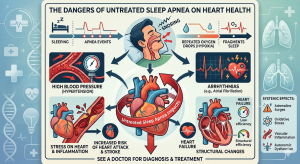
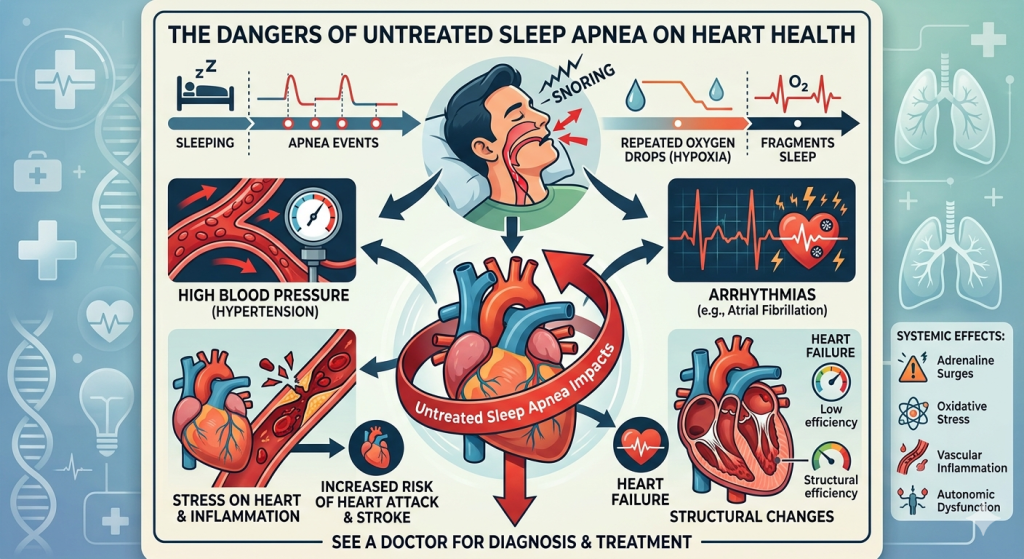
Untreated sleep apnea places repeated stress on the cardiovascular system throughout the night. Every time breathing stops, oxygen levels drop, forcing the body to work harder to restore normal breathing.
This repeated cycle can negatively affect heart function in several ways.
1. High Blood Pressure
Sleep apnea is strongly linked to hypertension, also known as high blood pressure. Oxygen deprivation activates the body’s stress response, causing blood vessels to narrow and blood pressure to rise.
Over time, chronic high blood pressure increases the risk of:
- Heart attacks
- Stroke
- Kidney disease
- Heart failure
People with severe sleep apnea are more likely to develop resistant hypertension that is difficult to control.
2. Increased Risk of Heart Disease
Repeated oxygen loss and sleep disruption may damage blood vessels and increase inflammation in the body. This raises the likelihood of developing coronary artery disease, where arteries supplying the heart become narrowed or blocked.
Untreated sleep apnea may contribute to:
- Chest pain
- Reduced blood flow
- Heart muscle damage
- Increased risk of sudden cardiac events
3. Irregular Heart Rhythms
Sleep apnea can interfere with the heart’s normal electrical activity, increasing the risk of arrhythmias such as atrial fibrillation.
Irregular heart rhythms may cause:
- Palpitations
- Dizziness
- Fatigue
- Increased stroke risk
People with untreated sleep apnea often experience recurring heart rhythm disturbances during sleep.
4. Heart Failure
Over time, the strain caused by repeated oxygen deprivation may weaken the heart muscle. This can contribute to heart failure, a condition in which the heart cannot pump blood efficiently.
Both obstructive and central sleep apnea are associated with worsening heart failure symptoms.
5. Increased Risk of Stroke
Poor oxygen circulation and high blood pressure linked to sleep apnea increase the risk of stroke. Interrupted breathing may also affect blood flow to the brain, contributing to long-term vascular damage.
Why Sleep Apnea Often Goes Undiagnosed
Many individuals ignore symptoms such as snoring or daytime tiredness because they do not realize these could signal a serious medical condition. In some cases, family members notice breathing pauses before the patient does.
Common reasons sleep apnea remains untreated include:
- Lack of awareness
- Misunderstanding symptoms
- Failure to seek medical evaluation
- Assuming snoring is harmless
Unfortunately, delaying treatment can allow cardiovascular damage to progress silently over time.
Risk Factors for Sleep Apnea
Several factors increase the likelihood of developing sleep apnea:
- Obesity
- Smoking
- Excess alcohol use
- Family history
- Nasal congestion
- Aging
- Large neck circumference
- High blood pressure
Men are generally at higher risk, although women may also develop sleep apnea, especially after menopause.
Diagnosing Sleep Apnea
Doctors may diagnose sleep apnea through:
- Sleep studies (polysomnography)
- Home sleep apnea testing
- Medical history evaluation
- Physical examination
Sleep studies monitor breathing patterns, oxygen levels, heart rate, and brain activity during sleep.
Effective Treatments for Sleep Apnea
The good news is that sleep apnea is treatable, and proper treatment can significantly improve heart health.
1. Continuous Positive Airway Pressure (CPAP)
CPAP machines are one of the most effective treatments for obstructive sleep apnea. The device delivers steady air pressure through a mask, helping keep airways open during sleep.
Regular CPAP use may:
- Improve sleep quality
- Reduce blood pressure
- Lower cardiovascular risks
- Improve daytime energy
2. Weight Management
Losing excess weight can reduce airway obstruction and improve breathing during sleep.
3. Lifestyle Changes
Healthy lifestyle habits can help manage symptoms:
- Avoid smoking
- Limit alcohol intake
- Exercise regularly
- Maintain consistent sleep schedules
- Sleep on your side instead of your back
4. Oral Appliances
Some patients benefit from special dental devices that help keep the airway open during sleep.
5. Surgery
In severe cases, surgery may be considered to remove tissue blocking the airway or correct structural abnormalities.
The Importance of Protecting Heart Health
Heart health and sleep quality are closely connected. Proper sleep allows the cardiovascular system to rest and recover. Chronic sleep disruption, however, places continuous strain on the body and increases disease risk.
Protecting heart health involves:
- Managing blood pressure
- Maintaining healthy weight
- Staying physically active
- Eating balanced meals
- Getting quality sleep
- Treating sleep disorders promptly
Read: Understanding Gastroesophageal Reflux Disease (GERD) and Digestive Health
Conclusion
Untreated sleep apnea is far more dangerous than simple snoring or restless sleep. Repeated breathing interruptions reduce oxygen supply, increase stress on the cardiovascular system, and significantly raise the risk of high blood pressure, heart disease, arrhythmias, heart failure, and stroke.
Early diagnosis and proper treatment are essential for protecting both sleep quality and long-term heart health. By recognizing symptoms, seeking medical care, and adopting healthier lifestyle habits, individuals with sleep apnea can reduce complications and improve their overall wellbeing.