Understanding Gastroesophageal Reflux Disease (GERD) and Digestive Health
Digestive health plays a vital role in overall wellbeing, affecting everything from nutrient absorption to energy levels and immune function. One of the most common digestive disorders affecting millions of people worldwide is Gastroesophageal Reflux Disease, commonly known as GERD. This chronic condition occurs when stomach acid frequently flows back into the esophagus, causing irritation and discomfort.
Although occasional acid reflux is common, persistent reflux may indicate GERD, a condition that can significantly affect daily life if left untreated. Understanding GERD, its causes, symptoms, complications, and treatment options is essential for maintaining good digestive health and preventing long-term health problems.
What Is GERD?
Gastroesophageal Reflux Disease (GERD) is a chronic digestive disorder in which stomach acid or bile repeatedly flows backward into the esophagus. The esophagus is the tube that carries food from the mouth to the stomach.
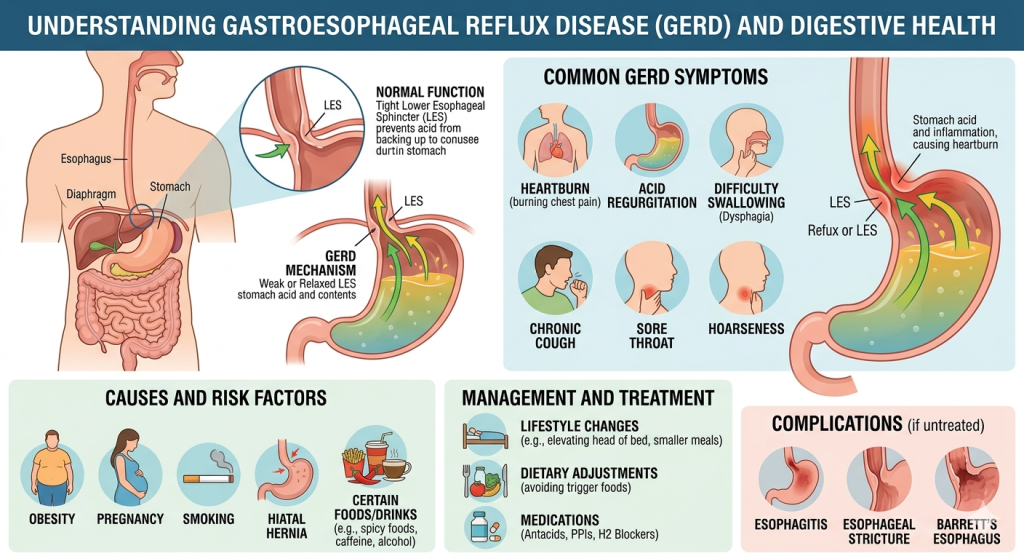
Normally, a ring of muscle called the lower esophageal sphincter (LES) acts like a valve, preventing stomach contents from moving upward. In people with GERD, this muscle becomes weak or relaxes abnormally, allowing acid to rise into the esophagus.
Frequent acid reflux can irritate the lining of the esophagus and lead to inflammation, pain, and other complications. Learn more
Common Symptoms of GERD
GERD symptoms may vary from person to person, but the most common signs include:
- Frequent heartburn
- Burning sensation in the chest
- Acidic or sour taste in the mouth
- Difficulty swallowing
- Chest discomfort after eating
- Chronic cough
- Hoarseness or sore throat
- Feeling of food stuck in the throat
- Bloating and indigestion
Symptoms often worsen after large meals, lying down, or eating spicy and fatty foods.
Causes of GERD
Several factors can contribute to the development of GERD.
1. Weak Lower Esophageal Sphincter
A weakened LES allows stomach acid to flow backward into the esophagus more easily.
2. Obesity
Excess body weight increases pressure on the stomach, making acid reflux more likely.
3. Poor Dietary Habits
Certain foods and beverages may trigger reflux symptoms, including:
- Spicy foods
- Fried foods
- Chocolate
- Caffeine
- Alcohol
- Carbonated drinks
- Citrus fruits
- Tomato-based foods
4. Smoking
Smoking weakens the LES and increases acid production, worsening reflux symptoms.
5. Pregnancy
Hormonal changes and pressure from the growing uterus can contribute to acid reflux during pregnancy.
6. Eating Large Meals
Overeating or eating too close to bedtime can increase stomach pressure and reflux risk.
How GERD Affects Digestive Health
GERD can interfere with normal digestion and reduce overall digestive comfort. Chronic reflux may lead to:
- Inflammation of the esophagus
- Difficulty eating comfortably
- Reduced appetite
- Sleep disturbances
- Nutrient absorption problems
Digestive health is closely linked to quality of life, making early management of GERD important for long-term wellbeing.
Potential Complications of Untreated GERD
Ignoring GERD symptoms can lead to serious complications over time.
Esophagitis
Frequent acid exposure may inflame and damage the esophageal lining.
Esophageal Strictures
Scarring from repeated irritation can narrow the esophagus and make swallowing difficult.
Barrett’s Esophagus
Long-term GERD may cause changes in the esophageal lining, increasing the risk of esophageal cancer.
Respiratory Problems
Acid reflux can sometimes affect the lungs and airways, contributing to:
- Asthma symptoms
- Chronic cough
- Laryngitis
- Breathing difficulties
Diagnosing GERD
Doctors may diagnose GERD using:
- Medical history evaluation
- Physical examination
- Endoscopy
- pH monitoring tests
- Imaging tests
Early diagnosis helps prevent complications and improves treatment success.
Effective Ways to Manage GERD
Managing GERD often involves a combination of lifestyle changes, dietary adjustments, and medication.
1. Maintain a Healthy Weight
Weight loss can reduce pressure on the stomach and decrease acid reflux episodes.
2. Eat Smaller Meals
Smaller portions help prevent excessive stomach pressure and reduce reflux symptoms.
3. Avoid Trigger Foods
Identifying and avoiding foods that worsen symptoms is an important part of GERD management.
4. Do Not Lie Down After Eating
Waiting at least two to three hours before lying down helps reduce acid reflux.
5. Elevate the Head During Sleep
Raising the head slightly while sleeping may help keep stomach acid from flowing upward.
6. Quit Smoking
Stopping smoking improves digestive health and reduces reflux severity.
7. Reduce Alcohol and Caffeine Intake
Both alcohol and caffeine can worsen acid reflux symptoms in some individuals.
Medical Treatments for GERD
Doctors may prescribe medications such as:
- Antacids
- H2 blockers
- Proton pump inhibitors (PPIs)
These medications help reduce stomach acid production and relieve symptoms.
In severe cases, surgery may be recommended to strengthen the lower esophageal sphincter.
The Importance of Digestive Health
Good digestive health supports:
- Proper nutrient absorption
- Strong immune function
- Healthy metabolism
- Better energy levels
- Improved mental wellbeing
Simple lifestyle habits such as balanced nutrition, regular exercise, hydration, and stress management can help maintain a healthy digestive system.
When to Seek Medical Attention
Medical care should be sought if symptoms include:
- Difficulty swallowing
- Unexplained weight loss
- Persistent vomiting
- Chest pain
- Blood in vomit or stool
- Severe or frequent heartburn
Early medical evaluation can help prevent serious complications.
Read: Asthma Triggers and Effective Ways to Manage Symptoms
Conclusion
Gastroesophageal Reflux Disease (GERD) is a common digestive disorder that can significantly affect comfort, nutrition, and overall health. Frequent acid reflux, heartburn, chest discomfort, and digestive irritation are common signs that should not be ignored.
Fortunately, GERD can often be managed successfully through lifestyle changes, healthy eating habits, weight control, and proper medical treatment. Maintaining good digestive health is essential for long-term wellbeing, and early management of GERD can help prevent complications while improving quality of life.