The Effects of Sedentary Lifestyle on Adult Health
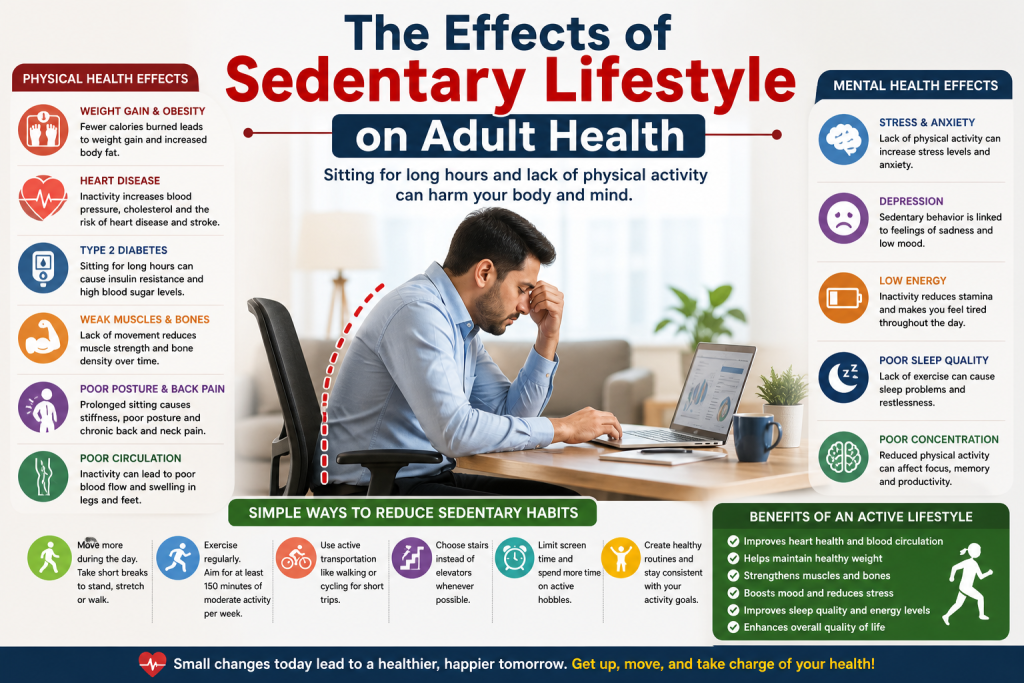
Modern life has made people more inactive than ever before. Many adults spend long hours sitting at desks, driving, watching television, or using mobile devices. While technology and convenience have improved daily living, they have also increased sedentary behavior. A sedentary lifestyle refers to a way of living that involves little or no physical activity. Over time, this lack of movement can negatively affect both physical and mental health.
Health experts warn that prolonged sitting and inactivity can increase the risk of several chronic diseases. Even people who exercise occasionally may still face health problems if they spend most of their day sitting. Understanding the effects of a sedentary lifestyle can help adults make healthier choices and improve their overall well-being.
What Is a Sedentary Lifestyle?
A sedentary lifestyle is characterized by low levels of physical activity and extended periods of sitting or lying down while awake. Common sedentary activities include working on a computer, watching television, playing video games, or scrolling through smartphones for long hours.
Adults with sedentary habits often burn fewer calories, which can contribute to weight gain and poor health. Over time, inactivity affects the body’s muscles, metabolism, circulation, and mental state. Learn more
Common Causes of Sedentary Living
Several factors contribute to inactive lifestyles among adults. Office jobs that require sitting for many hours are one of the biggest causes. Technology has also reduced the need for physical movement in everyday tasks. Food delivery services, online shopping, and entertainment streaming make it easy for people to stay indoors for long periods.
Busy schedules and lack of motivation can also prevent adults from exercising regularly. Some individuals may feel too tired after work, while others struggle to find time for physical activity.
Physical Health Effects of a Sedentary Lifestyle
Weight Gain and Obesity
One of the most common effects of inactivity is weight gain. When the body burns fewer calories than it consumes, excess calories are stored as fat. This increases the risk of overweight and obesity, which are linked to many serious health conditions.
Heart Disease
A sedentary lifestyle can weaken heart health over time. Lack of physical activity may lead to high blood pressure, poor blood circulation, and increased cholesterol levels. These factors raise the risk of heart disease, stroke, and other cardiovascular problems.
Type 2 Diabetes
Physical inactivity affects how the body regulates blood sugar. Adults who spend long hours sitting may become more resistant to insulin, increasing the risk of developing type 2 diabetes. Regular movement helps the body use glucose more effectively and supports healthy blood sugar levels.
Weak Muscles and Bones
The body needs movement to maintain muscle strength and bone density. Sitting for long periods can weaken muscles, especially in the legs and core. Inactivity may also increase the risk of osteoporosis and joint stiffness as adults age.
Poor Posture and Back Pain
Extended sitting often leads to poor posture, especially when using computers or smartphones. This can cause neck pain, shoulder tension, and lower back problems. Over time, poor posture may affect spinal health and mobility.
Mental Health Effects of Inactivity
A sedentary lifestyle does not only affect the body; it also impacts mental well-being. Adults who are physically inactive may experience higher levels of stress, anxiety, and depression. Exercise helps release endorphins, which are natural chemicals that improve mood and reduce stress.
Long hours of screen time and isolation can also contribute to emotional exhaustion and poor sleep quality. Lack of physical movement may reduce energy levels and make adults feel less motivated throughout the day.
How Sedentary Behavior Affects Energy and Sleep
People who are inactive often report feeling tired more frequently. Although it may seem that resting conserves energy, regular movement actually improves stamina and circulation. Physical activity helps oxygen and nutrients move efficiently through the body, increasing energy levels.
Sedentary behavior can also disrupt sleep patterns. Adults who do not engage in regular exercise may struggle with insomnia or poor-quality sleep. In contrast, active individuals often sleep more deeply and wake up feeling refreshed.
Simple Ways to Reduce Sedentary Habits
Making small lifestyle changes can greatly improve health and reduce the risks associated with inactivity.
Move More During the Day
Adults should try to stand, stretch, or walk regularly, especially during long work hours. Taking short movement breaks every 30 to 60 minutes can improve circulation and reduce stiffness.
Exercise Regularly
Engaging in physical activities such as walking, jogging, cycling, dancing, or swimming can strengthen the body and improve mental health. Experts recommend at least 150 minutes of moderate exercise each week.
Limit Screen Time
Reducing unnecessary television and smartphone use can encourage more active habits. Spending time outdoors or participating in hobbies that involve movement can be beneficial.
Use Active Transportation
Walking or cycling for short trips instead of driving can increase daily physical activity. Using stairs instead of elevators is another simple way to stay active.
Create Healthy Routines
Scheduling regular workout times and setting reminders to move can help adults stay consistent with healthy habits.
Benefits of an Active Lifestyle
Becoming more physically active offers many health benefits. Regular movement improves heart health, strengthens muscles and bones, boosts mood, supports weight management, and increases energy levels. Physical activity can also improve concentration, reduce stress, and enhance overall quality of life.
Adults who stay active are more likely to maintain independence and mobility as they age. Even small increases in daily movement can make a significant difference over time.
Read: Menopause and Mental Health: Coping With Emotional Changes
Conclusion
A sedentary lifestyle can have serious effects on adult health, including weight gain, heart disease, diabetes, poor posture, and mental health challenges. Modern lifestyles often encourage long periods of sitting, but small changes in daily habits can help reduce these risks. Regular movement, exercise, and active routines are essential for maintaining physical and emotional well-being. By becoming more active and reducing sedentary behavior, adults can improve their health, boost their energy, and enjoy a better quality of life.