The Impact of Sugar on Your Body: What You Need to Know
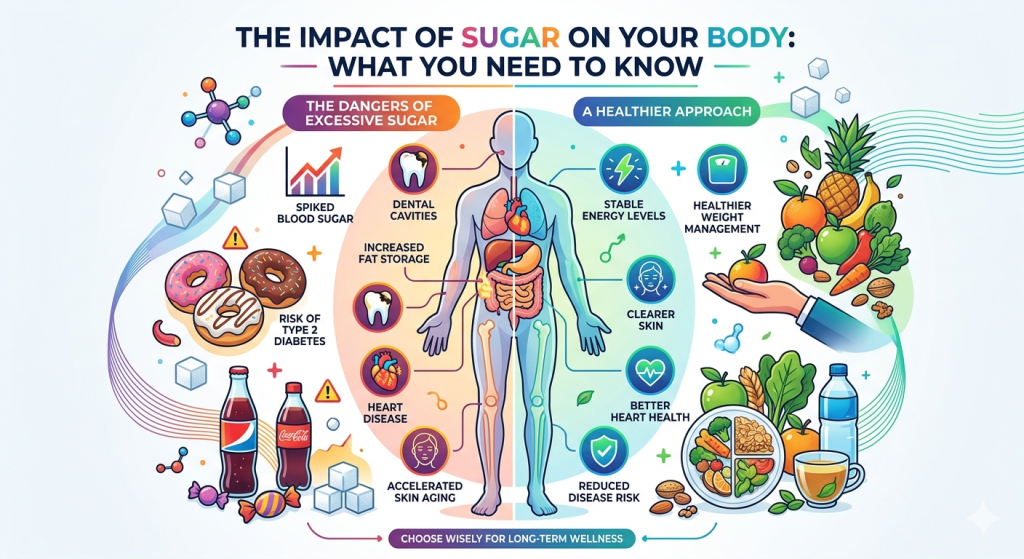
Sugar is a primary energy source, but not all sugars are created equal. While naturally occurring sugars in fruit come with fiber and vitamins, added sugars, found in sodas, candies, and processed snacks can have a significant impact on your physiological health when consumed in excess.
1. The Immediate Effect: Blood Sugar Spikes
When you consume simple sugars, your body breaks them down rapidly, causing a sharp rise in blood glucose. In response, your pancreas releases insulin to usher that sugar into your cells for energy.
- The Crash: Following a “sugar high,” insulin often clears the glucose so quickly that your blood sugar drops below normal, leading to fatigue, irritability, and “brain fog.”
- Cravings: This rapid drop signals your brain that it needs more energy, triggering a cycle of intense sugar cravings. Learn more
2. Weight Management and Metabolism
Excess sugar that isn’t used for immediate energy is converted by the liver into glycogen or, more commonly, triglycerides (fat).
- Visceral Fat: High sugar intake is strongly linked to an increase in visceral fat, the dangerous fat stored around internal organs.
- Leptin Resistance: Overconsumption can interfere with leptin, the hormone that tells your brain you are full, making it easier to overeat.
3. Long-Term Health Risks
Consistent high-sugar intake is a major contributor to several chronic conditions:
- Heart Health: Diets high in added sugar are linked to increased inflammation, high blood pressure, and a higher risk of heart disease.
- Liver Function: The liver is the only organ that can metabolize fructose in significant amounts. Excessive fructose can lead to Non-Alcoholic Fatty Liver Disease (NAFLD).
- Skin Aging: Sugar molecules can attach to proteins in the bloodstream through a process called glycation, creating harmful molecules called “AGEs” (Advanced Glycation End-products) that damage collagen and elastin, leading to premature wrinkles.
4. How to Spot “Hidden” Sugars
Sugar often hides on nutrition labels under various aliases. To reduce your intake, look out for:
- The “-ose” family: Sucrose, high-fructose corn syrup, maltose, and dextrose.
- Syrups: Agave nectar, rice syrup, and malt syrup.
- “Natural” concentrated sources: Fruit juice concentrates and honey (while more “natural,” they still impact blood sugar).
Read: How Carbohydrates Affect Your Body: Good vs Bad Carbs Explained
Key Takeaway
Managing sugar isn’t about total elimination, it’s about moderation and source. Focus on whole foods like berries and vegetables which provide fiber to slow sugar absorption, protecting your energy levels and your long-term health.