Preventive Health Screenings Every Young Adult Should Know About
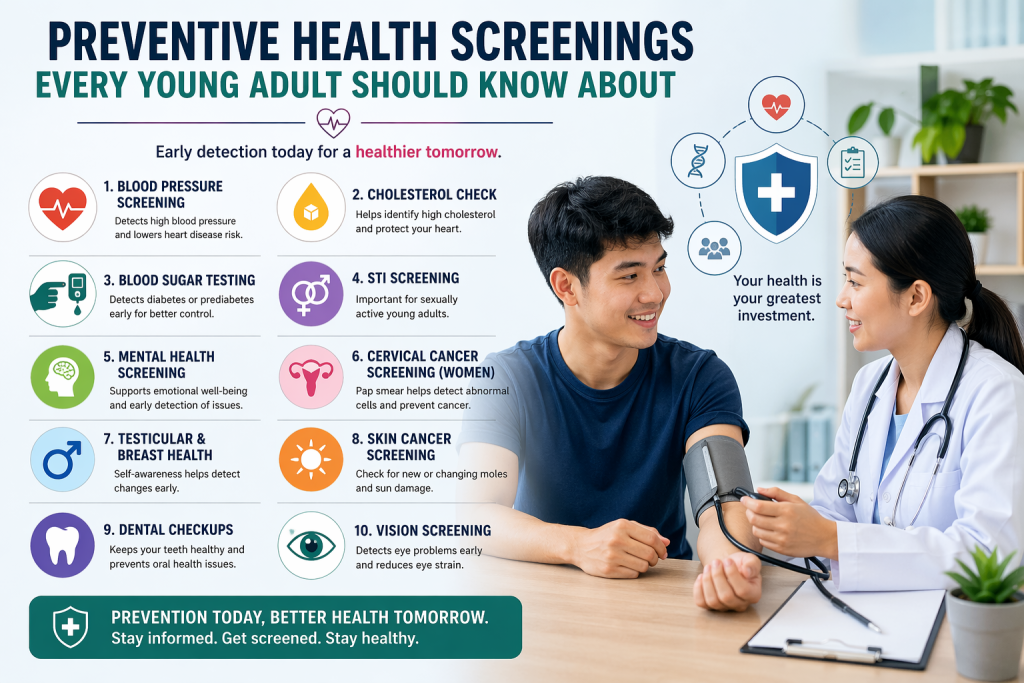
Preventive health screenings every young adult should know about are often overlooked because many people in their 20s and early 30s feel healthy and assume medical checkups are only necessary later in life. However, early detection of health issues can make a major difference in treatment, long-term wellness, and quality of life. Regular screenings help identify hidden conditions before symptoms appear, allowing young adults to take control of their health and prevent future complications.
Why Preventive Health Screenings Matter
Preventive screenings are medical tests or evaluations that detect diseases early, sometimes before noticeable symptoms develop. While young adulthood is generally considered a healthy stage of life, this period is also the best time to build habits that protect long-term health. Learn more
Benefits of preventive screenings include:
- Early detection of silent diseases
- Lower healthcare costs over time
- Better treatment outcomes
- Improved lifestyle awareness
- Reduced risk of serious complications
Many chronic conditions such as high blood pressure, diabetes, and certain infections can develop without warning signs.
1. Blood Pressure Screening
High blood pressure is known as the “silent killer” because it often causes no symptoms until serious damage occurs. Young adults can develop elevated blood pressure due to stress, poor diet, obesity, smoking, or lack of exercise.
Recommended Frequency
- At least once every 1–2 years if normal
- More often if elevated or at risk
Why It Matters
Unchecked high blood pressure can lead to:
- Heart disease
- Stroke
- Kidney damage
- Vision problems
Monitoring blood pressure early helps prevent future cardiovascular disease.
2. Cholesterol Check
Many young adults do not realize cholesterol problems can begin early. Poor eating habits, family history, and inactivity can increase unhealthy cholesterol levels.
Recommended Frequency
- Every 4–6 years for healthy adults
- Earlier or more often with family history or risk factors
What It Detects
- High LDL (bad cholesterol)
- Low HDL (good cholesterol)
- Elevated triglycerides
Early management can reduce the risk of heart disease later in life.
3. Blood Sugar Testing
Type 2 diabetes is increasingly affecting younger adults due to rising obesity rates and sedentary lifestyles.
Recommended Frequency
Screening may begin earlier if you have:
- Family history of diabetes
- Overweight or obesity
- High blood pressure
- PCOS in women
Why It Matters
Blood sugar tests can detect:
- Prediabetes
- Diabetes
- Insulin resistance
Early lifestyle changes can sometimes reverse prediabetes.
4. STI Screening
Sexually transmitted infections are common among young adults, and many infections show no symptoms.
Important Tests Include
- HIV
- Chlamydia
- Gonorrhea
- Syphilis
- Hepatitis B and C
Recommended Frequency
- Yearly for sexually active adults
- More frequently with multiple partners
Early treatment protects both personal and reproductive health.
5. Mental Health Screening
Mental health conditions often begin during young adulthood. Anxiety, depression, and stress-related disorders can significantly affect daily life.
Signs to Watch For
- Persistent sadness
- Excessive worry
- Sleep problems
- Loss of motivation
- Social withdrawal
Why Screening Matters
Mental health screenings help identify:
- Depression
- Anxiety disorders
- Substance abuse concerns
- Burnout
Early support can improve emotional well-being and functioning.
6. Cervical Cancer Screening for Women
Women should not ignore reproductive health screenings.
Pap Smear Recommendations
- Start at age 21
- Every 3 years if results are normal
Why It Matters
Pap tests can detect:
- Abnormal cervical cells
- HPV-related changes
- Early cervical cancer signs
Early detection can prevent serious complications.
7. Testicular and Breast Health Awareness
Young adults should be aware of body changes.
Men Should Watch For
- Lumps in the testicles
- Swelling
- Pain
Women Should Watch For
- Breast lumps
- Skin changes
- Nipple discharge
Self-awareness can help catch unusual changes early.
8. Skin Cancer Screening
Young adults who spend time in the sun or use tanning beds may be at higher risk for skin cancer.
Check For
- New moles
- Changing moles
- Irregular borders
- Color changes
A dermatologist can examine suspicious skin changes before they become dangerous.
9. Dental Checkups
Oral health is strongly connected to overall health.
Recommended Frequency
- Every 6 months
Dental visits help detect:
- Gum disease
- Cavities
- Oral infections
- Early signs of systemic illness
Good oral care supports long-term wellness.
10. Vision Screening
Screen time has made eye problems more common in young adults.
Signs You Need Screening
- Blurry vision
- Headaches
- Eye strain
- Difficulty seeing at night
Regular eye exams can identify:
- Refractive errors
- Glaucoma risk
- Digital eye strain problems
How Young Adults Can Stay Consistent
Many young adults avoid screenings because of busy schedules or fear of bad news. To stay consistent:
- Schedule annual wellness visits
- Keep personal health records
- Ask about family history risks
- Use health insurance benefits
- Prioritize preventive care over emergency care
Taking small steps now can prevent bigger health problems later.
Read: Age-Proof Your Balance: Simple Daily Exercises to Prevent Falls at Home
Final Thoughts
Preventive health screenings every young adult should know about can play a crucial role in maintaining lifelong wellness. Even if you feel healthy today, regular screenings can uncover hidden issues before they become serious. Young adulthood is the ideal time to develop a proactive approach to health, making prevention one of the smartest investments for your future.
By staying informed and scheduling routine checkups, young adults can build a healthier foundation for the years ahead.