Silent Symptoms of Diabetes: Early Signs of Diabetes Most People Miss
When it comes to diabetes, many people assume the disease only becomes noticeable when symptoms are severe. But the truth is that the Silent Symptoms of Diabetes often start long before diagnosis. These Early Signs of Diabetes may appear mild, subtle, or easy to dismiss but recognizing them early can help prevent serious complications such as nerve damage, kidney failure, stroke, and vision loss.
Below is a complete guide to understanding the hidden symptoms, risk factors, and early warning signals that most people overlook.
What Are the Silent Symptoms of Diabetes?
The Silent Symptoms of Diabetes are early warning signals that appear slowly and are often mistaken for normal everyday changes. These symptoms may not be painful or intense, but they indicate that your body is struggling to regulate blood sugar.
Many people live with prediabetes or undiagnosed diabetes for years without knowing. According to the CDC, more than 8.5 million Americans have diabetes but are unaware of it. Recognizing these signs early can save your life.
Most Overlooked Early Signs of Diabetes
Below are some of the most common Early Signs of Diabetes that people often ignore. Learn more

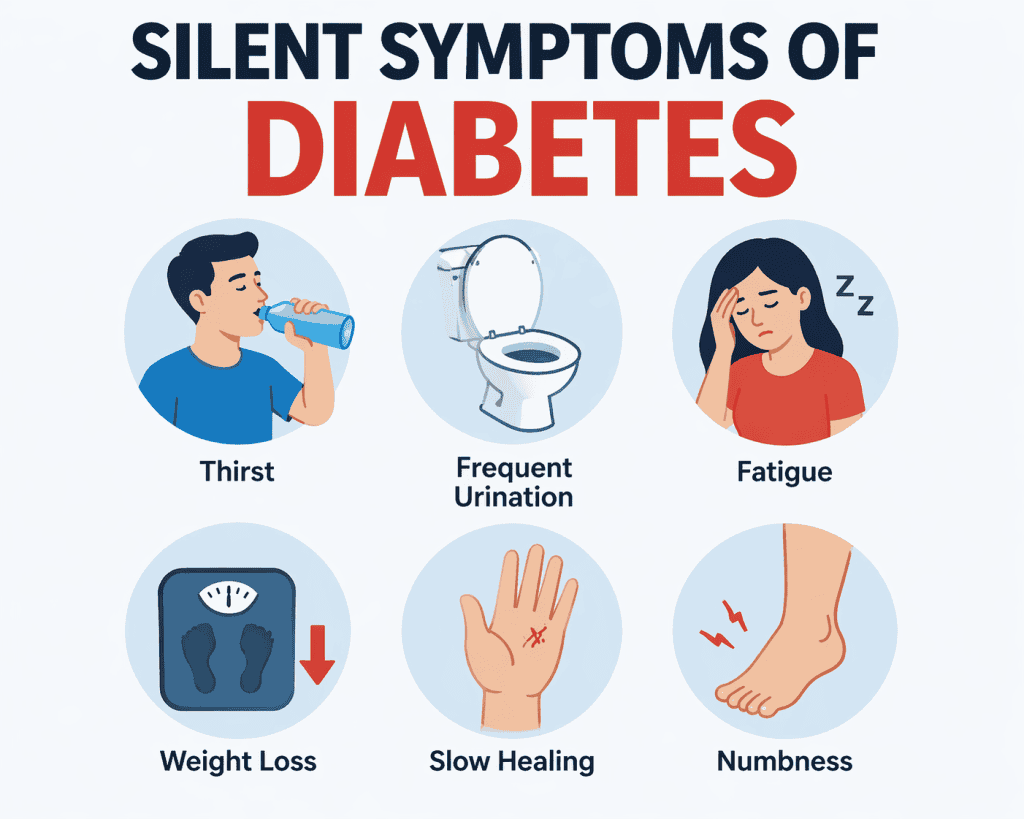
1. Increased Thirst and Frequent Urination
Excess sugar in the bloodstream forces your kidneys to work harder to filter it out. This causes:
- Persistent thirst (even after drinking water)
- Frequent urination, especially at night
These are among the earliest Silent Symptoms of Diabetes, but many people mistake them for weather changes, dehydration, or stress.
2. Unexplained Weight Loss
If you are eating normally but losing weight rapidly, it could be a warning sign. When glucose cannot enter cells for energy, the body begins burning muscle and fat.
This is one of the most dangerous Early Signs of Diabetes and should never be ignored.
3. Constant Fatigue and Low Energy
Feeling extremely tired even after resting is common in early diabetes. This happens because your cells are starved of fuel due to poor insulin function.
Fatigue impacts your mood, productivity, and ability to focus.
4. Blurred Vision
High blood sugar draws fluid from the lenses of the eyes, making it harder to focus.
Blurred vision may come and go, which is why many fail to link it to diabetes.
Untreated diabetes can eventually lead to permanent vision loss.

5. Slow-Healing Cuts and Frequent Infections
If small cuts take unusually long to heal, it could be due to:
- Weakened immunity
- Poor circulation
- High blood sugar feeding bacteria
Common infections include skin infections, gum infections, yeast infections, and fungal infections. These thrive when blood sugar stays high for long periods.
6. Tingling, Numbness, or Burning Sensation
This is often an early form of nerve damage (diabetic neuropathy).
You may experience:
- Tingling in hands or feet
- Burning sensation
- Numbness
- Pins-and-needles feeling
This is one of the most frequently ignored Silent Symptoms of Diabetes. Learn more
7. Dark Patches of Skin (Acanthosis Nigricans)
Darkened, velvety patches of skin often appear on:
- Neck
- Armpits
- Groin
- Elbows
This is a major warning sign of insulin resistance the beginning stage of type 2 diabetes.
Risk Factors You Should Never Ignore
Anyone can develop diabetes, but certain risk factors raise your chances significantly:
- Family history of diabetes
- Obesity or high body fat
- Lack of physical activity
- High blood pressure
- High intake of sugary or processed foods
- Age above 40
- Smoking
- High stress levels
- Polycystic ovarian syndrome (PCOS) in women
If you have more than two of these factors, early screening is essential.
How to Confirm If You Have Early Diabetes
If you notice any symptoms, a doctor may perform:
- Fasting Blood Sugar Test
- A1C Test
- Oral Glucose Tolerance Test (OGTT)
Early diagnosis can prevent long-term complications such as kidney disease, heart disease, and nerve damage.
How to Prevent Diabetes Before It Becomes Severe
The good news is that early lifestyle changes can significantly reduce your risk of developing full-blown diabetes.
1. Adopt a Low-Sugar, High-Fiber Diet
Choose foods such as:
- Whole grains
- Vegetables
- Beans
- Leafy greens
- Fish
- Nuts and seeds
Avoid sugary drinks, pastries, fatty foods, and processed meals.

2. Exercise for at Least 30 Minutes Daily
Physical activity helps:
- Improve insulin sensitivity
- Reduce belly fat
- Balance blood sugar
Simple activities like walking, cycling, and home workouts are effective.
3. Drink More Water
Water helps your kidneys flush out excess glucose from the bloodstream.
It also helps prevent dehydration, which can worsen symptoms.
4. Manage Stress
Chronic stress releases hormones that raise blood sugar levels.
Try:
- Meditation
- Deep breathing
- Yoga
- Stretching
- Light physical activity
You can also read our full guide on stress management here (internal link):
yourblog.com/how-stress-affects-your-body
5. Check Your Blood Sugar Regularly
Regular monitoring helps you detect early changes.
Discuss your numbers with your healthcare provider for personalized advice. Learn more
When to See a Doctor Immediately
Seek medical help if you experience:
- Sudden weight loss
- Severe fatigue
- Persistent blurry vision
- Numbness in feet or hands
- Frequent or recurring infections
These may indicate advanced or worsening diabetes.Learn more
Conclusion
Understanding the Silent Symptoms of Diabetes and recognizing the Early Signs of Diabetes can make all the difference. Early detection gives you the power to prevent complications, protect your organs, and maintain long-term health.
If you begin to notice any of these signs, don’t ignore them your health depends on early action.