Common Causes of Nasal Congestion and How to Relieve It
Nasal congestion, commonly known as a “stuffy nose,” is a widespread condition that affects people of all ages. While it is often associated with the common cold, nasal congestion can result from various underlying causes. The condition occurs when the tissues and blood vessels inside the nasal passages become swollen with excess fluid, making it difficult to breathe through the nose. Understanding the causes of nasal congestion and the available relief options can help you manage symptoms effectively and improve your quality of life.
What Causes Nasal Congestion?
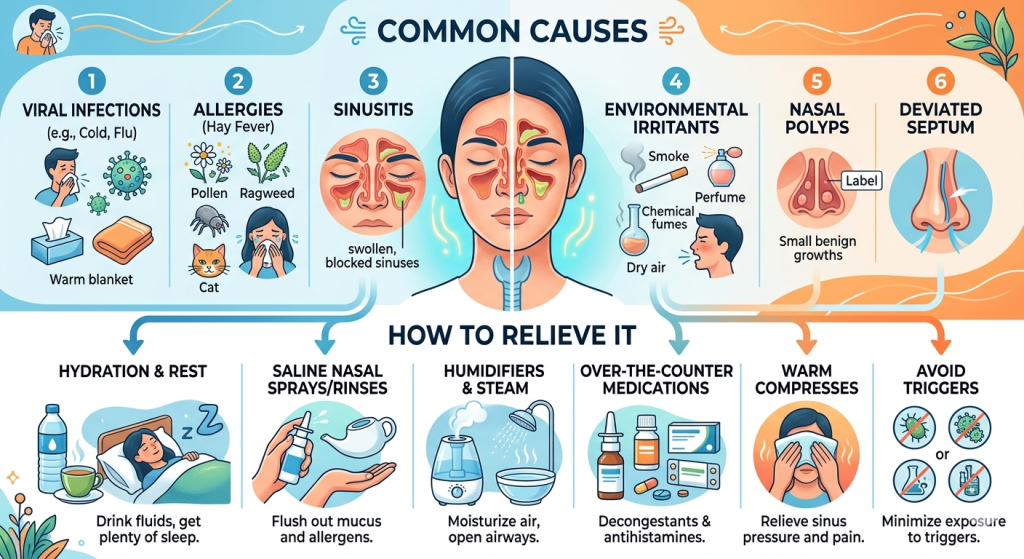
1. Common Cold and Viral Infections
One of the most frequent causes of nasal congestion is the common cold. Viruses can irritate the lining of the nose, leading to inflammation, increased mucus production, and blocked nasal passages. Congestion caused by a cold is usually temporary and improves within a week or two. Learn more
2. Allergies
Allergic reactions to pollen, dust mites, pet dander, mold, or other allergens can trigger inflammation in the nasal passages. This condition, known as allergic rhinitis, often causes congestion along with sneezing, itchy eyes, and a runny nose.
3. Sinus Infections
When the sinuses become infected, they can fill with mucus and become inflamed. This can result in severe nasal congestion, facial pressure, headaches, and thick nasal discharge. Sinus infections may be caused by viruses, bacteria, or fungi.
4. Nasal Polyps
Nasal polyps are soft, noncancerous growths that develop in the lining of the nasal passages or sinuses. Larger polyps can obstruct airflow and lead to chronic congestion, reduced sense of smell, and breathing difficulties.
5. Deviated Septum
The nasal septum is the wall that separates the two nostrils. When it is significantly off-center, it can restrict airflow and contribute to chronic nasal congestion, especially on one side of the nose.
6. Dry Air and Environmental Irritants
Dry indoor air, cigarette smoke, strong odors, air pollution, and chemical fumes can irritate the nasal lining. This irritation may cause swelling and congestion, particularly in sensitive individuals.
7. Hormonal Changes
Hormonal fluctuations during pregnancy, puberty, or certain medical conditions can increase blood flow to the nasal tissues, resulting in nasal congestion without infection or allergies.
8. Overuse of Nasal Decongestant Sprays
While decongestant sprays can provide quick relief, prolonged use beyond a few days may lead to rebound congestion. This condition causes the nasal passages to become more congested once the medication wears off.
Symptoms Associated with Nasal Congestion
Nasal congestion may occur alongside other symptoms, including:
- Difficulty breathing through the nose
- Runny nose
- Sinus pressure or pain
- Sneezing
- Reduced sense of smell and taste
- Snoring or sleep disturbances
- Postnasal drip
- Headaches
The severity and duration of symptoms often depend on the underlying cause.
How to Relieve Nasal Congestion
Stay Hydrated
Drinking plenty of water helps thin mucus, making it easier to drain from the nasal passages and sinuses. Warm beverages such as herbal teas and broths may provide additional comfort.
Use Saline Nasal Sprays or Rinses
Saline solutions help moisturize the nasal passages, loosen mucus, and remove irritants. Regular use can improve nasal airflow and reduce congestion without the side effects associated with medicated sprays.
Inhale Steam
Steam inhalation can temporarily ease congestion by moisturizing irritated nasal tissues. Taking a warm shower or breathing in steam from a bowl of hot water may provide short-term relief.
Use a Humidifier
Adding moisture to indoor air can prevent the nasal passages from becoming dry and irritated, especially during winter months or in air-conditioned environments.
Manage Allergies
If allergies are the cause, minimizing exposure to allergens can help reduce symptoms. Keeping windows closed during high-pollen seasons, using air purifiers, and washing bedding regularly may be beneficial.
Elevate Your Head While Sleeping
Sleeping with your head slightly elevated can promote sinus drainage and reduce nighttime congestion.
Apply Warm Compresses
A warm compress placed over the nose and forehead may help relieve sinus pressure and encourage mucus drainage.
Consider Appropriate Medications
Depending on the cause, healthcare providers may recommend antihistamines, corticosteroid nasal sprays, decongestants, or other treatments. Always follow medical advice and avoid prolonged use of over-the-counter decongestant sprays.
When to See a Doctor
Medical evaluation may be necessary if:
- Congestion lasts longer than 10–14 days
- Symptoms are severe or worsening
- You experience high fever
- There is significant facial pain or swelling
- You have recurring sinus infections
- Nasal congestion interferes with daily activities or sleep
- You suspect nasal polyps or a structural issue such as a deviated septum
Early diagnosis can help identify underlying conditions and prevent complications.
Tips for Maintaining Healthy Nasal Passages
- Practice good hand hygiene to reduce the risk of infections.
- Avoid smoking and secondhand smoke.
- Stay hydrated throughout the day.
- Use a humidifier when indoor air is dry.
- Manage allergies proactively.
- Keep your living environment clean and free of excessive dust and allergens.
Read: Understanding Learning Disabilities in Children
Conclusion
Nasal congestion is a common problem that can result from infections, allergies, sinus issues, environmental factors, or structural abnormalities within the nose. Although it is often temporary, persistent congestion should not be ignored. By identifying the underlying cause and using effective relief strategies such as hydration, saline rinses, and allergy management, most people can breathe easier and maintain better nasal health. If symptoms continue or become severe, consulting a healthcare professional is the best step toward proper diagnosis and treatment.