How Dry Mouth Affects Oral Health and What to Do About It
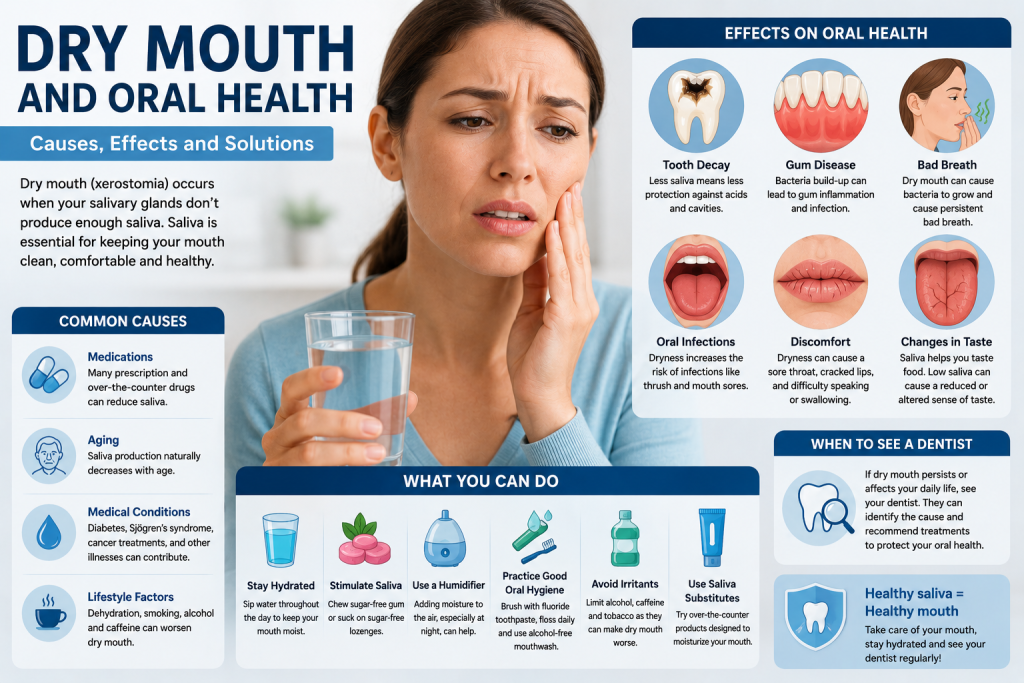
Dry mouth, medically known as xerostomia, is a common condition that occurs when the salivary glands do not produce enough saliva to keep the mouth adequately moist. While occasional dry mouth may not seem serious, persistent dryness can significantly impact oral health and overall well-being. Saliva plays a crucial role in protecting teeth, gums, and oral tissues. Without sufficient saliva, the risk of cavities, gum disease, bad breath, and oral infections increases considerably.
Understanding how dry mouth affects oral health and what to do about it can help individuals recognize symptoms early and take effective steps to maintain a healthy mouth.
What Is Dry Mouth?
Dry mouth occurs when saliva production decreases below normal levels.
Saliva is essential because it helps:
- Wash away food particles
- Neutralize harmful acids
- Control bacterial growth
- Aid digestion
- Protect tooth enamel
- Keep oral tissues moist
When saliva production is reduced, these protective functions become less effective. Learn more
Why Saliva Is Important for Oral Health
Many people underestimate the importance of saliva.
Saliva helps to:
- Prevent tooth decay
- Protect gums from infection
- Maintain fresh breath
- Support speaking and swallowing
- Improve taste sensation
- Aid digestion
A healthy saliva flow is one of the body’s natural defenses against oral disease.
Common Causes of Dry Mouth
Dry mouth can develop for many reasons.
Common causes include:
1. Medications
Hundreds of prescription and over-the-counter medications can reduce saliva production.
Examples include:
- Antidepressants
- Antihistamines
- Blood pressure medications
- Decongestants
- Pain medications
Medication side effects are among the most common causes of dry mouth.
2. Aging
Older adults are more likely to experience dry mouth due to:
- Medication use
- Medical conditions
- Natural changes in saliva production
However, aging itself is not always the direct cause.
3. Medical Conditions
Several health conditions can contribute to dry mouth.
Examples include:
- Diabetes
- Sjögren’s syndrome
- Parkinson’s disease
- Alzheimer’s disease
- Stroke
Certain autoimmune disorders directly affect salivary gland function.
4. Cancer Treatment
Radiation therapy and chemotherapy may damage salivary glands.
Possible effects:
- Reduced saliva production
- Persistent mouth dryness
- Increased cavity risk
Symptoms may be temporary or long-lasting.
5. Dehydration
Insufficient fluid intake can reduce saliva production.
Causes of dehydration:
- Excessive sweating
- Fever
- Vomiting
- Diarrhea
- Inadequate water intake
Staying hydrated supports healthy saliva flow.
6. Lifestyle Factors
Certain habits can worsen dry mouth.
Examples:
- Smoking
- Tobacco use
- Excessive alcohol consumption
- High caffeine intake
Lifestyle modifications can often improve symptoms.
Symptoms of Dry Mouth
Dry mouth can produce a variety of uncomfortable symptoms.
Common signs include:
- Sticky or dry feeling in the mouth
- Frequent thirst
- Dry tongue
- Cracked lips
- Sore throat
- Difficulty swallowing
- Difficulty speaking
- Burning sensation in the mouth
- Bad breath
- Changes in taste
Symptoms may worsen at night or during prolonged speaking.
How Dry Mouth Affects Oral Health
Persistent dry mouth can lead to several oral health complications.
1. Increased Risk of Tooth Decay
Saliva helps neutralize acids produced by bacteria.
Without enough saliva:
- Acids remain on teeth longer
- Enamel becomes weakened
- Cavities develop more easily
People with dry mouth often experience tooth decay along the gum line and between teeth.
2. Higher Risk of Gum Disease
Saliva helps control bacterial growth in the mouth.
Reduced saliva can lead to:
- Plaque accumulation
- Gum inflammation
- Gingivitis
- Periodontitis
Healthy saliva levels support healthier gums.
3. Persistent Bad Breath
Dry mouth often causes chronic bad breath.
Why it happens:
- Bacteria multiply more rapidly
- Food particles remain in the mouth
- Saliva cannot effectively cleanse oral tissues
Addressing dry mouth can significantly improve breath freshness.
4. Oral Infections
Dry oral tissues are more vulnerable to infection.
Common infections include:
- Oral thrush
- Gum infections
- Mouth sores
Fungal infections become more common when saliva levels decrease.
5. Difficulty Eating and Swallowing
Saliva helps lubricate food during chewing and swallowing.
Dry mouth may cause:
- Difficulty swallowing
- Choking sensations
- Discomfort while eating
This can affect nutrition and meal enjoyment.
6. Changes in Taste
Saliva helps dissolve food particles so taste buds can detect flavors.
Dry mouth may result in:
- Reduced taste sensation
- Altered taste perception
- Decreased appetite
These changes can affect dietary habits.
What to Do About Dry Mouth
Fortunately, several strategies can help manage symptoms and protect oral health.
1. Drink More Water
Staying hydrated is one of the simplest and most effective solutions.
Tips:
- Sip water throughout the day
- Carry a reusable water bottle
- Increase fluid intake during hot weather
Regular hydration helps keep the mouth moist.
2. Stimulate Saliva Production
Certain habits can encourage natural saliva flow.
Helpful options:
- Sugar-free gum
- Sugar-free lozenges
- Xylitol-containing products
Chewing and sucking motions stimulate salivary glands.
3. Use Saliva Substitutes
Artificial saliva products are available for people with persistent symptoms.
Benefits:
- Temporary moisture
- Improved comfort
- Easier speaking and swallowing
These products are available as sprays, rinses, and gels.
4. Maintain Excellent Oral Hygiene
Good dental hygiene is especially important for individuals with dry mouth.
Daily habits include:
- Brushing twice daily
- Using fluoride toothpaste
- Flossing every day
- Using dentist-recommended mouthwash
Proper hygiene helps reduce cavity and gum disease risks.
5. Avoid Alcohol-Based Mouthwash
Some mouthwashes can worsen dryness.
Choose:
- Alcohol-free mouthwash
- Moisturizing oral rinses
These products are gentler on oral tissues.
6. Limit Caffeine and Alcohol
Both substances may contribute to dehydration.
Consider reducing:
- Coffee
- Energy drinks
- Alcoholic beverages
Moderation can improve moisture levels.
7. Avoid Tobacco Products
Smoking and tobacco use can worsen dry mouth symptoms.
Benefits of quitting:
- Improved saliva production
- Better gum health
- Reduced oral cancer risk
Tobacco cessation supports overall oral health.
8. Use a Humidifier at Night
Dry indoor air may worsen symptoms during sleep.
A humidifier can:
- Add moisture to the air
- Reduce nighttime dryness
- Improve comfort
Many people notice relief after using one regularly.
Foods That May Help With Dry Mouth
Certain foods can support hydration and comfort.
Helpful options:
- Water-rich fruits
- Cucumbers
- Melons
- Soups
- Yogurt
Avoid excessively salty or spicy foods if they irritate the mouth.
When to See a Dentist or Doctor
Professional evaluation is important if dry mouth persists.
Seek medical advice if you experience:
- Severe dryness
- Frequent cavities
- Mouth sores
- Difficulty swallowing
- Persistent bad breath
- Oral infections
A healthcare provider can identify underlying causes and recommend appropriate treatment.
Preventing Dry Mouth-Related Dental Problems
Key prevention strategies:
- Maintain good hydration
- Practice excellent oral hygiene
- Visit the dentist regularly
- Use fluoride products
- Avoid tobacco
- Manage medical conditions effectively
Prevention is often easier than treating complications later.
Read: Best Mouthwash Practices for Optimal Oral Health
Final Thoughts
Understanding how dry mouth affects oral health and what to do about it is essential for protecting your teeth, gums, and overall well-being. Although dry mouth may seem like a minor inconvenience, it can significantly increase the risk of cavities, gum disease, infections, and discomfort if left untreated. By staying hydrated, maintaining proper oral hygiene, stimulating saliva production, and seeking professional care when necessary, you can effectively manage dry mouth and maintain a healthier smile for years to come.