How Aging Affects Oral Health and Dental Hygiene
As people grow older, maintaining good oral health becomes increasingly important. Aging brings many changes to the body, including the teeth, gums, jawbone, and oral tissues. While some oral health changes are a natural part of aging, poor dental hygiene can accelerate these problems and increase the risk of tooth loss, gum disease, and other complications. Understanding how aging affects oral health and dental hygiene can help older adults take proactive steps to preserve their smiles and overall well-being.
Good oral health is essential not only for eating and speaking but also for maintaining confidence, comfort, and quality of life. Research has shown that poor oral health can also contribute to serious health conditions, including heart disease, diabetes complications, and respiratory infections.
Why Oral Health Matters as You Age
Oral health plays a critical role in overall wellness.
Healthy teeth and gums help:
- Support proper nutrition
- Improve speech
- Enhance self-confidence
- Reduce infection risks
- Improve quality of life
- Support overall health
As people age, preventive dental care becomes even more important. Learn more
Common Oral Health Changes Associated with Aging
Several changes naturally occur in the mouth over time.
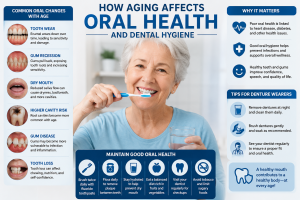
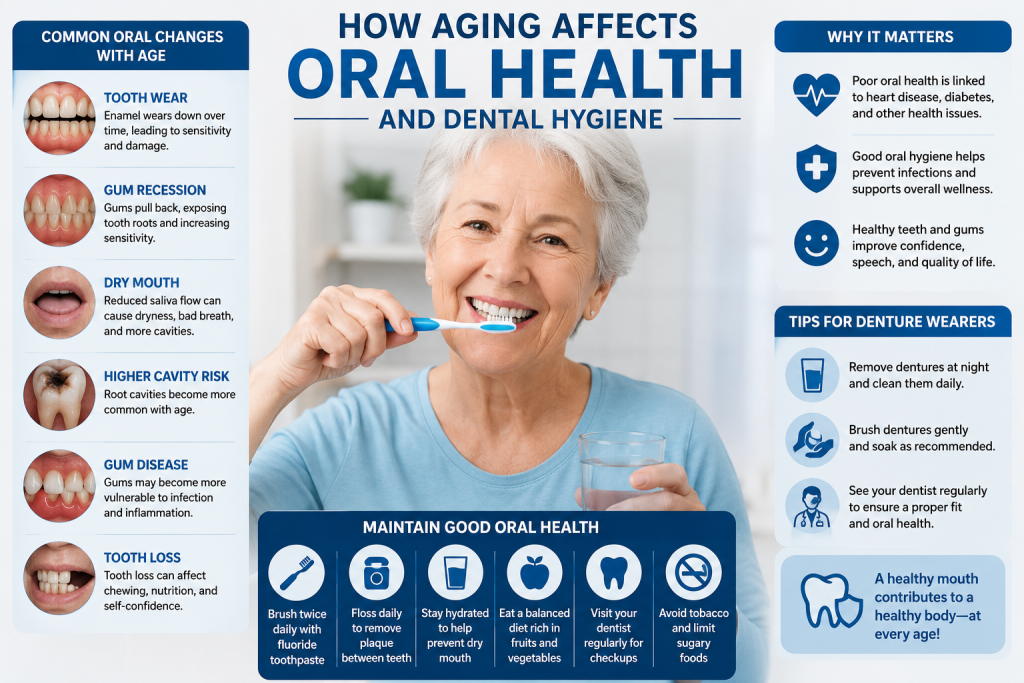
Common age-related changes include:
- Increased tooth wear
- Receding gums
- Dry mouth
- Reduced saliva production
- Higher risk of gum disease
- Greater tooth sensitivity
Not everyone experiences these changes to the same degree, but awareness helps with prevention.
1. Tooth Wear and Enamel Erosion
Years of chewing, grinding, and exposure to acidic foods can gradually wear down tooth enamel.
Signs of enamel wear:
- Flattened chewing surfaces
- Increased tooth sensitivity
- Cracks or chips
- Yellowing teeth
Because enamel does not regenerate, protecting it is essential.
2. Gum Recession
Gums naturally recede with age, exposing more of the tooth root.
Effects of gum recession:
- Increased sensitivity
- Higher cavity risk
- Greater vulnerability to infection
- A longer tooth appearance
Proper brushing techniques can help minimize further gum damage.
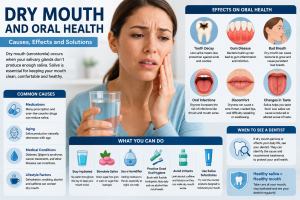
3. Dry Mouth (Xerostomia)
Dry mouth is one of the most common oral health problems among older adults.
Causes include:
- Aging-related changes
- Certain medications
- Medical conditions
- Cancer treatments
Saliva helps protect teeth from decay, wash away bacteria, and maintain oral comfort.
Symptoms of dry mouth:
- Difficulty swallowing
- Bad breath
- Dry tongue
- Increased cavities
- Mouth soreness
Managing dry mouth is important for maintaining oral health.
4. Increased Risk of Tooth Decay
Older adults may be more vulnerable to cavities.
Reasons include:
- Gum recession exposing roots
- Dry mouth
- Medication side effects
- Difficulty maintaining oral hygiene
Root cavities are particularly common among seniors.
5. Gum Disease
Gum disease remains one of the leading causes of tooth loss in older adults.
Early symptoms include:
- Red gums
- Swelling
- Bleeding while brushing
- Bad breath
Advanced gum disease can damage supporting bone and tissues.
Risk factors:
- Smoking
- Diabetes
- Poor oral hygiene
- Dry mouth
Early treatment improves outcomes significantly.
6. Tooth Loss
Although tooth loss is not an inevitable part of aging, it becomes more common due to untreated dental problems.
Common causes:
- Severe gum disease
- Tooth decay
- Trauma
- Poor oral hygiene
Missing teeth can affect:
- Nutrition
- Speech
- Facial appearance
- Self-confidence
7. Tooth Sensitivity
Many older adults experience increased tooth sensitivity.
Triggers include:
- Hot beverages
- Cold foods
- Sweet foods
- Acidic drinks
Sensitivity often occurs because of enamel wear and exposed tooth roots.
8. Oral Infections
The aging immune system may increase susceptibility to oral infections.
Common infections:
- Gum infections
- Fungal infections
- Denture-related infections
Prompt treatment can prevent complications.
9. Changes in Taste and Smell
Aging may affect the ability to taste and smell foods.
Contributing factors:
- Medications
- Dry mouth
- Health conditions
- Oral infections
These changes may influence appetite and nutrition.
10. Oral Cancer Risk Increases with Age
The risk of oral cancer rises as people get older.
Warning signs include:
- Persistent mouth sores
- White or red patches
- Difficulty swallowing
- Unexplained oral pain
Regular dental examinations can help detect oral cancer early.
How Aging Affects Dental Hygiene Habits
Physical limitations can make oral care more challenging.
Common challenges:
- Arthritis affecting hand movement
- Reduced vision
- Cognitive decline
- Limited mobility
These issues may make brushing and flossing more difficult.
Tips for Maintaining Good Dental Hygiene as You Age
Proper oral care can help prevent many age-related dental problems.
1. Brush Twice Daily
Use fluoride toothpaste and brush for at least two minutes.
Benefits:
- Removes plaque
- Prevents cavities
- Protects gums
A soft-bristled toothbrush is often recommended.
2. Floss Every Day
Flossing removes food particles and plaque between teeth.
Benefits:
- Reduces gum disease risk
- Prevents cavities
- Improves oral cleanliness
Daily flossing remains important at every age.
3. Stay Hydrated
Drinking water helps combat dry mouth.
Benefits:
- Stimulates saliva production
- Washes away bacteria
- Supports oral comfort
Hydration is especially important for seniors.
4. Eat a Tooth-Friendly Diet
Nutrition plays a major role in oral health.
Healthy foods include:
- Fruits and vegetables
- Dairy products
- Lean proteins
- Whole grains
Limiting sugary foods reduces cavity risk.
5. Avoid Tobacco Products
Smoking and tobacco use significantly increase oral health risks.
Potential effects:
- Gum disease
- Tooth loss
- Oral cancer
- Delayed healing
Quitting tobacco benefits both oral and overall health.
6. Clean Dentures Properly
For denture wearers, daily cleaning is essential.
Denture care tips:
- Remove dentures at night
- Clean daily
- Follow dentist recommendations
Proper care reduces infection risk.
7. Schedule Regular Dental Checkups
Routine dental visits help identify problems early.
Benefits include:
- Professional cleaning
- Early disease detection
- Oral cancer screening
- Personalized care advice
Regular exams remain important throughout life.
The Connection Between Oral Health and Overall Health
Poor oral health can affect the entire body.
Research has linked oral disease to:
- Heart disease
- Diabetes complications
- Respiratory infections
- Nutritional deficiencies
Maintaining oral health supports overall wellness.
When to See a Dentist
Seek professional care if you notice:
- Persistent tooth pain
- Bleeding gums
- Loose teeth
- Mouth sores that do not heal
- Difficulty chewing
- Severe dry mouth
Early intervention often prevents more serious complications.
Read: Understanding Macronutrients: Protein, Carbs, and Fats Explained
Final Thoughts
Understanding how aging affects oral health and dental hygiene is essential for maintaining a healthy smile and overall well-being. While aging can increase the risk of tooth decay, gum disease, dry mouth, and other oral health issues, many of these problems can be prevented or managed with proper dental hygiene, healthy lifestyle choices, and regular dental checkups. By prioritizing oral care throughout life, older adults can preserve their teeth, improve their quality of life, and support long-term health.