The Most Common Respiratory Diseases and Their Symptoms
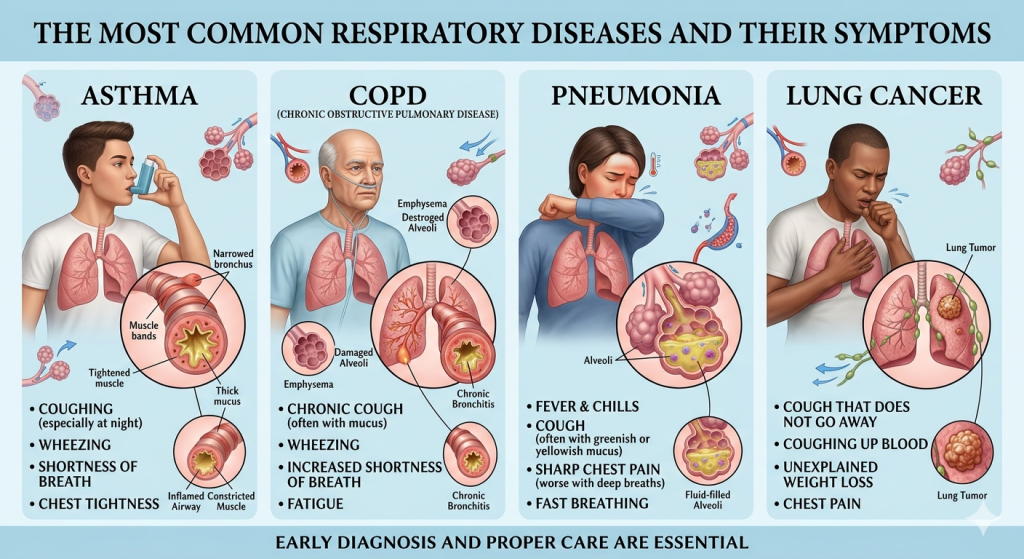
Respiratory diseases are conditions that affect the lungs and other parts of the respiratory system, making it difficult to breathe properly. These diseases can range from mild infections to chronic conditions that require long-term management. Because the respiratory system is essential for supplying oxygen to the body, any disruption can significantly impact overall health and quality of life.
Understanding the most common respiratory diseases and their symptoms is important for early detection, timely treatment, and prevention of complications.
What Are Respiratory Diseases?
Respiratory diseases are illnesses that affect the airways, lungs, and breathing muscles. They may be caused by infections, environmental pollution, smoking, allergies, or genetic factors. Some are short-term, while others are long-lasting or chronic.
Common Respiratory Diseases
1. Common Cold
The common cold is a mild viral infection that affects the nose and throat.
Symptoms:
- Runny or stuffy nose
- Sneezing
- Sore throat
- Mild cough
- Low-grade fever
Although usually harmless, it can be uncomfortable and spread easily from person to person.
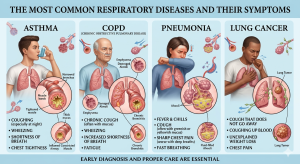
2. Asthma
Asthma is a chronic condition where the airways become inflamed and narrow, making breathing difficult.
Symptoms:
- Shortness of breath
- Wheezing (whistling sound when breathing)
- Chest tightness
- Persistent cough, especially at night or early morning
Asthma attacks can be triggered by dust, smoke, exercise, or allergens.
3. Bronchitis
Bronchitis occurs when the bronchial tubes become inflamed, often due to infection or irritants.
Symptoms:
- Persistent cough with mucus
- Fatigue
- Mild fever and chills
- Chest discomfort
- Wheezing
It can be acute (short-term) or chronic (long-term), especially in smokers.
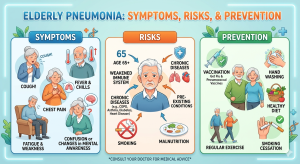
4. Pneumonia
Pneumonia is a serious infection that inflames the air sacs in one or both lungs.
Symptoms:
- High fever and chills
- Chest pain when breathing or coughing
- Productive cough with mucus or pus
- Shortness of breath
- Fatigue
Pneumonia can be life-threatening if not treated promptly.
5. Chronic Obstructive Pulmonary Disease (COPD)
COPD is a progressive lung disease that includes emphysema and chronic bronchitis.
Symptoms:
- Long-term cough with mucus
- Difficulty breathing (especially during physical activity)
- Wheezing
- Frequent respiratory infections
- Fatigue
Smoking is the leading cause of COPD.
6. Tuberculosis (TB)
Tuberculosis is a bacterial infection that mainly affects the lungs but can spread to other organs.
Symptoms:
- Persistent cough lasting more than 3 weeks
- Coughing up blood
- Night sweats
- Weight loss
- Fever and fatigue
TB is contagious and requires long-term antibiotic treatment.
7. Sinusitis
Sinusitis is inflammation of the sinuses caused by infection or allergies.
Symptoms:
- Facial pain or pressure
- Nasal congestion
- Headache
- Thick nasal discharge
- Reduced sense of smell
Causes of Respiratory Diseases
Respiratory diseases can be caused or triggered by:
- Viral or bacterial infections
- Smoking and secondhand smoke
- Air pollution
- Allergens like dust, pollen, and mold
- Weak immune system
- Occupational exposure to chemicals or dust
How Respiratory Diseases Are Diagnosed
Doctors may use:
- Physical examination
- Chest X-rays
- Lung function tests (spirometry)
- Blood tests
- Sputum analysis
Treatment Options
Treatment depends on the type and severity of the disease:
Medications:
- Antibiotics for bacterial infections
- Inhalers for asthma and COPD
- Antiviral drugs in some cases
- Anti-inflammatory medications
Lifestyle Changes:
- Avoid smoking and polluted environments
- Exercise regularly
- Maintain good hygiene
- Stay hydrated
- Eat a balanced diet
Medical Support:
- Oxygen therapy for severe cases
- Pulmonary rehabilitation for chronic conditions
- Hospital care for severe infections
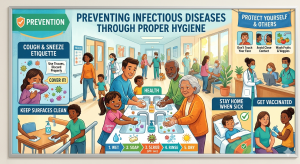
Prevention Tips
- Wash hands regularly
- Wear masks in polluted areas
- Avoid smoking and secondhand smoke
- Get vaccinated (e.g., flu and pneumonia vaccines)
- Keep living spaces clean and well-ventilated
When to See a Doctor
Seek medical attention if you experience:
- Persistent cough lasting more than 2 weeks
- Difficulty breathing
- Chest pain
- High fever that does not improve
- Coughing up blood
Read: Understanding Skin Diseases and Effective Treatment Options
Conclusion
Respiratory diseases are common but can often be managed or prevented with early detection and proper care. Recognizing symptoms early and adopting healthy lifestyle habits can greatly reduce the risk of complications. Protecting lung health is essential for maintaining overall well-being and a healthy life.