Preventing Infectious Diseases Through Proper Hygiene
Infectious diseases remain one of the most common causes of illness worldwide. They are caused by harmful microorganisms such as bacteria, viruses, fungi, and parasites that can spread from person to person, through contaminated surfaces, food, water, or the air. However, many infectious diseases are preventable through simple but effective hygiene practices.
Proper hygiene is one of the most powerful and affordable tools for protecting individual and public health. By adopting good hygiene habits, individuals can significantly reduce the spread of infections and maintain overall well-being.
What Are Infectious Diseases?
Infectious diseases are illnesses caused by pathogens that enter the body and multiply, leading to symptoms ranging from mild discomfort to severe health complications. These diseases can spread quickly in communities, especially where hygiene practices are poor.
Common infectious diseases include:
- Common cold and flu
- Cholera
- Tuberculosis
- COVID-19
- Typhoid fever
- Hepatitis A and B
Why Hygiene Matters in Disease Prevention
Good hygiene helps break the chain of infection. When proper hygiene is practiced, the spread of harmful microorganisms is reduced or completely stopped. This protects not only the individual but also family members, coworkers, and the wider community.
Key Hygiene Practices That Prevent Infectious Diseases
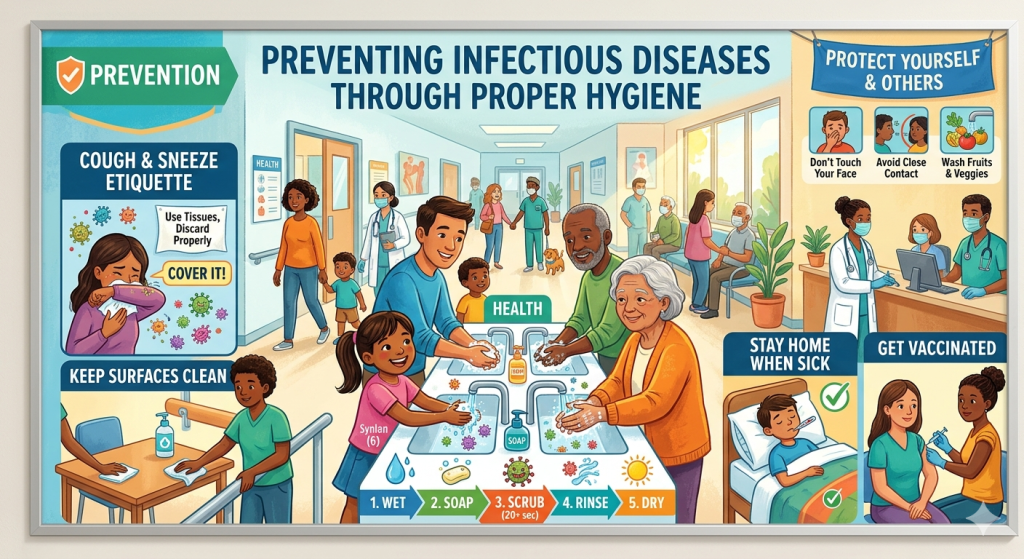
1. Regular Handwashing
Handwashing is one of the simplest and most effective ways to prevent infections.
Why it works:
Hands often carry germs picked up from surfaces, food, or contact with infected individuals.
How to wash properly:
- Use clean running water
- Apply soap and lather for at least 20 seconds
- Clean between fingers, under nails, and wrists
- Rinse and dry with a clean towel
Wash hands:
- Before eating or preparing food
- After using the toilet
- After coughing, sneezing, or blowing the nose
- After touching public surfaces
2. Personal Hygiene
Maintaining personal cleanliness helps reduce the risk of infection.
Good practices include:
- Daily bathing
- Wearing clean clothes
- Brushing teeth twice daily
- Keeping nails trimmed and clean
- Covering mouth and nose when coughing or sneezing
3. Food Hygiene
Contaminated food is a major source of infectious diseases.
Preventive measures:
- Wash fruits and vegetables thoroughly
- Cook food properly
- Store food at safe temperatures
- Avoid eating raw or undercooked meat
- Use clean utensils and surfaces
4. Safe Water Usage
Unsafe water can carry dangerous pathogens.
Tips for safe water:
- Drink boiled or filtered water
- Store water in clean containers
- Avoid drinking from unknown or unsafe sources
5. Environmental Cleanliness
A clean environment reduces the breeding of disease-causing organisms. Learn more
Important steps:
- Dispose of waste properly
- Clean household surfaces regularly
- Eliminate stagnant water to prevent mosquito breeding
- Maintain proper sanitation facilities
6. Respiratory Hygiene
Many infections spread through droplets in the air.
Protective habits:
- Cover mouth and nose when sneezing or coughing
- Use tissues or elbows instead of hands
- Wear masks in crowded places when necessary
- Avoid close contact with sick individuals
7. Safe Social Practices
Infectious diseases can spread through close human contact.
Preventive actions:
- Avoid sharing personal items like towels or toothbrushes
- Maintain physical distance during outbreaks
- Stay home when feeling sick
- Seek medical care early when symptoms appear
The Role of Vaccination
While hygiene is essential, vaccination adds an extra layer of protection against many infectious diseases. Vaccines help the body build immunity and reduce the severity or spread of infections.
Common Mistakes That Increase Infection Risk
- Ignoring handwashing after public contact
- Eating from unclean environments
- Reusing dirty towels or clothing
- Poor waste disposal practices
- Ignoring early symptoms of illness
Avoiding these mistakes can significantly reduce infection risk.
When to Seek Medical Help
You should consult a healthcare professional if you experience:
- Persistent fever
- Severe diarrhea or vomiting
- Difficulty breathing
- Unusual skin rashes
- Symptoms lasting more than a few days
Early treatment prevents complications and limits disease spread.
Read: Understanding Skin Diseases and Effective Treatment Options
Conclusion
Preventing infectious diseases does not always require expensive treatments or advanced medical care. Simple hygiene practices such as regular handwashing, proper sanitation, safe food handling, and respiratory etiquette can greatly reduce the risk of infection.
By making hygiene a daily habit, individuals can protect themselves and contribute to a healthier and safer community.