Elderly Pneumonia: Symptoms, Risks, and Prevention
Pneumonia is a serious lung infection that can affect people of all ages, but it is especially dangerous for older adults. As people age, the immune system naturally becomes weaker, making it harder for the body to fight infections. In elderly individuals, pneumonia can quickly become life-threatening if not recognized and treated early.
Understanding the symptoms, risk factors, and prevention methods can help families and caregivers protect the health and well-being of seniors.
What Is Pneumonia?
Pneumonia is an infection that causes inflammation in the air sacs of the lungs. These air sacs may fill with fluid or pus, making breathing difficult and reducing oxygen levels in the body. Pneumonia can be caused by bacteria, viruses, or fungi.
Older adults are more vulnerable because aging affects lung function, immunity, and the body’s ability to recover from illness. Learn more
Common Symptoms of Pneumonia in the Elderly
Pneumonia symptoms in seniors may not always appear the same as in younger adults. Some elderly individuals may show subtle or unusual signs.
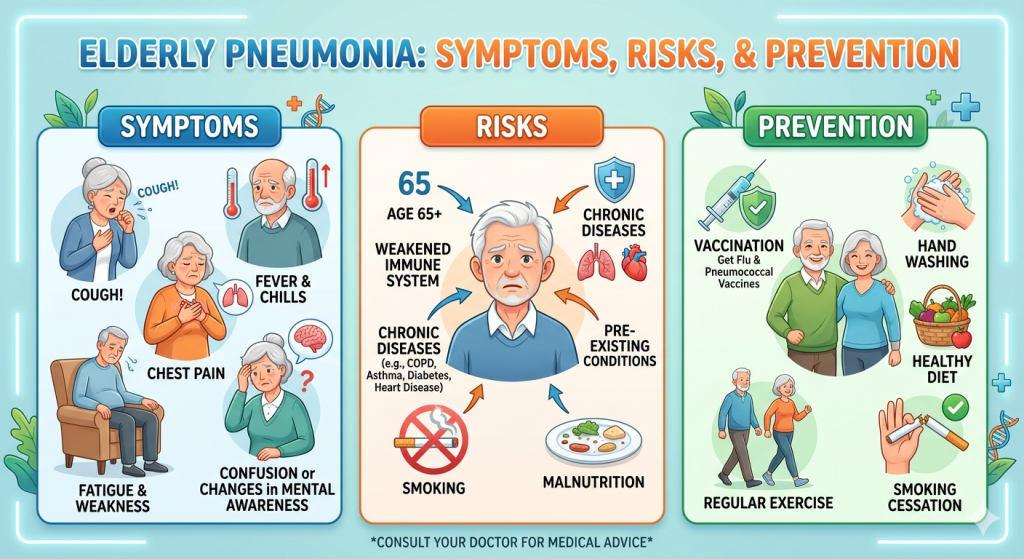
Common symptoms include:
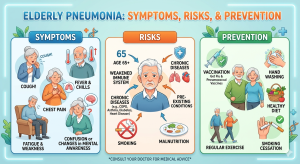
- Persistent cough
- Fever or chills
- Shortness of breath
- Chest pain during breathing or coughing
- Fatigue and weakness
- Loss of appetite
- Rapid breathing
- Confusion or sudden mental changes
- Low energy levels
- Bluish lips or fingertips in severe cases
In older adults, confusion or sudden disorientation may sometimes be the first noticeable sign of pneumonia. Because symptoms can be mild at first, early medical attention is important.
Why Pneumonia Is More Dangerous for Seniors
Pneumonia can become severe in elderly individuals due to several age-related factors:
Weakened Immune System
As people age, the immune system becomes less effective at fighting infections.
Chronic Health Conditions
Conditions such as diabetes, heart disease, COPD, or kidney disease increase the risk of complications.
Reduced Lung Function
Aging lungs may not clear mucus and germs as efficiently as younger lungs.
Difficulty Swallowing
Some seniors have swallowing problems that may cause food or liquids to enter the lungs, leading to aspiration pneumonia.
Hospitalization Risks
Older adults who stay in hospitals or nursing homes may be exposed to infections more easily.
Risk Factors for Elderly Pneumonia
Several factors can increase the likelihood of developing pneumonia in older adults:
- Smoking history
- Chronic respiratory diseases
- Weak immune system
- Poor nutrition
- Limited mobility
- Recent flu or viral infection
- Living in crowded care facilities
- Alcohol misuse
- Difficulty swallowing
- Lack of vaccination
Recognizing these risks can help caregivers take preventive steps.
Possible Complications
Without prompt treatment, pneumonia can lead to serious complications in seniors, including:
- Respiratory failure
- Sepsis (a dangerous body-wide infection)
- Fluid buildup around the lungs
- Worsening of existing medical conditions
- Long recovery periods
- Increased risk of hospitalization
In severe cases, pneumonia may become fatal, especially in frail older adults.
How Pneumonia Is Diagnosed
Doctors may use several methods to diagnose pneumonia, including:
- Physical examination
- Chest X-rays
- Blood tests
- Oxygen level testing
- Sputum tests to identify infection type
Early diagnosis improves the chances of successful treatment.
Treatment Options
Treatment depends on the cause and severity of the infection.
Antibiotics
Bacterial pneumonia is commonly treated with antibiotics.
Antiviral Medications
Some viral pneumonias may require antiviral treatment.
Oxygen Therapy
Seniors with breathing difficulties may need oxygen support.
Rest and Hydration
Proper rest and fluid intake support recovery.
Hospital Care
Severe cases may require hospitalization for close monitoring and advanced treatment.
It is important for elderly patients to complete all prescribed medications and attend follow-up appointments.
How to Prevent Pneumonia in the Elderly
Prevention is one of the best ways to protect older adults from pneumonia.
Get Vaccinated
Pneumonia vaccines and annual flu shots can significantly lower the risk of severe infection.
Practice Good Hygiene
Regular handwashing helps reduce the spread of germs.
Stop Smoking
Smoking damages the lungs and weakens respiratory defenses.
Maintain Healthy Nutrition
A balanced diet supports the immune system.
Stay Physically Active
Light exercise can improve lung strength and circulation.
Manage Chronic Conditions
Keeping diseases like diabetes and heart disease under control reduces complications.
Avoid Sick Contacts
Limiting exposure to individuals with respiratory infections helps reduce risk.
When to Seek Medical Attention
Immediate medical care is necessary if an elderly person experiences:
- Difficulty breathing
- Persistent chest pain
- Sudden confusion
- High fever
- Severe weakness
- Blue lips or low oxygen symptoms
Early treatment can prevent complications and improve recovery outcomes.
Read: How Financial Literacy Helps Families Achieve Long-Term Stability
Final Thoughts
Pneumonia remains one of the leading health concerns for older adults, but awareness and prevention can make a significant difference. Recognizing symptoms early, managing risk factors, and maintaining healthy habits can help seniors stay safer and healthier.
Families and caregivers play an important role in monitoring elderly loved ones and ensuring they receive proper medical attention when needed. With early care and preventive measures, many pneumonia-related complications can be avoided.