How Sleep Deprivation Affects Your Brain and Body
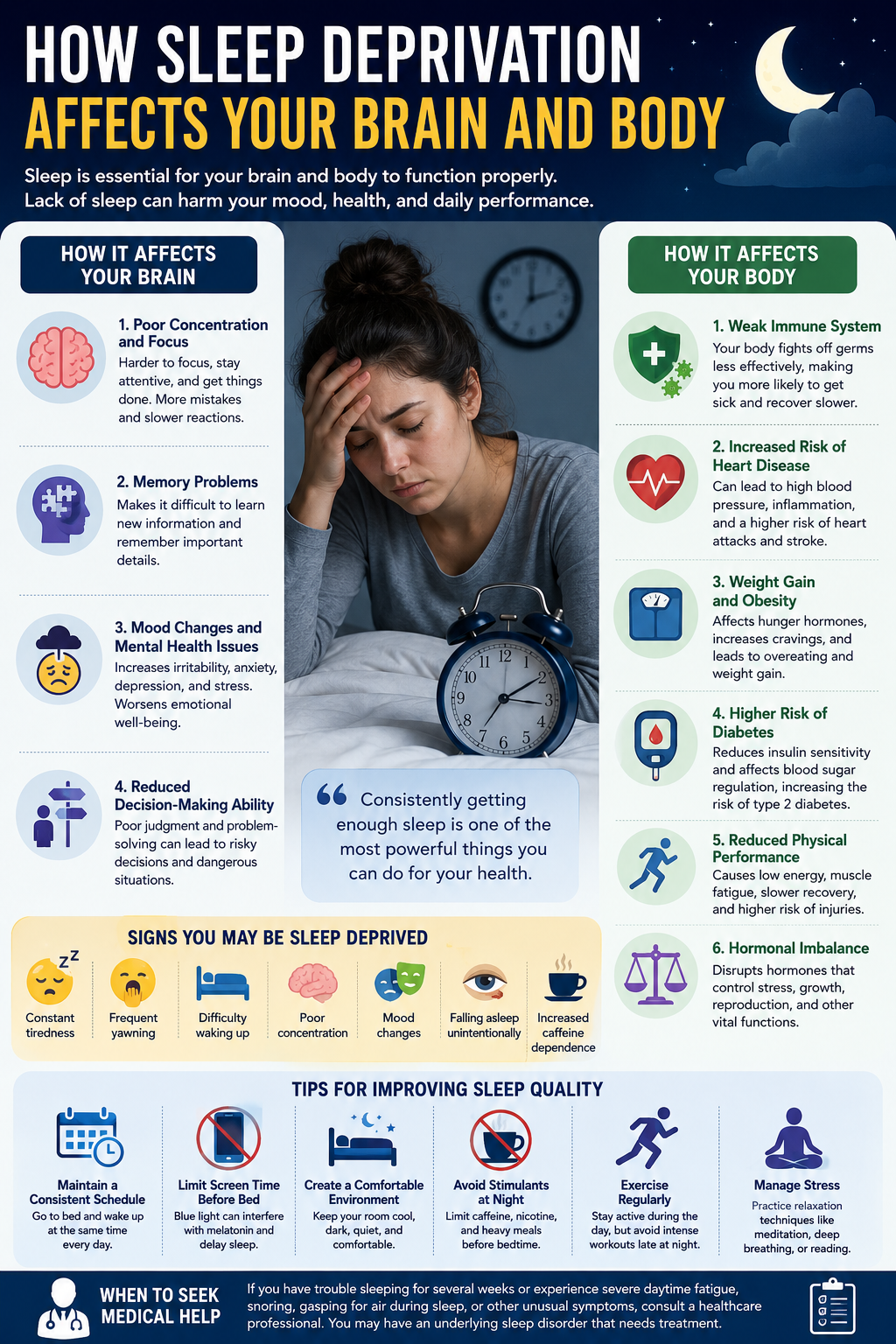
Sleep is one of the most important pillars of good health, yet millions of people regularly sacrifice it because of work, stress, social activities, or excessive screen time. While missing a few hours of sleep may seem harmless, chronic sleep deprivation can seriously affect both the brain and the body. From reduced concentration and memory problems to weakened immunity and increased risk of chronic diseases, lack of sleep impacts nearly every aspect of human health.
Understanding how sleep deprivation affects the body can help people make better lifestyle choices and prioritize healthy sleep habits.
What Is Sleep Deprivation?
Sleep deprivation occurs when a person does not get enough quality sleep to support normal physical and mental functioning. Adults generally need between 7 and 9 hours of sleep each night, although individual needs may vary.
Sleep deprivation can be:
- Acute: Short-term lack of sleep over one or two days
- Chronic: Ongoing insufficient sleep over weeks or months
Both forms can negatively affect health, but chronic sleep deprivation is especially dangerous. Learn more
How Sleep Deprivation Affects the Brain
The brain depends heavily on sleep for restoration, memory processing, and cognitive performance. Without enough rest, mental functions begin to decline quickly.
1. Poor Concentration and Focus
One of the earliest effects of sleep deprivation is difficulty concentrating. Sleep helps the brain stay alert and process information efficiently. When sleep is limited, attention span decreases, making it harder to focus on work, school, or daily tasks.
People who are sleep deprived often:
- Make more mistakes
- React more slowly
- Struggle to stay attentive
- Experience reduced productivity
2. Memory Problems
During sleep, the brain organizes and stores memories. Lack of sleep interferes with this process, making it harder to learn new information and remember important details.
Students, professionals, and older adults may notice:
- Forgetfulness
- Difficulty retaining information
- Trouble recalling names or events
Over time, chronic sleep deprivation may increase the risk of cognitive decline.
3. Mood Changes and Mental Health Issues
Sleep and mental health are closely connected. Insufficient sleep can trigger emotional instability and worsen psychological conditions.
Common emotional effects include:
- Irritability
- Anxiety
- Depression
- Mood swings
- Increased stress levels
People who consistently lack sleep are also more likely to develop mental health disorders over time.
4. Reduced Decision-Making Ability
Sleep deprivation affects judgment and problem-solving skills. A tired brain struggles to evaluate situations properly, which can lead to poor decisions and risky behavior.
This is especially dangerous when:
- Driving
- Operating machinery
- Handling important responsibilities
- Making financial or medical decisions
How Sleep Deprivation Affects the Body
The effects of poor sleep extend far beyond the brain. The body uses sleep to repair tissues, regulate hormones, and maintain healthy organ function.
1. Weak Immune System
Sleep strengthens the immune system by supporting the production of infection-fighting cells and proteins. People who do not sleep enough often get sick more frequently and recover more slowly.
Sleep deprivation may increase the risk of:
- Common colds
- Flu
- Viral infections
- Inflammation-related illnesses
2. Increased Risk of Heart Disease
Poor sleep has been linked to higher blood pressure, inflammation, and irregular heart rhythms. Over time, these issues can raise the risk of cardiovascular diseases.
Research suggests that chronic sleep deprivation may contribute to:
- High blood pressure
- Heart attacks
- Stroke
- Heart failure
3. Weight Gain and Obesity
Lack of sleep affects hormones that control hunger and appetite. Sleep deprivation increases cravings for sugary and high-calorie foods while reducing feelings of fullness.
As a result, sleep-deprived individuals are more likely to:
- Overeat
- Snack late at night
- Gain weight
- Develop obesity-related conditions
4. Higher Risk of Diabetes
Sleep helps regulate blood sugar and insulin sensitivity. Chronic sleep deprivation can interfere with glucose metabolism, increasing the risk of type 2 diabetes.
People who sleep poorly may experience:
- Insulin resistance
- Elevated blood sugar levels
- Increased fatigue after meals
5. Reduced Physical Performance
Athletes and physically active individuals need sleep for muscle recovery, energy restoration, and coordination. Poor sleep can lead to:
- Reduced strength
- Slower reaction times
- Increased injury risk
- Lower endurance
Even everyday physical tasks may feel more exhausting after insufficient sleep.
6. Hormonal Imbalance
Sleep influences the production of many important hormones, including growth hormone, cortisol, and reproductive hormones.
Long-term sleep deprivation may contribute to:
- Increased stress hormones
- Reduced fertility
- Low testosterone levels
- Menstrual irregularities
Signs You May Be Sleep Deprived
Many people underestimate their sleep deficit. Common warning signs include:
- Constant tiredness during the day
- Frequent yawning
- Difficulty waking up
- Poor concentration
- Mood changes
- Falling asleep unintentionally
- Increased caffeine dependence
If these symptoms persist, improving sleep habits should become a priority.
Tips for Improving Sleep Quality
Better sleep often starts with small lifestyle changes. Here are some effective ways to improve sleep quality naturally:
Maintain a Consistent Sleep Schedule
Go to bed and wake up at the same time every day, including weekends.
Limit Screen Time Before Bed
Blue light from phones, tablets, and televisions can interfere with melatonin production and delay sleep.
Create a Comfortable Sleep Environment
Keep the bedroom:
- Cool
- Dark
- Quiet
- Comfortable
Avoid Stimulants at Night
Reduce caffeine, nicotine, and heavy meals before bedtime.
Exercise Regularly
Physical activity can improve sleep quality, but intense exercise should be avoided close to bedtime.
Manage Stress
Relaxation techniques such as meditation, deep breathing, or reading can help calm the mind before sleep.
When to Seek Medical Help
Occasional sleep problems are normal, but chronic insomnia or severe daytime fatigue may indicate an underlying sleep disorder. A healthcare professional should be consulted if symptoms persist for several weeks.
Possible sleep disorders include:
- Insomnia
- Sleep apnea
- Restless leg syndrome
- Narcolepsy
Early diagnosis and treatment can improve both sleep quality and overall health.
Read: How Hormonal Imbalances Affect Women’s Health and Pregnancy
Conclusion
Sleep deprivation affects far more than energy levels. It impacts memory, concentration, emotional stability, immune function, heart health, metabolism, and overall physical performance. In today’s fast-paced world, sleep is often overlooked, but consistently getting enough rest is essential for long-term wellbeing.
Prioritizing healthy sleep habits can improve mental clarity, strengthen the body, and reduce the risk of serious health problems. Quality sleep is not a luxury, it is a fundamental requirement for a healthy life.