Emergency Health Tips for Choking in Adults and Children
Choking is a serious medical emergency that happens when an object blocks the airway, preventing normal breathing. Knowing emergency health tips for choking in adults and children can save a life within minutes, as a blocked airway quickly reduces oxygen to the brain and can become fatal if not treated immediately.
Quick recognition and correct first aid response are critical in these situations.
Understanding Choking
Choking occurs when food, small objects, or other materials become stuck in the throat or windpipe. It can be:
- Mild choking: The person can still cough or speak
- Severe choking: The airway is completely blocked, and the person cannot breathe, speak, or cough
Severe choking requires immediate action. Learn more
Signs of Severe Choking
Look out for these warning signs:
- Inability to speak or cry
- Weak or no coughing
- Difficulty breathing or noisy breathing
- Clutching the throat (universal choking sign)
- Bluish lips or skin
- Loss of consciousness
If any of these occur, act immediately.
Emergency Steps for Adults and Children (Over 1 Year)
Step 1: Encourage Coughing (If Possible)
If the person can cough forcefully:
- Encourage them to keep coughing
- Do NOT slap their back at this stage
- Do NOT give water or food
A strong cough may clear the blockage naturally.
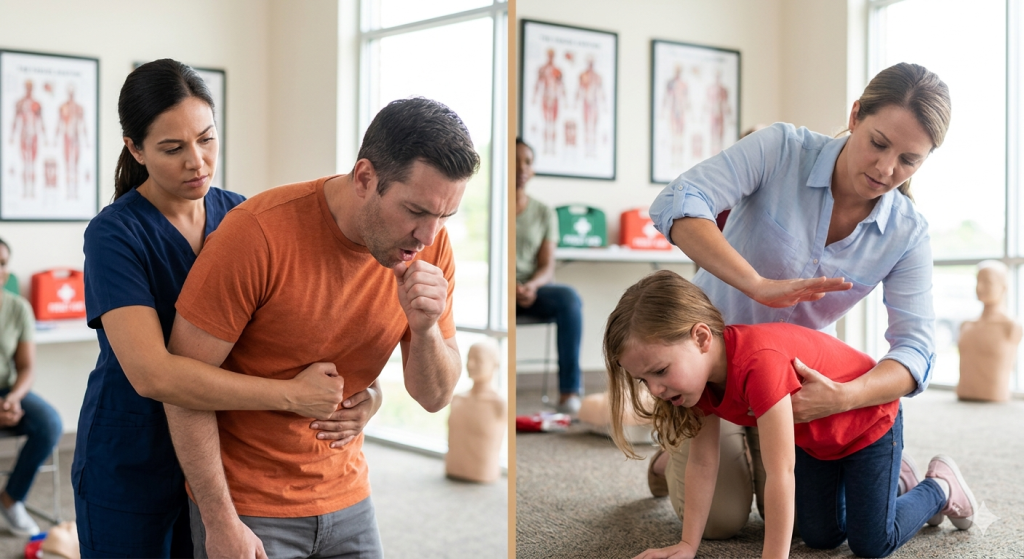
Step 2: Perform Back Blows
If coughing does not help:
- Stand slightly behind the person
- Lean them forward
- Give 5 firm back blows between the shoulder blades using the heel of your hand
Check if the object is dislodged after each blow.
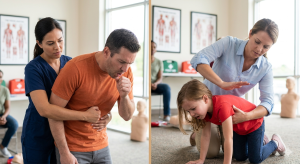
Step 3: Perform Abdominal Thrusts (Heimlich Maneuver)
If back blows fail:
- Stand behind the person
- Wrap your arms around their waist
- Make a fist just above the navel
- Perform quick inward and upward thrusts
Repeat until the object is expelled or the person becomes unresponsive.
Emergency Steps for Infants (Under 1 Year)
Infants require a different approach.
Step 1: Back Blows
- Place the baby face-down on your forearm
- Support the head and neck
- Deliver 5 gentle but firm back blows
Step 2: Chest Thrusts
- Turn the baby face-up
- Place two fingers in the center of the chest
- Give 5 chest thrusts
Repeat until the airway is clear or help arrives.
If the Person Becomes Unconscious
If the person stops responding:
- Call emergency services immediately
- Begin CPR (cardiopulmonary resuscitation)
- Check the mouth for visible objects before rescue breaths
- Continue CPR until help arrives
What NOT to Do During Choking
Avoid these dangerous mistakes:
- Do NOT give water or food
- Do NOT try to blindly remove objects with fingers
- Do NOT delay emergency action
- Do NOT shake the person
Incorrect actions can push the object deeper into the airway.
Special Considerations for Children
Children are more prone to choking due to small airways and eating habits.
Common choking hazards include:
- Hard candies
- Grapes
- Nuts
- Small toys
- Hot dogs
Prevention Tips:
- Cut food into small pieces
- Supervise children while eating
- Avoid giving high-risk foods to toddlers
- Keep small objects out of reach
How to Prevent Choking in Adults
Adults can reduce risk by:
- Chewing food slowly and thoroughly
- Avoiding talking or laughing while eating
- Not eating while lying down
- Being cautious with alcohol consumption during meals
- Taking smaller bites
Why Fast Action Matters
Choking can lead to brain damage or death within 4–6 minutes if breathing is not restored. Immediate response using back blows, abdominal thrusts, or CPR can make the difference between life and death.
Read: How to Handle a Heart Attack Before Help Arrives
Final Thoughts
Understanding emergency health tips for choking in adults and children is essential for every household. Emergencies happen suddenly, and knowing how to respond calmly and correctly can save lives.
Learning basic first aid techniques like back blows, Heimlich maneuver, and infant CPR ensures you are prepared to act when every second counts.